

South American home cooks build aji amarillo seasoning around Peru's fruity yellow chili so dishes like aji de gallina, anticuchos, and causa taste right even when fresh aji amarillo peppers aren't sitting in the produce aisle. This guide breaks down the blend itself, the tools that sharpen it, and the mistakes that flatten it before it ever hits the pan.
- Aji amarillo seasoning blends dried yellow chili powder with garlic, cumin, and salt for Peruvian-style heat.
- Fresh-cracked black pepper sharpens an aji amarillo rub more than pre-ground pepper from a shaker.
- Jarred aji amarillo paste works faster for sauces; dry powder blends stretch further for rubs and marinades.
- Aji amarillo runs about 30,000 to 50,000 Scoville units, closer to cayenne than to habanero.
- Best for weeknight lomo saltado and anticuchos: a dry rub base ground fresh instead of shaken from a jar.
Why aji amarillo seasoning matters for South American home cooking
Aji amarillo is the backbone flavor of Peruvian cooking, showing up in aji de gallina, causa rellena, anticuchos marinade, and the aji verde sauce served at chicken shops from Lima to Miami. Outside specialty Latin markets, fresh aji amarillo pods are close to impossible to find in most US grocery stores in 2026, so the seasoning form — dried powder, paste, or a dry rub blend — is how home cooks outside Peru actually access the flavor. It's the same reason adobo seasoning bottles stand in for fresh adobo peppers on Mexican-style grilling nights: the packaged version is what most kitchens actually have access to.
The pepper itself sits at roughly 30,000 to 50,000 Scoville heat units, putting it in the same range as cayenne or Tabasco sauce rather than the blistering heat of habanero or ghost pepper. That matters for a home cook building a rub: aji amarillo seasoning should read as fruity and warm first, hot second, not the other way around. A blend that leans too hard on cayenne or paprika substitutes loses that fruit-forward character and just tastes like generic chili powder.
How to build aji amarillo seasoning for South American dishes
Start with a dry base before you add heat
Most aji amarillo seasoning blends start dry, then get loosened with oil, lime, or broth depending on the dish. Building the dry base first means you can measure consistently and adjust one variable at a time instead of guessing at a wet mix.
- Dried aji amarillo powder or ground aji amarillo flakes as the primary chili
- Granulated garlic, not garlic salt, to control sodium separately
- Ground cumin, toasted first if whole seeds are on hand
- Dried oregano, Peruvian or Mexican variety if available
- Fine sea salt, added last so you can taste before committing
Match the acid and fat to the dish
The same dry base works across a dozen dishes, but the finishing liquid changes everything about how it reads on the plate. Lime juice and oil turn it into an anticuchos marinade; evaporated milk and queso fresco turn it into the base for aji de gallina; mayonnaise and boiled potato turn it into causa.
- Lime juice and olive oil for grilled anticuchos skewers
- Evaporated milk, walnuts, and bread for aji de gallina sauce
- Mayonnaise and lime for causa rellena filling
- Vegetable broth and cream for a quick aji amarillo soup base
- Vinegar and garlic for a table-side aji verde style sauce
Grind your black pepper fresh instead of shaking it from a canister
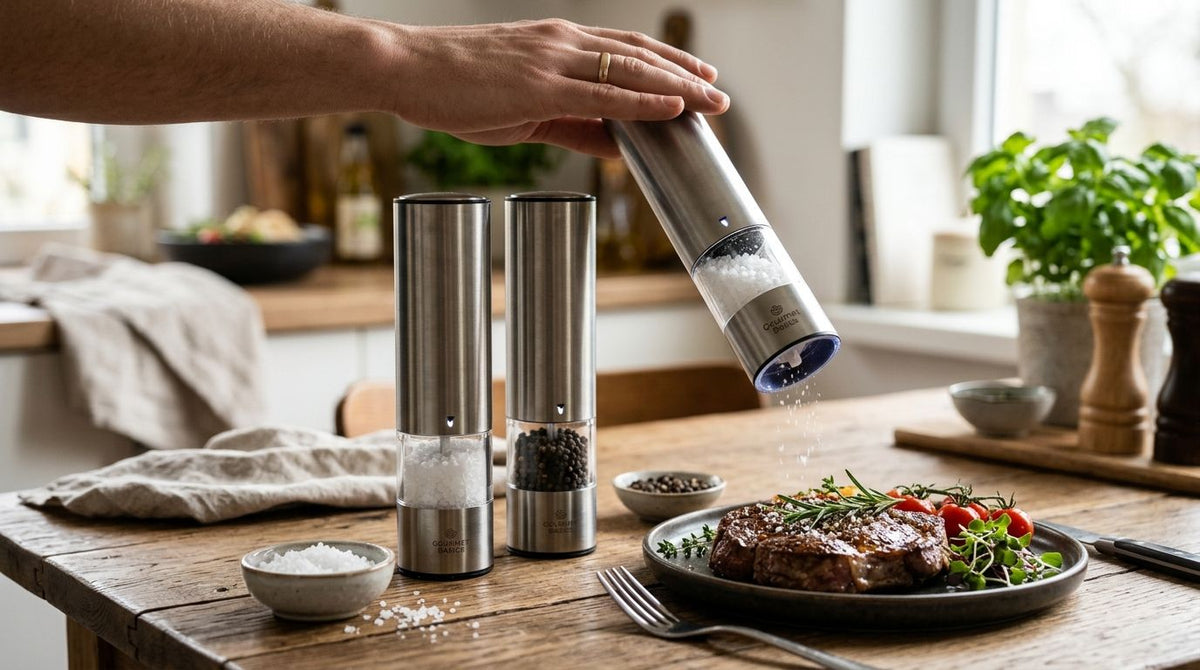
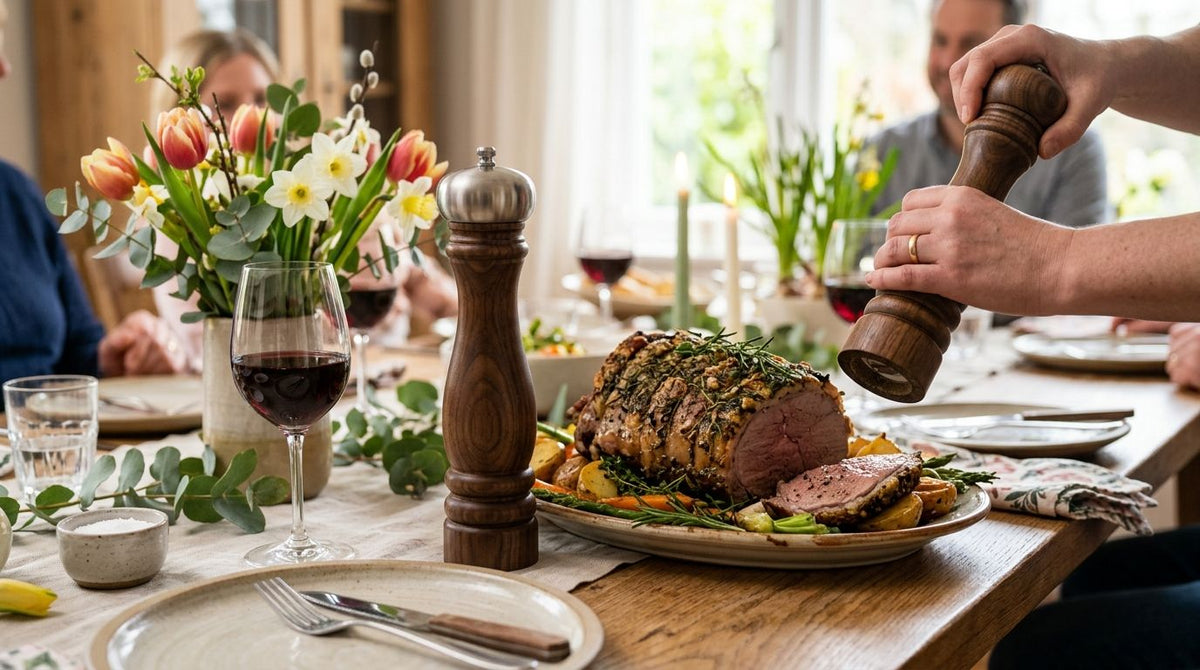
Every aji amarillo blend above still needs a black pepper backbone, and pre-ground pepper from a shaker loses most of its aroma within weeks of grinding. A PepperMate traditional pepper mill grinds whole peppercorns to order, so the pepper going into your rub is still releasing oil when it hits the pan instead of tasting flat and dusty.
- Grind coarse for a dry rub that needs texture on the surface of meat
- Grind fine for a smooth sauce like aji de gallina or causa filling
- Keep whole black peppercorns on hand instead of pre-ground jars that go stale
- Taste the pepper alone before adding it to the blend — stale pepper tastes dusty, fresh pepper tastes sharp and slightly citrusy
- Adjust pepper last, since it's the easiest variable in the blend to overcorrect
Adjust the heat ratio dish by dish
Aji de gallina, served over rice with hard-boiled egg, usually wants less raw heat because the cream and walnuts mute it on their own. Anticuchos marinade for grilled beef heart or chicken thigh can run hotter since it's balanced against char and a hard squeeze of lime.
- Start at 1 tablespoon aji amarillo powder per pound of protein and adjust up from there
- Cut heat with a spoon of mashed yellow potato or extra cream, not just water
- Add pepper and garlic in layers rather than dumping everything in at once
- Taste after the acid goes in — lime changes how hot a blend reads on the tongue
- Keep a milder version of the base ready for guests who don't want restaurant-level heat
Pair aji amarillo with the right sides and condiments
South American tables rarely serve just one condiment next to the protein. Aji amarillo shows up next to huacatay sauce, rocoto-based salsas, or a simple pickled red onion, and rotating condiments keeps the same rice-and-protein plate from tasting repeated meal after meal. The same logic applies well outside Peruvian cooking — building a rotation of gourmet mustard brands worth trying alongside a barbecue spread does the same job of layering acid and heat instead of leaning on one bottle for every plate.
- Pickled red onion made with onion, lime, and salt as a standard side
- Huacatay (black mint) sauce for anticuchos nights
- Rocoto-based salsa for cooks who want more heat than aji amarillo alone provides
- A slice of avocado to cool down a heavier hand with the rub
Store and scale the blend so it doesn't lose potency
A dry aji amarillo seasoning blend holds its flavor for around 6 months in an airtight jar kept away from direct light, roughly in line with any ground spice mix. Paste versions, once opened, behave more like a condiment and belong in the refrigerator rather than the pantry.
- Double or triple the dry recipe and store in a labeled jar for weeknight use
- Freeze paste-based batches in an ice cube tray, then bag the cubes for portioned use later
- Label the jar with the date mixed, since ground spice loses aroma faster than whole peppercorns or whole dried chiles
- Keep the paste version refrigerated after opening, not in the pantry
- Rebuild the dry mix every 6 months rather than topping off an old jar with fresh powder
Aji amarillo seasoning options compared
| Option | Best for | Key limitation |
|---|---|---|
| Dried aji amarillo powder | Dry rubs, batch cooking, long pantry storage | Needs oil or acid added separately to bloom the flavor |
| Jarred aji amarillo paste | Quick sauces like aji de gallina or aji verde | Shorter fridge life once the jar is opened |
| Frozen aji amarillo peppers | Cooks who want full control over heat and texture from scratch | Requires a specialty Latin market or an online order |
| DIY dry rub with fresh-ground pepper | Anticuchos marinade, grilled meats, causa filling | Takes a few extra minutes versus grabbing a pre-mixed jar |
| Plain cayenne or paprika substitute | An emergency swap when no aji amarillo is on hand | Loses the fruity, citrus-adjacent flavor that defines the dish |
A dry aji amarillo powder blend, ground fresh with a proper pepper mill, wins for most South American home cooking in 2026 because it stores longest and adapts to the widest range of dishes.
Common mistakes South American home cooks make with aji amarillo seasoning
- Swapping in cayenne 1:1 — cayenne runs hotter without the fruit character, so a straight swap makes the dish taste sharp instead of rounded.
- Salting before tasting the paste — jarred aji amarillo paste is often salted already, and adding table salt on top oversalts the final dish.
- Using pre-ground black pepper as the backbone — pepper that's been sitting ground for months adds dust, not aroma, and mutes the chili's fruitiness.
- Skipping the acid step — lime or vinegar isn't optional in most aji amarillo applications; without it the blend reads flat and one-note.
- Storing the paste in a reactive metal container — aji amarillo's acidity reacts with some metals over time and dulls both the color and the flavor; glass or plastic holds up better.
Grind Fresh Pepper for Every Blend
Fresh-cracked pepper anchors any aji amarillo rub.
FAQ
What is aji amarillo seasoning made of?
Aji amarillo seasoning is a dried yellow chili powder mixed with garlic, cumin, oregano, and salt. Some versions add dried onion or a touch of sugar to round out the fruit-forward heat.
Is aji amarillo seasoning the same as aji amarillo paste?
No, the dry seasoning is a powder blend meant for rubs and batch cooking, while the paste is a wet, jarred product built for sauces. The paste moves faster into a dish but has a shorter fridge life once opened.
How hot is aji amarillo seasoning compared to cayenne?
Aji amarillo runs about 30,000 to 50,000 Scoville heat units, which overlaps with cayenne and Tabasco sauce. It reads milder than habanero or ghost pepper and carries a fruitier, less sharp heat.
Can I substitute cayenne for aji amarillo seasoning?
Cayenne works in a pinch but loses the citrus-adjacent, fruity character that defines aji amarillo dishes. A better emergency swap blends cayenne with a small amount of paprika and a squeeze of orange juice to fake the fruit note.
What dishes use aji amarillo seasoning?
Aji de gallina, anticuchos, causa rellena, and aji verde sauce all rely on aji amarillo as the primary flavor. It also shows up in Peruvian-style soups and grilled chicken marinades.
How long does aji amarillo seasoning last once mixed?
A dry aji amarillo blend holds its flavor for around 6 months in an airtight jar kept out of direct light. Jarred paste should move to the refrigerator after opening and gets used faster.
Should I use pre-ground or fresh-ground pepper in an aji amarillo rub?
Fresh-ground black pepper carries more aroma and a sharper bite than pepper that has been sitting pre-ground on a shelf. Grinding it to order, coarse for rubs or fine for sauces, keeps the backbone of the blend from tasting flat.
Where can I find aji amarillo seasoning outside Peru?
Specialty Latin grocery stores and online retailers carry dried aji amarillo powder and jarred paste as of 2026. Fresh pods are rare outside Peru, which is why the dried and jarred forms are the practical option for most home cooks.
One last thing
Aji amarillo isn't actually yellow when it's fresh — the pod ripens from green to a deep orange, and most of the seasoning sold in the US in 2026 comes from pods dried and ground at that fully ripe stage, which is also the point of peak sugar content in the fruit. That's why a good aji amarillo blend tastes almost citrus-sweet before the heat arrives, and it's the detail that separates a rounded rub from a flat, one-note chili powder.