


Canners and preservers reach for an apple corer for canning and preserving apples fast enough to keep a hot-pack session moving instead of stalling at the cutting board. A canning day rarely stops at a handful of apples: you're working through 20, 40, sometimes 60 pieces of fruit before the water bath even starts, and a plain paring knife turns that into an hour of repetitive cuts. The segment's real constraint isn't flavor, it's throughput — apples need to move from bin to jar before they brown and before piece size drifts across the batch.
- A serrated stainless apple corer for canning and preserving removes core and seeds in one push, replacing four knife cuts per apple.
- Sort apples by firmness before coring; soft spots slow every step downstream and change jar texture.
- PepperMate's Superior Chef Stainless Steel Serrated Apple Corer works for pie rings, scones, and canning-ring prep alike.
- Uniform slice thickness after coring matters more for even jar processing than which corer you buy.
- Acidulated water between coring and packing stops browning during a long 2026 canning session.
Why apple corers matter for canning and preserving cooks
Home canning recipes for applesauce, apple butter, and spiced apple rings all assume consistent piece size going into the jar. Uneven cores and stray seeds throw off both texture and how evenly heat reaches the center of a packed jar. A canning session built around a short 2026 harvest window means coring a full bushel in one sitting, not trimming an apple for a lunchbox one at a time. That's a different job than everyday kitchen prep, and it's why the tool that works for canning and preserving looks different from a basic paring knife. Cooks running a pickling or fermentation project alongside their apple batch hit the same volume problem — the pickling and fermentation guide covers how spice prep scales the same way once you're working in bulk.
Sort and wash your apples before you core
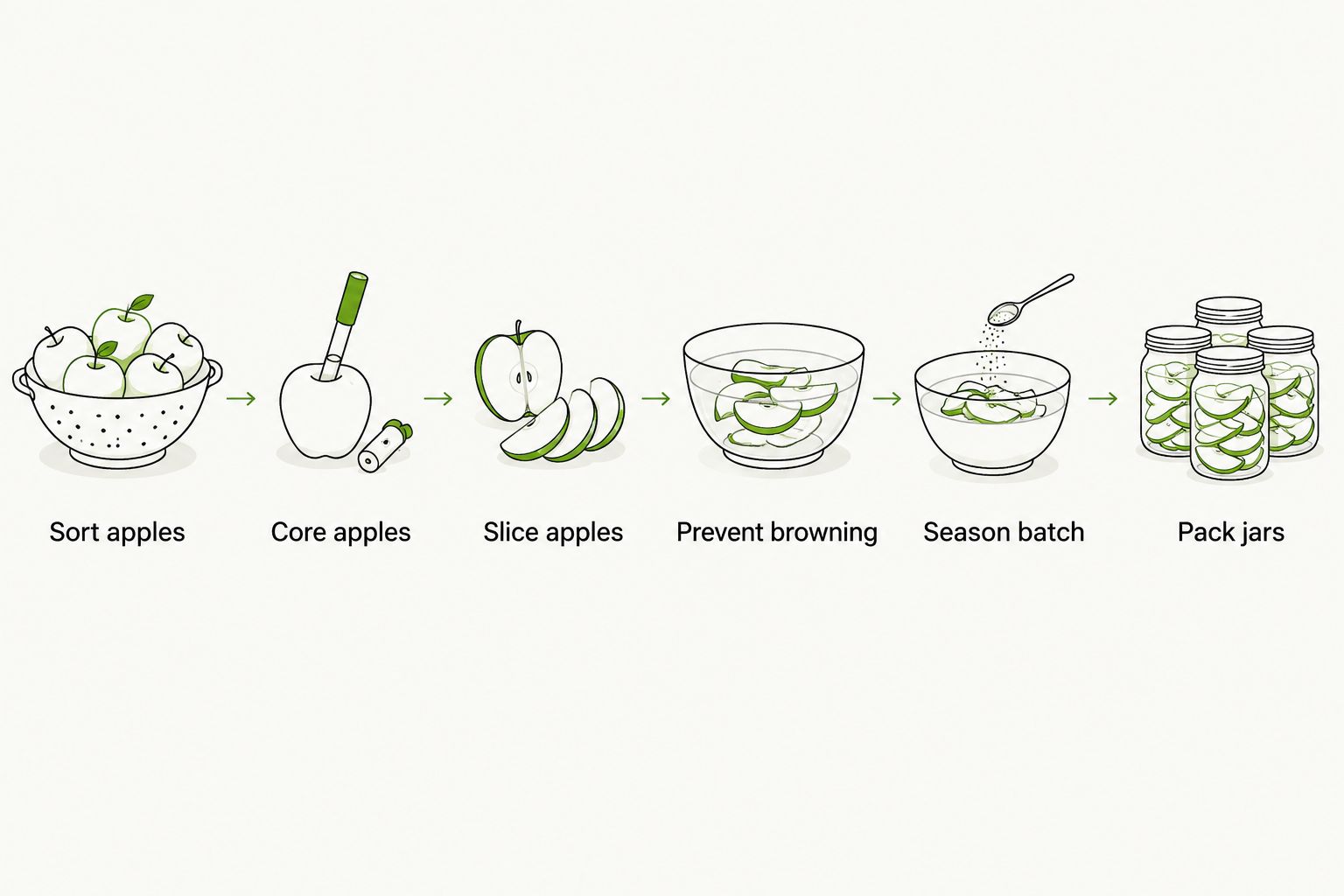
A canning batch is only as consistent as the fruit that goes into it. Sorting before you core saves you from mixing textures in the same jar later.
- Pick a firm, low-moisture variety like Granny Smith or Honeycrisp for canning; soft apples turn to mush once heat hits the jar
- Wash apples under cold running water and check each one for bruised or soft spots
- Set bruised apples aside for applesauce, where texture matters less, and save firm ones for rings or wedges
- Stage washed apples near your canning pot so coring, slicing, and packing happen in one continuous run
- Count or weigh apples before starting; most quart-jar batches use 2 to 3 pounds of apples per jar
Core apples by hand first if you're testing a new recipe
If you're testing a new spiced apple ring recipe or adjusting a family applesauce formula, core the first few apples by hand before committing the whole harvest to one method.
- Cut the apple in quarters and cut the core out with a paring knife at an angle
- Use a melon baller to scoop stray seeds a paring knife misses
- Twist a straight metal apple corer down through the center for whole-fruit core removal
- Taste-test the first few jars before scaling the recipe to the rest of your apples
Switch to a stainless corer once you commit to the full batch
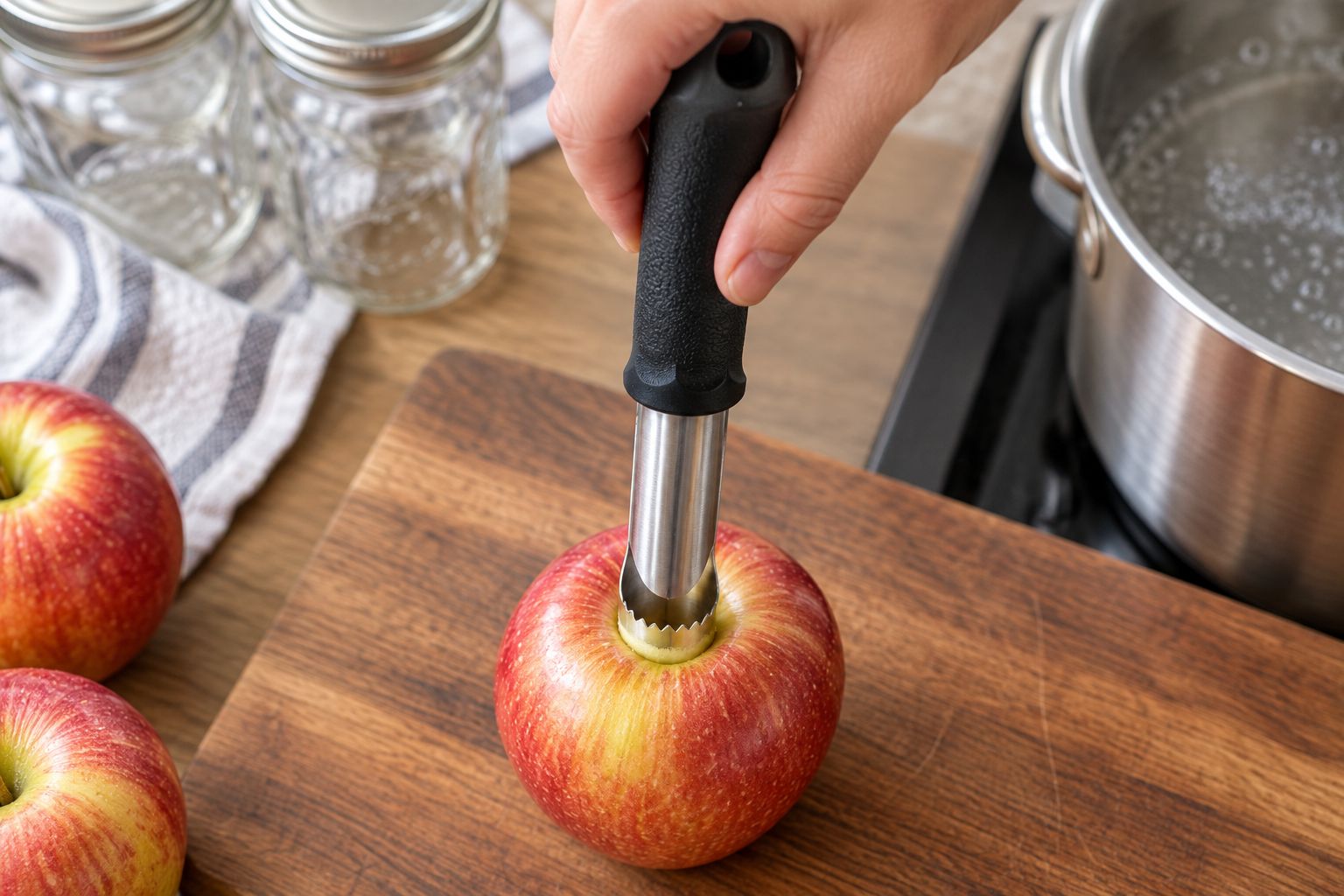
Once the recipe is set, a serrated stainless steel corer replaces four knife cuts with one push through the apple's center. PepperMate's Superior Chef Stainless Steel Serrated Apple Corer is built for that exact repetition, ring after ring, jar after jar, through a full canning day.
- Push straight down through the apple's stem end; the serrated edge cuts core and seeds in a single motion
- Twist gently before pulling the corer back out to avoid tearing the surrounding flesh
- Use the hollow core shape to cut clean rings for spiced apple ring preserves
- Rinse the corer between apples when working with very ripe fruit that leaves residue on the blade
Slice cored apples to a uniform thickness
Coring is only half the job. Slice thickness decides how evenly the batch processes and how it looks once it's in the jar.
- Cut rings 1/4 inch thick for spiced apple ring preserves so they hold shape through processing
- Cut wedges 1/2 inch thick for pie filling that needs to hold up under a second bake
- Chop applesauce apples into rough 1-inch chunks since they'll cook down anyway
- Keep piece size consistent within a single jar so heat penetrates evenly during processing
Stop the browning between coring and packing
Cored apples start browning within minutes. On a long canning day, that window shrinks fast if you're not staged and ready.
- Drop cored, sliced apples into a bowl of water mixed with lemon juice or ascorbic acid
- Work in small batches of 8 to 10 apples so slices don't sit exposed for long stretches
- Keep jars, lids, and your canning pot staged and ready before you start coring
- Drain and pat apples dry right before they go into the jar, not before
Season the batch before it goes in the jar
Some spiced apple butter and mostarda-style preserves finish with a few twists of black pepper for a savory edge alongside cinnamon and cloves. A fresh grind from a traditional pepper mill adds more bite to a spiced preserve than pre-ground pepper that's been sitting in a jar for months.
- Add whole spices like cinnamon sticks and cloves to the canning liquid, not the jar itself, if your recipe calls for straining
- Grind pepper fresh right before it goes into a spiced apple butter or mostarda for maximum flavor
- Taste the batch before jarring; canning locks in whatever seasoning level you set
- Keep whole black peppercorns on hand instead of pre-ground pepper; grinding fresh preserves aromatic oils that fade fast once cracked
Pack jars with consistent headspace
Headspace is the last variable before the lid goes on, and it's the one canners skip fastest when they're rushing through a big batch.
- Leave 1/2-inch headspace for applesauce and spiced apple butter, per standard USDA home-canning guidance
- Leave 1/2-inch to 3/4-inch headspace for apple rings and wedges packed in syrup
- Wipe jar rims clean before applying lids; apple residue on the rim breaks the seal
- Process jars in a water bath for the time your specific recipe calls for, adjusted for altitude


Apple corer options for canning and preserving, compared
Availability of hand-held corers and combo tools has widened by 2026, so the choice usually comes down to batch size, not what's in stock.
| Option | Best for | Key limitation | Verdict |
|---|---|---|---|
| Paring knife | One-off batches under a dozen apples | Slow, inconsistent core removal, higher risk of cut fingers | Skip for full canning batches |
| T-shaped hand corer | Small households doing occasional canning | Crushes soft apples instead of cutting cleanly | Hold for light, occasional use |
| Serrated stainless steel corer, like PepperMate's Superior Chef | Canning and preserving batches of 20 or more apples | Cores only; you still need a knife for wedges | Buy for regular canning sessions |
| Combination corer/slicer | Cooks who want cores and even wedges in one motion | Larger apples can jam the slicing blades | Buy if you ring and wedge apples often |
Common mistakes canning and preserving cooks make with apple corers
- Coring a full 2026 batch hours before processing, then losing half of it to browning at the counter
- Mixing bruised and firm apples in the same jar, so some pieces turn to mush while others stay firm
- Using a dull manual corer that crushes the core out instead of cutting it, leaving stray seeds in the jar
- Skipping a headspace check on ring-packed jars, which seals less reliably than sauce-packed jars
- Switching apple varieties mid-batch without adjusting slice thickness, throwing off processing consistency across jars
FAQ
What's the best apple corer for canning and preserving in 2026?
A serrated stainless steel corer, like PepperMate's Superior Chef Stainless Steel Serrated Apple Corer, is the best apple corer for canning and preserving batches of 20 apples or more because it removes core and seeds in one push instead of four knife cuts.
Is a stainless steel apple corer better than a plastic one for canning?
Yes, for repeated use through a full canning batch. Stainless steel holds a cutting edge through dozens of apples, while plastic corers dull and start crushing instead of cutting after heavy use.
How many apples can you core in one canning session?
Most home canners work through 20 to 60 apples per session, depending on how many jars the recipe fills. A serrated stainless corer keeps that volume manageable in one sitting.
Do you need to peel apples before coring for canning?
It depends on the recipe. Applesauce and apple butter are usually peeled and cored; spiced apple rings are often cored with the skin left on for texture and color.
How do you stop cored apples from browning before you can them?
Drop cored and sliced apples into water mixed with lemon juice or ascorbic acid, and work in small batches of 8 to 10 apples so slices aren't exposed to air for long.
Can an apple corer double as a slicer for canning prep?
Combination corer/slicer tools do both in one motion, which suits rings and wedges. A dedicated corer alone still needs a separate knife pass for even slices.
What headspace do you leave when canning cored apple slices?
Applesauce and apple butter typically call for 1/2-inch headspace; apple rings and wedges packed in syrup need 1/2 inch to 3/4 inch, per standard USDA home-canning guidance.
Is a hand-held corer fast enough for a full canning batch?
A basic T-shaped hand corer works for small batches but slows down and starts crushing soft apples once you're past a dozen or so. A serrated stainless corer holds its edge longer through a full batch.
One last thing
The same corer that clears seeds for applesauce also cuts the rings for a savory, spiced apple ring preserve finished with a few fresh grinds of black pepper instead of straight cinnamon-sugar. Run a small test jar of that version alongside your standard batch this canning season; it's a five-minute variation on a step you're already doing, and it's the kind of jar that gets asked about first at a potluck in 2026.

