

Outdoor grillers need a cutting board for outdoor grilling that shrugs off direct sun, hot cast iron, and raw meat juice without warping, splitting, or turning into a bacteria trap two feet from the propane tank. A board that works fine on a kitchen counter often fails outside within a season because it's dealing with heat swings, no sink access, and back-to-back raw-to-cooked handoffs that indoor prep never sees.
- A solid hardwood board like PepperMate's Walnut Hardwood Cutting Board handles grill-side prep better than thin plastic mats in 2026.
- Dedicate one board to raw meat and a second to produce and buns to cut cross-contamination risk outdoors.
- Bamboo dries fastest in direct sun, but solid walnut or maple resists warping better over a full grilling season.
- Oil a wood board every 2-4 weeks outdoors — UV and heat pull moisture out faster than an indoor kitchen ever does.
Why a dedicated cutting board matters at the grill station
An indoor kitchen has a sink three feet away and a stable, shaded counter. A grill station has neither. That gap is why the wrong board fails outside faster than it would inside.
No sink at the cart means you can't rinse and reload a board mid-cook the way you would at a kitchen island — you're wiping, not washing, until the meal's done. Direct sun and 90°F-plus ambient heat near charcoal or gas pull moisture out of wood fast, and a board that isn't oiled regularly will cup or split by midsummer. Raw meat prep also happens inches from where finished food gets plated, so the margin for cross-contamination is thinner outdoors than it is at a kitchen counter with more surface area to spread work across.
A cutting board for outdoor grilling has to survive heat, sun, and raw meat juice at the same time — most kitchen boards were never built for that combination.
Pick a board material built for heat and sun
Start here before anything else, because material decides how the board ages over a full grilling season, not just how it looks the first weekend.
- Solid hardwood (walnut, maple) resists warping best across fluctuating outdoor temperatures and holds an edge for the knife longer than softer woods
- Bamboo dries fast and stays light for carrying, but splits sooner under prolonged direct sun than dense hardwood does
- Plastic and poly boards are dishwasher-safe and cheap to replace, but a chef's knife scars them deeply, and bacteria settles into those grooves
- Rubber and composite boards resist knife marks well and skip the oiling routine entirely, at the cost of a firmer, less forgiving cutting feel
Size the board to your prep station, not your kitchen counter
Measure the actual space at the grill cart before buying anything — outdoor prep surfaces run smaller than a kitchen island, and an oversized board becomes unstable on a narrow rolling cart.
- A board in the 11x17 inch range covers a rack of ribs or a whole chicken without hanging off the edge of most carts
- Leave at least 6 inches of clearance around the board for tongs, a resting plate, and a pepper mill within reach
- Confirm the board sits flat on your specific cart or table — a board that rocks on an uneven surface is a knife-safety problem, not a cosmetic one
- Bigger looks good in photos but doesn't fix a wobbly cart
Separate raw meat prep from serving and garnish
One board can't safely do both jobs during the same cookout, and outdoor stations make it easy to blur the line without a sink nearby to break the habit.
- Keep one board strictly for raw chicken, beef, or pork
- Use a second board, or the flip side of a reversible one, for buns, herbs, and finished cuts
- Notch a corner or mark one side so guests helping with sides don't grab the raw-meat board by mistake
- Never carry raw meat and plate finished food off the same unwashed surface, even between two dishes in the same meal
Protect the board from direct heat and cast iron
A board that survives the knife can still fail from heat contact, and that damage shows up as permanent scorch rings, not gradual wear.
- Never set a skillet or a pan straight off the grill directly onto a wood or bamboo board
- Use a trivet or the grill's side shelf for anything coming off the heat above roughly 300°F
- Keep the board out of direct sun when it's not in active use — lean it against the cart rather than leaving it face-up for hours
- A juice groove around the edge catches runoff before it pools and works into the grain
Handle hot food and raw meat without cross-contaminating the board
This step gets skipped most often because hands are full at the grill, and it's exactly where cross-contamination happens fastest.
- Wear a heat-resistant glove when pulling hot food straight onto the board so you're not setting down tongs mid-task and touching raw surfaces with bare hands
- PepperMate's disposable BBQ gloves with heat-protection liners work for exactly this hand-off between grill and board
- Keep dish soap and a scrub brush at the station itself, not just a stack of paper towels
- Wipe the board with a paper towel before the final wash pass to lift grease before it soaks into the grain
Clean and sanitize between raw and cooked rounds
USDA food safety guidance treats hot, soapy water as the baseline step for any surface that's touched raw meat, and that rule doesn't change because you're outside.
- Wash with hot, soapy water and a scrub brush immediately after raw meat touches the board
- Follow with a diluted vinegar rinse on wood boards; skip bleach on wood but it's fine on plastic
- Air-dry the board standing on edge, not flat, so both sides get airflow
- Never let a wood board soak — standing water is what causes cracks and grey staining over time
Store and season the board between cookouts
What happens after the cookout decides whether the board lasts one season or five.
- Bring the board indoors between uses instead of leaving it on the patio cart full-time
- Oil a wood board every 2-4 weeks with food-grade mineral oil, more often during peak summer heat
- A full oiling schedule and product picks are covered in the guide on oiling a wood cutting board
- Store flat or on a slotted rack, not leaned against the hot body of the grill
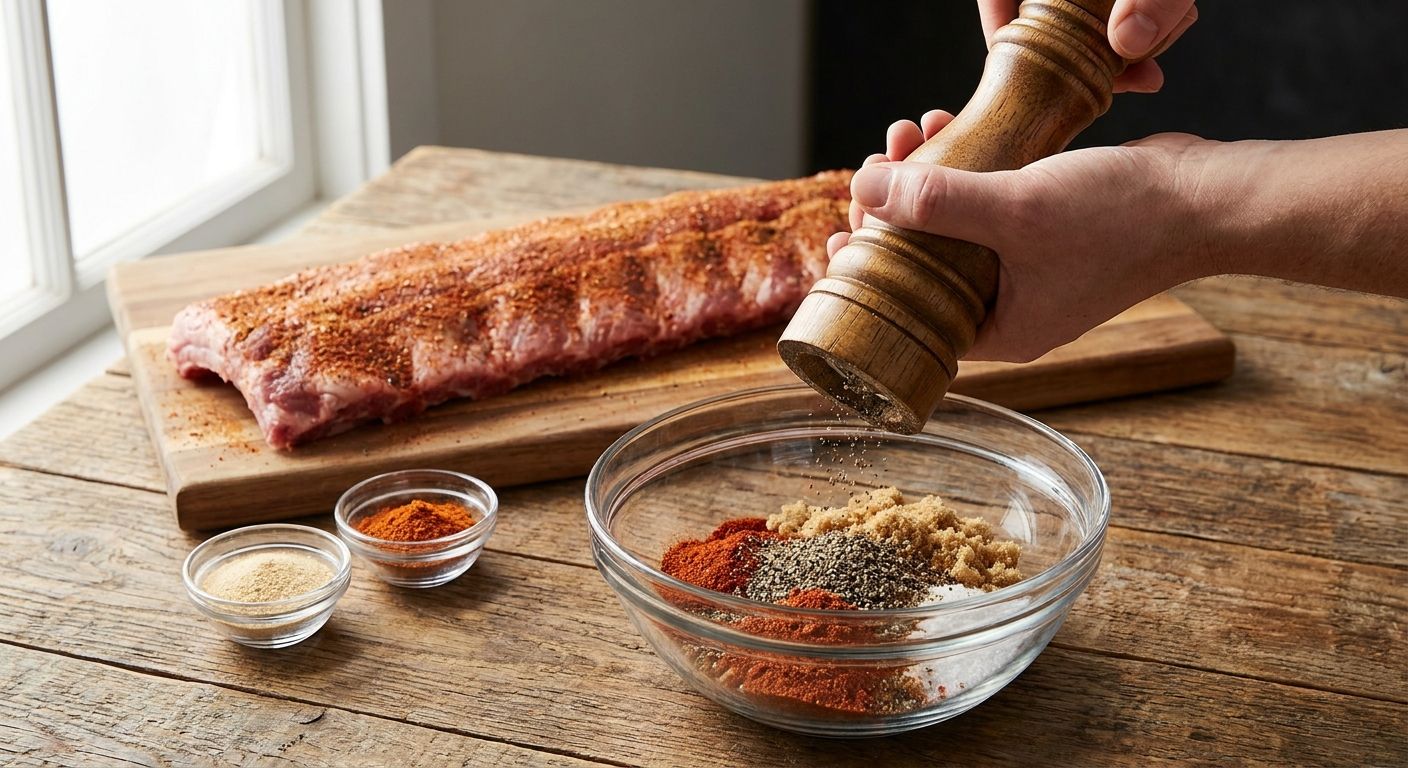
A prep table set up with the right board also holds up better when it's stocked for the rest of the meal — a pepper mill built for outdoor kitchens sitting next to the board means you're not walking back inside mid-sear to season a steak.
PepperMate's own Walnut Hardwood Cutting Board — 11x17x1 inches with a juice groove — is built at the size and material spec this guide recommends for a grill-side station, without needing to size up from a smaller kitchen board.
Comparing board types for outdoor grilling
| Board Type | Best For | Key Limitation |
|---|---|---|
| Solid hardwood (walnut/maple) | Weekly grillers who want one board to last multiple seasons | Needs oiling every few weeks in sun and heat |
| Bamboo | Cooks who want a lighter board to carry back and forth | Splits sooner under prolonged direct sun |
| Plastic/poly | Quick weeknight grilling with dishwasher cleanup | Deep knife scars trap bacteria over time |
| Rubber/composite | High-volume grillers and competition cooks | Firmer, less traditional cutting feel |
Common mistakes outdoor grillers make with cutting boards
- Using one board for both raw chicken and the burger buns because "it's just for one cookout"
- Leaving a wood board face-up in full sun between rounds, then wondering why it cupped by August
- Setting a cast-iron pan straight off the grill onto the board and scorching a permanent ring into the wood
- Skipping the oil routine all summer, then blaming the board when it splits in September
- Storing the board outdoors on the cart through the winter instead of bringing it in
FAQ
What's the best cutting board for outdoor grilling?
A solid hardwood board like walnut or maple is the best cutting board for outdoor grilling in 2026 because it resists warping across heat swings and holds up to years of knife use with regular oiling.
Is a wood cutting board better than plastic for grilling outdoors?
Wood resists deep knife scarring better than plastic, which matters outdoors because those scars trap bacteria between washes at a station without a sink nearby.
How often should you oil a cutting board used outside?
Oil a wood board every 2-4 weeks when it's used outdoors regularly, more often during peak summer heat since sun and heat pull moisture out faster than indoor use does.
Can you leave a cutting board outside on a grill cart?
No — leaving a wood or bamboo board outside full-time in direct sun and rain accelerates warping and cracking; bring it indoors between cookouts.
Do you need two cutting boards for grilling?
Yes, one dedicated to raw meat and one for produce, buns, and finished cuts cuts cross-contamination risk since outdoor stations lack a sink for quick rinses between tasks.
What size cutting board works best for a grill prep station?
An 11x17 inch board covers a whole chicken or a rack of ribs without hanging off most grill carts, while leaving room for tongs and a pepper mill nearby.
Is bamboo good for outdoor cutting boards?
Bamboo is lightweight and dries quickly, but it splits sooner than dense hardwood under prolonged direct sun exposure over a full grilling season.
How do you clean a cutting board after raw meat outdoors?
Wash immediately with hot, soapy water and a scrub brush, following USDA guidance for raw-meat surfaces, then air-dry the board standing on edge rather than flat.
One last thing
A board that's cupped even slightly no longer sits flat on a rolling cart — that wobble under the knife is usually the first real warning sign, well before the wood visibly cracks. Check for it by setting the board down and pressing each corner; if one rocks, it's due for oiling or retirement, not just a wipe-down. And once the board is set, a fresh grind from a PepperMate pepper mill right at the station beats pre-ground pepper sitting in a shaker through a whole summer of humidity.