

A dry rub for ribs built on freshly cracked pepper holds its punch through hours of smoke, while pre-ground pepper flattens out and turns bitter by hour two. The base ratio that works on baby backs or spares in 2026: 1/4 cup paprika, 3 tablespoons brown sugar, 2 tablespoons coarse black pepper, 1 tablespoon kosher salt, and 1 teaspoon each garlic and onion powder, mixed and pressed into the meat at least 30 minutes before it hits heat.
- Base dry rub for ribs pepper ratio: 1/4 cup paprika, 3 tbsp brown sugar, 2 tbsp coarse pepper, 1 tbsp salt.
- Grind pepper coarse, not fine, so it survives 4-6 hours of low, slow smoker heat without scorching.
- Sweet, spicy, and savory rib rub variants change the sugar-to-cayenne ratio, never the pepper amount.
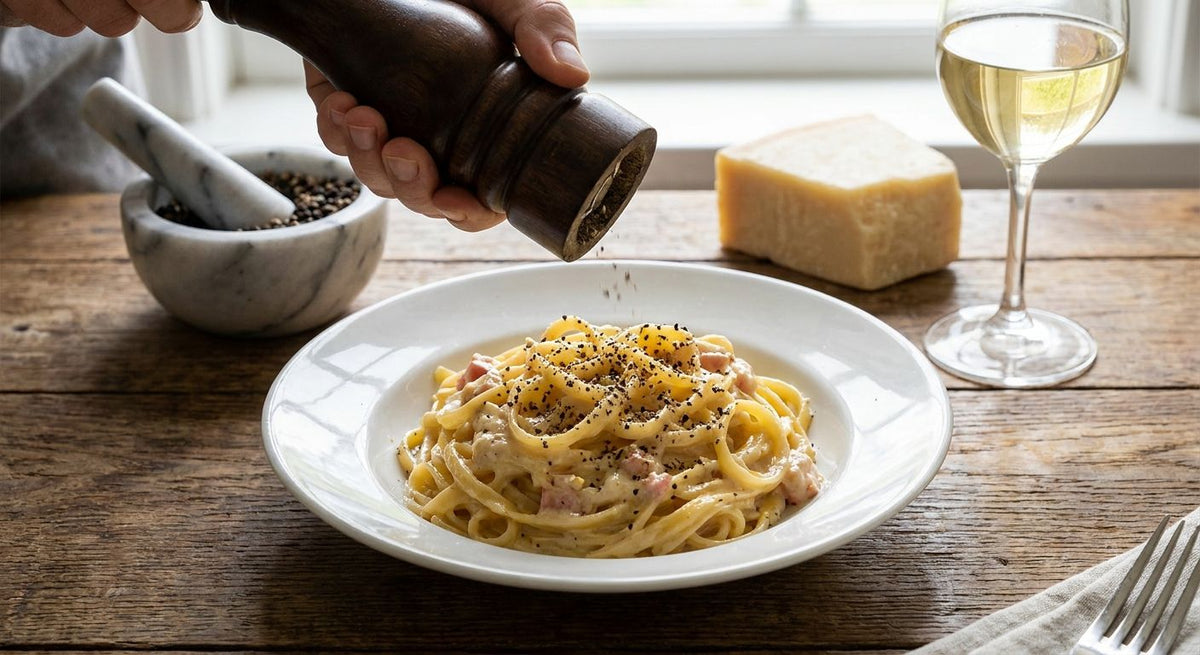
- A hand-crank mill builds a better bark than shaker pepper because the flakes stay intact through the cook.
- Rub ribs 30 minutes to overnight before smoking; longer rests push flavor past the surface into the meat.
Why this matters
Ribs cook low and slow for hours, and that heat is exactly what destroys pre-ground pepper's aroma before the meat ever sees smoke. Pepper loses its volatile oils within minutes of grinding, which is why a jar of pre-cracked pepper tastes dusty compared to pepper cracked straight onto the rack. Grinding pepper fresh, right before the rub goes on, is the single change that makes the biggest difference in a rib rub — bigger than the brand of paprika or the ratio of sugar to salt.
A traditional pepper mill set to a coarse grind produces flakes large enough to survive a 225°F smoker for five or six hours, building a gritty, dark bark instead of dissolving into the sugar. That's the difference between a rub that tastes like pepper and one that just looks like it.
How to make a dry rub for ribs with pepper
The process is five steps, and none of them require special equipment beyond a mill and a bowl.
- Grind the pepper coarse. Set the mill to its largest setting — you want visible flakes, not powder.
- Combine the dry ingredients. Paprika, brown sugar, salt, garlic powder, onion powder, and the cracked pepper go into one bowl.
- Whisk until even. Sugar clumps if it sits, so break it up before it touches the meat.
- Strip the membrane off the ribs. Rub sticks to bare meat far better than to the silverskin on the back of the rack.
- Pack the rub in with your hands. Press, don't sprinkle — you want it adhering, not sitting loose on the surface.
| Step | What it does | Time |
|---|---|---|
| Grind pepper coarse | Prevents burning and dissolving in smoke | 1 minute |
| Mix dry ingredients | Distributes sugar and salt evenly | 2 minutes |
| Strip membrane | Lets rub bond to the meat | 3-5 minutes |
| Apply and press | Builds the bark layer | 2 minutes |
| Rest before smoking | Lets salt draw moisture back into meat | 30 min-overnight |
Sweet rib rub: 4 tablespoons brown sugar per 2 tablespoons pepper
Drop the paprika slightly and push the brown sugar to 4 tablespoons against the same 2 tablespoons of coarse pepper. This is the profile most home smokers land on for baby backs — it caramelizes into a glossy bark and balances the pepper's bite instead of fighting it. Best for: cooks who want a rack that reads sweet first, peppery second. Verdict: Buy this ratio if it's your first time building a rub from scratch.
Spicy rib rub: 1 tablespoon cayenne per 2 tablespoons pepper
Keep the base ratio but add 1 tablespoon of cayenne alongside the 2 tablespoons of cracked pepper, and cut the brown sugar to 2 tablespoons so the heat isn't buried under sweetness. This variant needs the pepper coarse more than any other — a fine grind burns fast next to cayenne's own heat and turns acrid by hour three. Best for: pitmasters cooking for a crowd that wants a rack with real heat. Verdict: Buy if your last rack tasted flat instead of layered.
Savory rib rub: 1 tablespoon dried thyme per 2 tablespoons pepper
Swap most of the sugar for 1 tablespoon of dried thyme or rosemary, keep the same 2 tablespoons of coarse pepper, and add a full tablespoon of garlic powder instead of a teaspoon. This one leans closer to a steak rub than a classic sweet rib profile, and it works especially well on spares that will get a light glaze rather than a heavy sauce. Best for: cooks serving ribs alongside a vinegar-based sauce instead of a sweet one. Verdict: Hold this one for a dinner party rack, not a backyard cookout.
Why a dry rub for ribs pepper flavor varies
- Grind size — coarse survives heat, fine burns and turns bitter within the first hour of smoking.
- Sugar ratio — more sugar caramelizes into bark faster but scorches sooner over direct heat.
- Salt type — kosher salt distributes evenly; fine table salt over-salts the surface before it penetrates.
- Rest time — a 30-minute rest seasons the surface; an overnight rest pulls flavor into the meat itself.
- Smoker temperature — anything above 275°F pushes sugar toward burning before the pepper finishes doing its job.
- Pepper freshness — pepper cracked within the hour tastes sharper than pepper ground a week earlier and left in a shaker.
Regional rub traditions push these variables in different directions, and that's worth remembering before assuming there's one correct rib rub. Spice-heavy traditions outside American barbecue build entire dishes around freshly cracked pepper and layered heat rather than sugar-forward bark — spice-forward Ethiopian dishes lean on that same principle of grinding whole spices close to cook time instead of relying on pre-mixed jars. The lesson carries over to ribs: freshness of the grind matters more than the exact list of ingredients.
How much dry rub do I need for a rack of ribs?
A full rack of ribs needs roughly 1/2 cup of dry rub, split evenly between both sides and pressed in rather than shaken on. Baby backs, being smaller, can get by on slightly less; a full spare rib rack sometimes takes closer to 3/4 cup if it's a heavy cook.
Should I let the rub sit before smoking?
Yes — at least 30 minutes, and up to overnight in the refrigerator, uncovered so the surface dries slightly before it hits the smoker. The salt in the rub draws moisture out first, then reabsorbs it along with the seasoning, which is why an overnight rest reads deeper in flavor than a rack seasoned five minutes before cooking.
Can I use pre-ground pepper instead of a mill?
Pre-ground pepper works, but it loses aroma within days of grinding, so a rack rubbed with a shaker jar tastes noticeably flatter than one rubbed with pepper cracked to order. A mill costs a few extra minutes of prep and changes the bark texture enough that most backyard pitmasters who switch don't go back.
Swapping in whole black peppercorns instead of a pre-ground container is the one ingredient change that upgrades every variant above without touching the rest of the recipe. If bark texture and pepper punch keep coming up short on your racks, that's usually the fix, not the sugar ratio.


Pitmasters chasing competition-level bark often go further with pepper mill techniques built for grilling competitions, where grind consistency across dozens of racks matters as much as the recipe itself. The same coarse-grind logic that works for a Saturday cookout scales up once volume and consistency become the goal.
FAQ
What is the best dry rub for ribs pepper ratio?
The base ratio is 1/4 cup paprika, 3 tablespoons brown sugar, 2 tablespoons coarse black pepper, 1 tablespoon salt, and 1 teaspoon each garlic and onion powder. Adjust sugar or cayenne from there depending on whether you want a sweet, spicy, or savory profile.
Is fresh cracked pepper better than pre-ground for ribs?
Fresh cracked pepper holds its aroma and bite through a 4-6 hour smoke, while pre-ground pepper loses its oils within days and turns bitter under sustained heat. The difference shows up most in the bark, which is the part of the rack people taste first.
How much dry rub do I need for a rack of ribs?
A full rack needs roughly 1/2 cup of dry rub split between both sides, with spare ribs sometimes needing closer to 3/4 cup. Press the rub in rather than shaking it loose on the surface.
Should I rub ribs the night before smoking?
Yes, an overnight rest in the refrigerator lets the salt draw moisture out and reabsorb it along with the seasoning, producing deeper flavor than a same-day rub. A minimum of 30 minutes works if you're short on time.
What grind size of pepper works best for a rib rub?
A coarse grind survives smoker heat without burning, while a fine grind scorches and turns acrid well before the ribs finish cooking. Set the mill to its largest setting for anything going into a rub.
Can I use the same dry rub for ribs and steak?
The savory version of a rib rub, heavier on garlic and thyme with less sugar, works on steak with almost no changes. Sweet rib rub variants are too sugar-forward for a quick sear and will burn on high heat.
One last thing
The part most home cooks skip is stripping the membrane off the back of the rack before the rub goes on — rub sticks to bare meat and slides right off silverskin, no matter how well it's pressed in. Do that one step in 2026 before touching the ratio, and the rub problem usually solves itself.