

A peppercorn marinade for grilled vegetables mixes coarse cracked black pepper with olive oil, an acid like red wine vinegar or lemon juice, and salt in roughly a 3-to-1-to-1 ratio, then coats the vegetables for 20 to 30 minutes before they hit the grill. The part most recipes skip: freshly cracked pepper releases its oils fast, so a marinade made more than an hour ahead loses its bite before the vegetables ever touch heat.
- A peppercorn marinade for vegetables works at a 3:1:1 ratio of olive oil, acid, and cracked pepper.
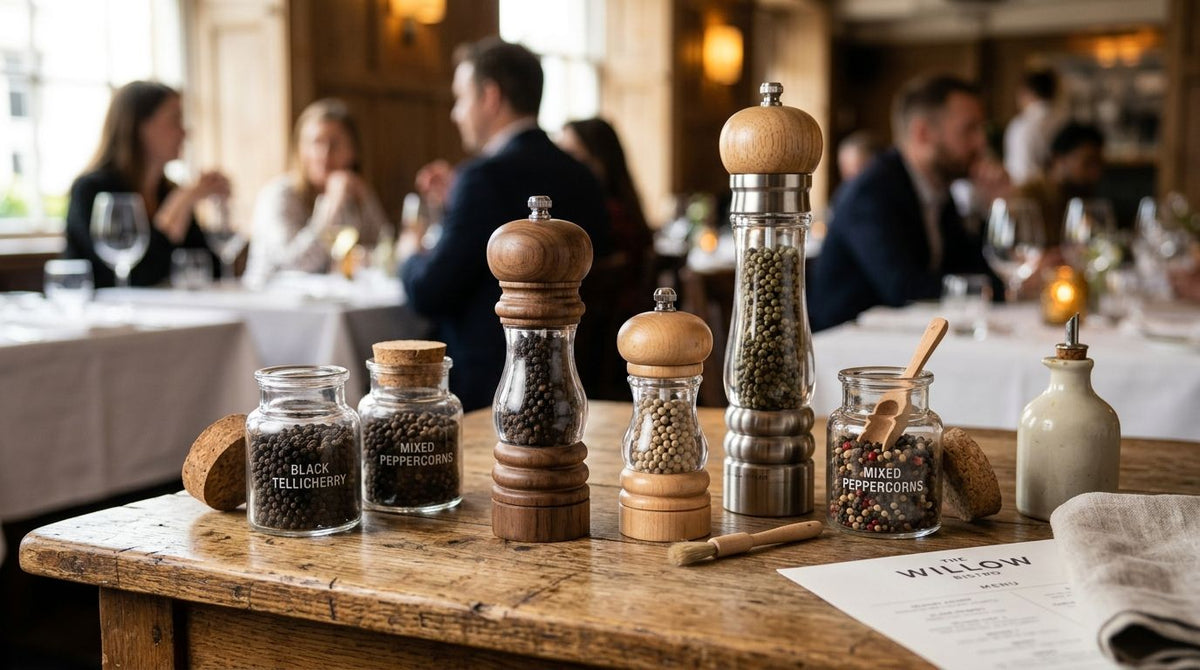
- Fresh-cracked pepper from a mill like Peppermate's Traditional Pepper Mill beats pre-ground pepper for marinade punch in 2026.
- Marinate dense vegetables like zucchini and peppers 20-30 minutes; leafy or delicate ones need only 10.
- Coarse-crack, not fine-grind, pepper is the setting that actually clings to grilled vegetables.
Why this matters
Most bottled vegetable marinades lean on garlic powder and vinegar and treat pepper as an afterthought, a pinch from a shaker that's already gone stale. Cracked black pepper carries volatile oils that fade within minutes of grinding, which is the whole reason a peppercorn marinade tastes sharper than anything made with pre-ground pepper sitting in a jar since last grilling season. Get the ratio and the grind size right and the vegetables come off the grill with a peppery crust instead of a dusty coating.
How to make a peppercorn marinade for grilled vegetables
The base ratio holds for almost any vegetable you're grilling in 2026: 3 parts oil, 1 part acid, 1 part freshly cracked pepper, plus salt to taste.
- Crack the pepper coarse. Set a pepper mill to its coarsest setting — fine grind disappears into the oil instead of clinging to the vegetable surface.
- Whisk the base. Combine 3 tablespoons olive oil, 1 tablespoon red wine vinegar or lemon juice, and 1 tablespoon freshly cracked pepper in a bowl.
- Add salt and one aromatic. A minced garlic clove or a teaspoon of Dijon mustard rounds out the marinade without covering the pepper.
- Coat the vegetables. Toss cut vegetables in the marinade so every surface is covered, then let them sit at room temperature.
- Marinate 20-30 minutes. Dense vegetables (zucchini, bell peppers, eggplant, mushrooms) hold up to the full window; leafy or thin-cut vegetables (asparagus, thin-sliced onion) only need 10 minutes before the acid starts breaking down texture.
- Grill over medium-high heat. Direct heat for 4-6 minutes per side chars the pepper into a visible crust instead of letting it fall to the coals.
| Ratio component | Amount | Why it's there |
|---|---|---|
| Olive oil | 3 tbsp | Carries pepper oils, prevents sticking |
| Acid (vinegar/citrus) | 1 tbsp | Tenderizes surface, balances fat |
| Cracked black pepper | 1 tbsp | Flavor and crust when grilled |
| Salt | to taste | Draws moisture, seasons through |
Balsamic peppercorn marinade
Swap red wine vinegar for balsamic and add a half teaspoon of honey — the sugar caramelizes on the grill and pairs well with peppercorn crust on mushrooms and onions. Best for root vegetables and mushrooms that benefit from a sweeter char.
Citrus peppercorn marinade
Use fresh lemon or orange juice as the acid instead of vinegar, keep the pepper coarse, and skip the mustard. Best for lighter vegetables like zucchini, squash, and asparagus where you don't want a heavy vinegar note.
Herb peppercorn marinade
Add a tablespoon of chopped rosemary or thyme to the base ratio; the herb oils bind with the pepper and hold up better through 20-30 minutes of marinating than dried herbs do. Best for eggplant and bell peppers grilled whole or in large planks.
Why peppercorn marinade ratios vary
- Vegetable density — a bell pepper takes the full 20-30 minutes; sliced tomato or delicate greens turn mushy past 10.
- Grind size — coarse-cracked pepper clings and chars; fine-ground pepper burns faster and turns bitter on high heat.
- Acid strength — citrus is milder than vinegar, so citrus-based marinades tolerate a longer soak without breaking down vegetable fiber.
- Grill heat — direct high heat needs a shorter marinate time since the crust forms fast; indirect or lower heat can handle a longer soak.
- Oil-to-pepper ratio — too little oil and the pepper burns before the vegetable cooks through; too much and the pepper slides off instead of forming a crust.
Related questions
How long should you marinate vegetables in peppercorn marinade?
20 to 30 minutes covers most dense vegetables like zucchini, peppers, and mushrooms, while thinner cuts need only about 10 minutes to avoid turning mushy from the acid. Marinating vegetables overnight isn't necessary the way it is for meat — vegetables absorb flavor at the surface, not through the fiber.
Can you use whole peppercorns in a marinade?
Whole peppercorns don't release flavor into a marinade the way cracked pepper does, so they sit inert in the oil instead of infusing it. Grind or crack whole black peppercorns coarse right before mixing the marinade for the sharpest flavor.
What vegetables work best with peppercorn marinade?
Zucchini, bell peppers, eggplant, mushrooms, and red onion hold a peppercorn marinade well because their dense flesh grills long enough for the pepper to char into a crust. Thin or watery vegetables like tomato slices or cucumber lose texture fast and are better finished with a light dressing after grilling instead.
A pre-ground jar of pepper won't get you the crust these marinades depend on — the oils that make a peppercorn marinade sharp fade within minutes of grinding, which is why cooks who grill vegetables often keep whole black peppercorns on hand and grind fresh right before mixing the bowl.
“A peppercorn marinade is only as sharp as the last time the pepper was ground.”
FAQ
What's the best peppercorn marinade for grilled vegetables?
The best base is a 3:1:1 ratio of olive oil, vinegar or citrus, and coarsely cracked black pepper, marinated 20-30 minutes before grilling. Balsamic works best on mushrooms and root vegetables, citrus works best on zucchini and squash.
How much cracked pepper goes in a vegetable marinade?
One tablespoon of coarsely cracked pepper per 3 tablespoons of oil is the standard ratio for a batch that coats about 4 cups of cut vegetables. Adjust up if you want a visible pepper crust after grilling.
Is fresh cracked pepper better than pre-ground pepper for marinades?
Yes — fresh cracked pepper still holds its volatile oils, which is what gives a marinade its bite, while pre-ground pepper loses most of that flavor within minutes of grinding. This is the single biggest difference between a flat marinade and a sharp one.
How long can you store peppercorn marinade before using it?
Mix a peppercorn marinade no more than an hour before using it, since the cracked pepper's oils fade fast once exposed to air. Grind the pepper and whisk the marinade right before coating the vegetables for the strongest flavor.
Can you use a peppercorn marinade on grilled corn or potatoes?
Corn and potatoes can take the same 3:1:1 marinade base, but both need a longer cook time on the grill, so brush extra marinade on halfway through instead of relying on a single pre-grill soak. The starch in both vegetables absorbs less surface flavor than zucchini or peppers.
Does a peppercorn marinade work for vegan or plant-based grilling?
Yes, a peppercorn marinade of oil, acid, and cracked pepper has no animal ingredients by default, making it one of the simpler plant-based grilling marinades. Swap honey for maple syrup in the balsamic variation if you're keeping the whole recipe vegan.
One last thing
The grind setting matters more than the recipe: a mill set too fine turns cracked pepper into dust that burns black on the grill grates before the vegetables finish cooking. A traditional pepper mill with an adjustable coarse setting solves this in one turn — no separate pepper cracker or mortar and pestle needed for a 2026 grilling season marinade.