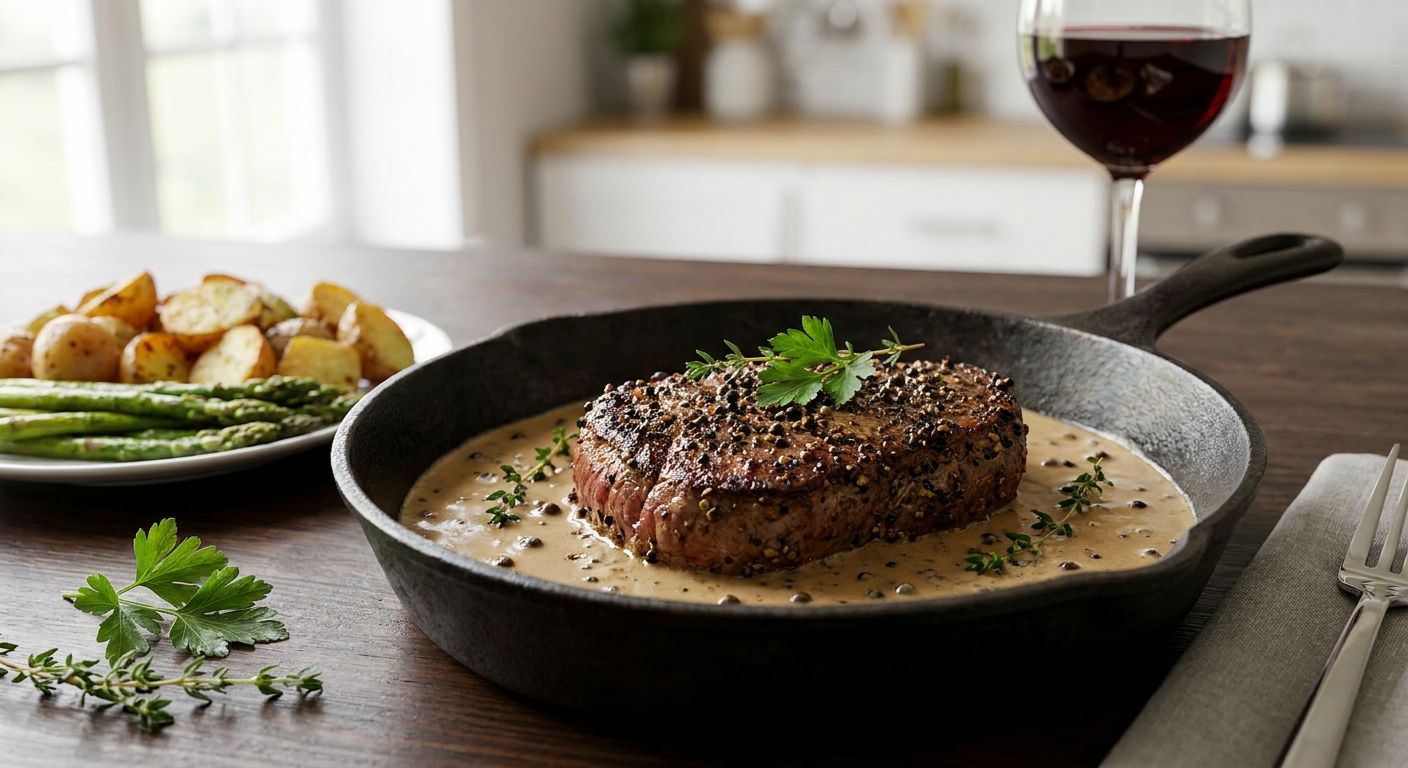


A pepper crusted tuna recipe comes down to three things: peppercorns cracked coarse (not fine), a pan hot enough to smoke, and a sear under 90 seconds per side so the center stays rare. Salmon uses the same crust but needs a longer sear because the fish is thicker and less forgiving raw in the middle. Skip either step and you get a crust that either burns before the fish cooks or slides off in the pan.
- A pepper crusted tuna recipe needs coarsely cracked peppercorns, a smoking-hot pan, and a sear under 90 seconds per side.
- Ahi tuna stays rare in the center; salmon needs a longer sear, closer to medium, for food safety.
- Pre-ground pepper burns before a crust forms — a mill set to its coarsest grind is what actually works.
- Pat the fish bone-dry first or the crust won't stick to either tuna or salmon.
- PepperMate's Traditional Pepper Mill cranks to a coarse enough grind for an even crust in one pass.
“If the pan isn't smoking, the crust won't sear — it'll steam.”
Why this matters
Most pepper-crusted tuna recipes fail for one reason: the pepper is ground too fine. Fine pepper burns in the first 20 seconds of a hot sear and turns bitter before the fish is even warm. Coarse pepper toasts instead of burning, which is the whole point of the dish in 2026 as much as it was a decade ago — the crust is supposed to add texture and heat, not char.
Salmon and tuna behave differently under a crust because of fat content and thickness. Tuna is lean and usually cut into a thick loin that sears fast on the outside while staying cold in the middle. Salmon carries more fat, cooks less evenly, and needs a slightly longer stay in the pan to hit a safe internal temperature without drying out.
How to make pepper-crusted ahi tuna or salmon
The method is nearly identical for both fish — only the sear time changes.
- Pat the fillet completely dry. Any surface moisture stops the crust from sticking and causes the pepper to slide off in the pan.
- Crack peppercorns coarse. Set your mill to its widest grind — you want visible cracked pieces, not powder. The PepperMate Traditional Pepper Mill has a top-mounted adjustment that goes coarse enough for this in one turn.
- Press the pepper on, don't sprinkle it. Pour cracked pepper onto a plate and press each side of the fillet into it firmly so it adheres.
- Heat the pan until it's lightly smoking. Cast iron or heavy stainless steel holds heat best. Add a high-smoke-point oil like avocado or grapeseed right before the fish goes in.
- Sear tuna 45-60 seconds per side; sear salmon 3-4 minutes per side. Don't move the fish while it sears — that's what builds the crust.
- Rest 2 minutes before slicing. Slicing immediately lets the juices run out and softens the crust.
Pepper-crusted ahi tuna: the fast sear
Ahi tuna is built for a short, hot sear because it's meant to be eaten rare to medium-rare in the center. A loin cut 1.5 to 2 inches thick sears in under 2 minutes total and stays cool and red inside — that's the entire appeal of the dish. Buy sushi-grade or previously frozen tuna for raw-center searing; it's the safest way to eat the middle rare.
Oversear ahi tuna and you lose the contrast that makes the dish work: crisp, peppery crust against a cool, silky center. If you're unsure the center is rare enough, cut the loin in half before serving rather than slicing thin — thin slices overcook from residual heat before they hit the plate.
Pepper-crusted salmon: the longer sear
Salmon needs more time in the pan because it's typically served cooked through or close to it, not rare. A 6-ounce fillet at room temperature takes 3-4 minutes per side over medium-high heat to reach a safe internal temperature while keeping the inside moist.
Salmon's higher fat content means the crust has more surface to grip, but it also means more splatter and a pan that stays hot longer between batches. Disposable BBQ gloves with heat-protection liners make it easier to handle a hot cast-iron pan or flip a fillet without a spatula fumble — heat-protection BBQ gloves are worth keeping by the stove for this exact job, not just for outdoor grilling.
Why the pepper crust varies
A few variables decide whether the crust holds and tastes right, or falls apart and turns bitter:
- Grind size — coarse cracked pepper toasts; fine ground pepper burns.
- Moisture on the fillet — any surface water stops the pepper from bonding to the fish.
- Pan preheat time — a pan that isn't fully hot steams the crust instead of searing it.
- Oil smoke point — butter and olive oil burn before the pan gets hot enough; avocado or grapeseed oil holds up.
- Peppercorn freshness — pepper that's been ground and sitting for weeks loses the oils that give the crust its bite.
- Fillet thickness — thicker cuts of both tuna and salmon need more time before the center catches up to the crust.
Pepper crust and gluten-free cooking
A pepper-crusted tuna recipe is naturally gluten-free by design — the crust is pepper pressed straight onto the fish, no flour or breadcrumb binder involved. That's a useful trait if you're cooking for a mixed table in 2026, when more home cooks are building menus around naturally gluten-free proteins rather than substitute flours. The same principle shows up across other cuisines that lean on whole spices instead of starch for texture — the approach behind naturally gluten-free Ethiopian dishes works the same way, building flavor and crust from spice blends rather than a coating that needs wheat.
If you're building a spice-forward crust beyond black pepper, a coarse blend adds depth without introducing gluten. The coarse salt, pepper and garlic blend works the same way as straight cracked pepper — press it on, sear it fast, and it stays gluten-free the whole way through.


What's the best pepper for a pepper-crusted tuna recipe?
Coarsely cracked whole black peppercorns work best for a pepper-crusted tuna recipe — they toast under high heat instead of burning like fine ground pepper does. A mill set to its coarsest setting gets you there without buying a separate cracked-pepper product.
Should I use whole peppercorns or pre-ground pepper for a crust?
Whole peppercorns, cracked fresh, beat any pre-ground pepper for crusting. Pre-ground pepper is milled fine for everyday seasoning and loses its aromatic oils fast once opened, so it burns quicker and tastes flatter under a hot sear.
Can pepper-crusted salmon be baked instead of seared?
Searing gives you the crust; baking alone won't. A 400°F oven finish after a quick stovetop sear on both sides is the closest you'll get to an oven method that still holds the pepper crust.
FAQ
What's the best pepper crusted tuna recipe for beginners?
Pat a sushi-grade ahi loin dry, press it into coarsely cracked black pepper, and sear it 45-60 seconds per side in a smoking-hot pan. That's the entire recipe — the fish stays rare in the center while the crust toasts on the outside.
Should ahi tuna be cooked rare or well done for a pepper crust?
Ahi tuna is traditionally seared rare to medium-rare, with the center staying cool and red. A 45-60 second sear per side on a thick loin keeps the crust crisp without cooking the middle.
Can I use the pepper crust method on salmon too?
Yes, the same pressed pepper-crust method works on salmon, but salmon needs 3-4 minutes per side instead of under a minute because it's usually served closer to medium doneness.
What's the best pepper for crusting tuna or salmon?
Coarsely cracked whole black peppercorns are the standard choice because they toast instead of burning under a hot sear. A mill set to its coarsest grind produces the same result as a pre-cracked pepper blend.
Do I need whole peppercorns or can I use pre-ground pepper?
Whole peppercorns cracked fresh work far better than pre-ground pepper, which burns faster and tastes flatter once it's been sitting ground for weeks.
How long should I sear pepper-crusted tuna?
Sear pepper-crusted tuna 45 to 60 seconds per side in a smoking-hot pan for a rare center. Thicker loins closer to 2 inches can go slightly past a minute per side.
Is pepper-crusted tuna gluten-free?
Yes, pepper-crusted tuna is naturally gluten-free since the crust is only cracked pepper pressed onto the fish, with no flour or breadcrumb coating involved.
Can pepper-crusted salmon be made in the oven instead of a pan?
A stovetop sear builds the crust; a 400°F oven can finish thicker salmon fillets after searing both sides, but the crust forms from the pan contact, not the oven heat alone.
One last thing
The part most home cooks skip is resting the fish before slicing. Two minutes off the heat lets the crust set and the juices redistribute — slice a hot fillet straight out of the pan and the crust slides right off with the first cut. It's a small step, but in 2026 it's still the difference between a crust that survives the plate and one that doesn't.