


Pepper-crusted pork tenderloin needs a coarse cracked-pepper coat, a hard sear, and a short oven finish to hit 145°F internal without burning the crust. The number that trips people up isn't the temperature — it's the grind: pre-ground pepper from a shaker turns to bitter dust in the pan, while coarsely cracked peppercorns from a mill toast into a crust that stays crunchy.
- Pepper-crusted pork tenderloin: sear 2-3 minutes per side, then oven-finish at 400°F for 15-18 minutes to 145°F internal.
- Coarse-cracked peppercorns from a PepperMate Traditional Pepper Mill hold the crust; pre-ground pepper burns and falls off.
- A 1 to 1.5 lb tenderloin, patted fully dry, is the size that sears evenly without overcooking.
- Resting 5-10 minutes after the oven keeps the crust intact when you slice.
Why this matters
Pork tenderloin is lean and cooks fast, which means the margin between a juicy crust-covered roast and a dry, blown-out one is a matter of minutes, not hours. Get the sear wrong and the pepper coat slides off in the pan. Get the oven time wrong and you're eating shoe leather in 2026 instead of dinner.
The crust itself does double duty: it seasons the meat and it seals in juice during the sear, the same principle behind a classic steak au poivre. Fresh-cracked pepper matters here more than in almost any other pepper application, because the crust is the whole point of the dish, not a background note.
How to make pepper-crusted pork tenderloin
This method works for a standard 1 to 1.5 lb pork tenderloin and takes about 25 minutes start to finish.
- Pat the tenderloin bone-dry with paper towels. Any surface moisture steams instead of sears, and a wet crust never bonds to the meat.
- Crack whole peppercorns coarse — a full pass through a PepperMate Traditional Pepper Mill on the coarsest setting gives you rough, uneven flecks that grip the surface instead of a fine powder that scorches.
- Press the cracked pepper into the meat on all sides, using your palm to work it in rather than just sprinkling it on top.
- Sear in a hot, oiled skillet for 2-3 minutes per side until every surface has color and the crust looks set.
- Transfer to a 400°F oven and roast 15-18 minutes, until an instant-read thermometer hits 145°F at the thickest point.
- Rest 5-10 minutes before slicing. Cutting into it early lets the juice run out and takes the crust with it.
| Step | Time | Target |
|---|---|---|
| Sear (stovetop) | 2-3 min per side | Even browning, crust set |
| Roast (oven, 400°F) | 15-18 min | 145°F internal |
| Rest | 5-10 min | Juices redistribute |
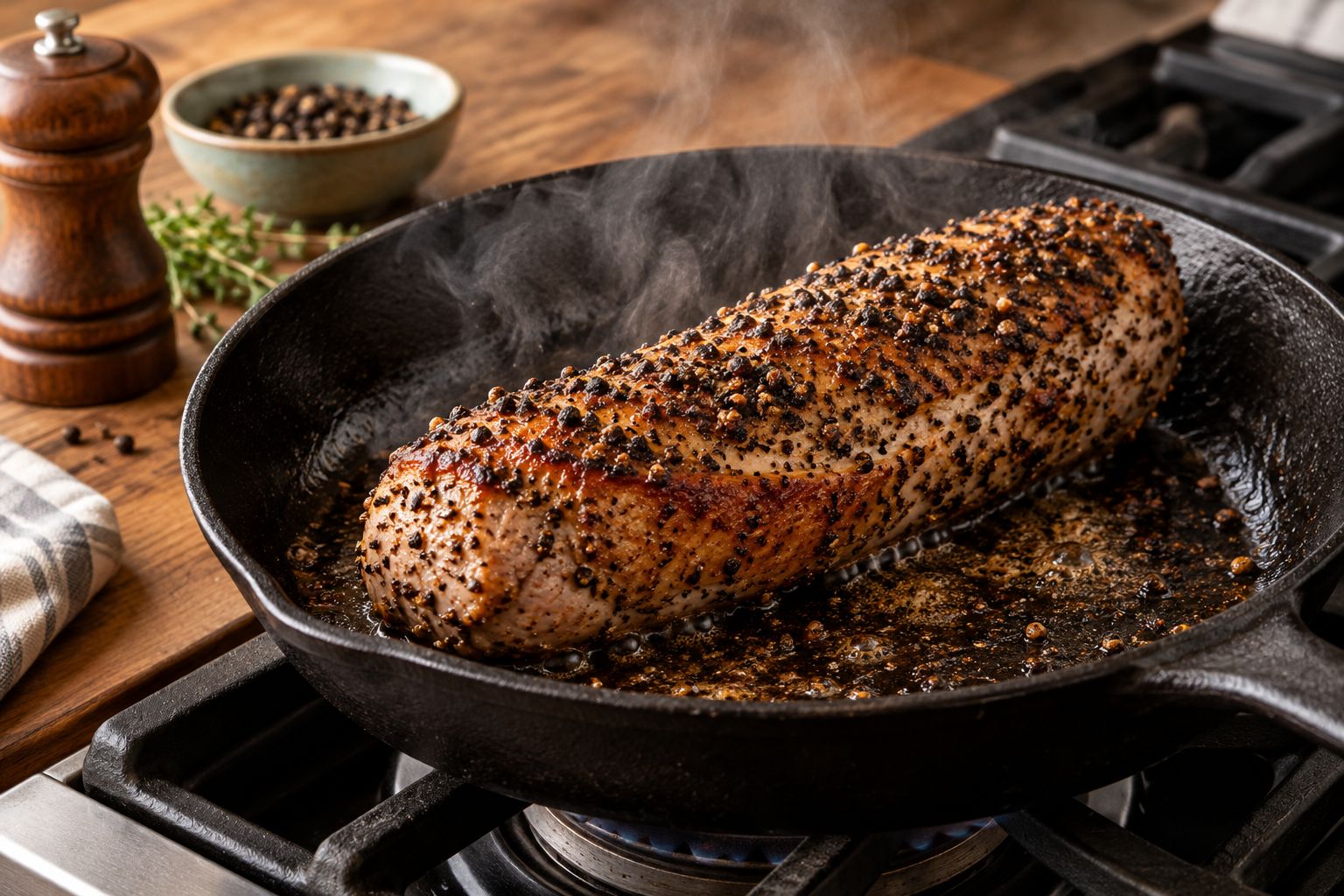
Oven-finished crust: 400°F for 15-18 minutes
This is the method above and it's the one that gives the most even crust-to-doneness ratio, because the skillet only builds color while the oven carries the tenderloin the rest of the way without babysitting a burner. It's the better choice for a 1 to 1.5 lb tenderloin cooking for a dinner where you want to plate everything at once. Best for: weeknight dinners and small dinner parties where hands-off oven time matters more than stovetop control.
Skillet-only crust: stovetop finish
Skip the oven entirely and finish the tenderloin in the same skillet over lower heat, turning every couple of minutes until it hits 145°F, checked with a thermometer since there's no set oven timer to rely on. This method demands more attention because a lean tenderloin overcooks fast once the pan stays hot. Best for: cooks without oven access, like a stovetop-only kitchen or a camp setup, willing to trade convenience for constant monitoring.
Why the pepper crust falls off (or burns)
- Wet meat surface — moisture steams the pepper instead of letting it toast, so it slides off in the pan.
- Pre-ground pepper — fine store-bought grind burns bitter at searing temperatures far faster than coarse-cracked pepper.
- Pan not hot enough — a lukewarm skillet lets the pepper sit and smolder instead of setting into a crust in the first 30 seconds.
- Skipping the press-in step — pepper sprinkled on top instead of pressed in doesn't bond to the meat's surface.
- Cutting too soon — slicing before the rest is up lets juice (and loose pepper) run onto the cutting board.
- Stale peppercorns — pepper that's been sitting ground or cracked for weeks loses the oils that make the crust aromatic instead of just spicy.


What temperature should pepper-crusted pork tenderloin reach?
Pepper-crusted pork tenderloin should reach 145°F internal at the thickest point, per USDA guidance for whole cuts of pork. Pull it a few degrees early and let it rest 5-10 minutes, since the temperature climbs slightly as it sits.
Can I use pre-ground pepper for the crust?
Pre-ground pepper works in a pinch, but it burns faster and produces a dustier, less crunchy crust than coarsely cracked peppercorns. A pepper mill set to its coarsest grind, using whole black peppercorns, gets closer to the texture a good crust needs.
How long should pork tenderloin rest after cooking?
Pork tenderloin should rest 5 to 10 minutes after coming out of the oven or skillet, tented loosely to hold heat. Skipping the rest is the fastest way to lose both juice and crust the moment the knife goes in.
One last thing
The crust technique here is close cousin to cracked black pepper for the perfect steak crust — same coarse grind, same hard sear, just a leaner cut and a lower finishing temperature. If pepper-crusted tenderloin becomes a regular Sunday dish in 2026, the grind consistency of your mill will matter more than any recipe tweak, since inconsistent cracks are what cause spotty crusts pan after pan.
FAQ
What's the best pepper for a pork tenderloin crust?
Whole black peppercorns cracked coarse in a mill make the best crust, since they toast evenly and hold to the meat's surface better than pre-ground pepper.
Is pepper-crusted pork tenderloin better seared or oven-finished?
A sear-then-oven method wins for even doneness: 2-3 minutes per side in a hot skillet, then 15-18 minutes at 400°F to 145°F internal.
How much pepper do I need for one tenderloin?
About 2 tablespoons of coarsely cracked peppercorns covers a standard 1 to 1.5 lb tenderloin with a full, even crust on all sides.
Can I make pepper-crusted pork tenderloin ahead of time?
The pepper crust holds best applied right before searing; pressing it on more than an hour ahead lets moisture soften the crust before it hits the pan.
What sides go with pepper-crusted pork tenderloin?
Roasted vegetables, mashed potatoes, or a simple pan sauce made from the skillet drippings all complement the pepper crust without competing with it.
Why did my pepper crust turn bitter?
A bitter crust usually means the pepper burned, either from a pan that was too hot too fast or from using fine pre-ground pepper instead of coarse-cracked peppercorns.
Do I need a meat thermometer for pork tenderloin?
Yes — pork tenderloin is thin enough to overshoot 145°F within a minute or two, so an instant-read thermometer is the only reliable way to hit the target without guessing.

