


Peppercorn-crusted duck breast means scoring the fat, pressing a coarse layer of cracked black pepper into one side, and rendering the skin slowly over medium heat before a short oven finish. Get the crust and the fat render right and you have a restaurant-style dish on the table in under 30 minutes.
- Peppercorn-crusted duck breast is made by scoring the fat, pressing cracked pepper into the flesh side, and searing skin-down for 6 to 8 minutes before flipping.
- Medium heat, not high heat, keeps the crust from scorching bitter within the first minute or two.
- A 5 to 10 minute rest off the heat matters as much as the sear for juice retention.
- Coarse-ground pepper from a Peppermate Traditional Pepper Mill holds the crust better than pre-ground pepper.
Why this matters
Duck breast has a thick fat cap that chicken and beef don't, and that fat is both the problem and the payoff. Render it too fast on high heat and the pepper crust burns before the fat even melts. Render it too slow and you get a soggy, unrendered layer under a nice crust. The pepper crust itself is unforgiving too — cracked pepper turns acrid fast, so timing the sear matters more here than in most seared-protein recipes.
A Traditional Pepper Mill that cracks pepper coarse rather than powder-fine is the difference between a crust that holds through the sear and one that dusts off the pan. Fine-ground pepper from a pre-ground jar toasts and burns almost immediately at searing temperatures.
How do you make peppercorn-crusted duck breast?
Here's the full sequence, start to plate, in six steps:
- Pat the duck breast dry and score the skin in a crosshatch pattern, cutting through the fat but not into the meat. This lets fat render out and lets the crust grip.
- Crack whole peppercorns coarse — a full tablespoon per breast is typical for a visible, crunchy crust. Whole black peppercorns crack more evenly than pre-cracked pepper that's already lost some oil.
- Salt the skin, press pepper into the flesh side only, leaving the skin bare so it can crisp without the crust burning against hot metal.
- Sear skin-side down in a cold, dry skillet and bring it up to medium heat gradually — 6 to 8 minutes, pouring off excess fat once or twice as it renders.
- Flip and sear the peppercorn side for 2 to 3 minutes, just enough to set the crust without scorching it black.
- Rest 5 to 10 minutes before slicing against the grain. Duck breast carries over several degrees after it leaves the heat, same as steak.
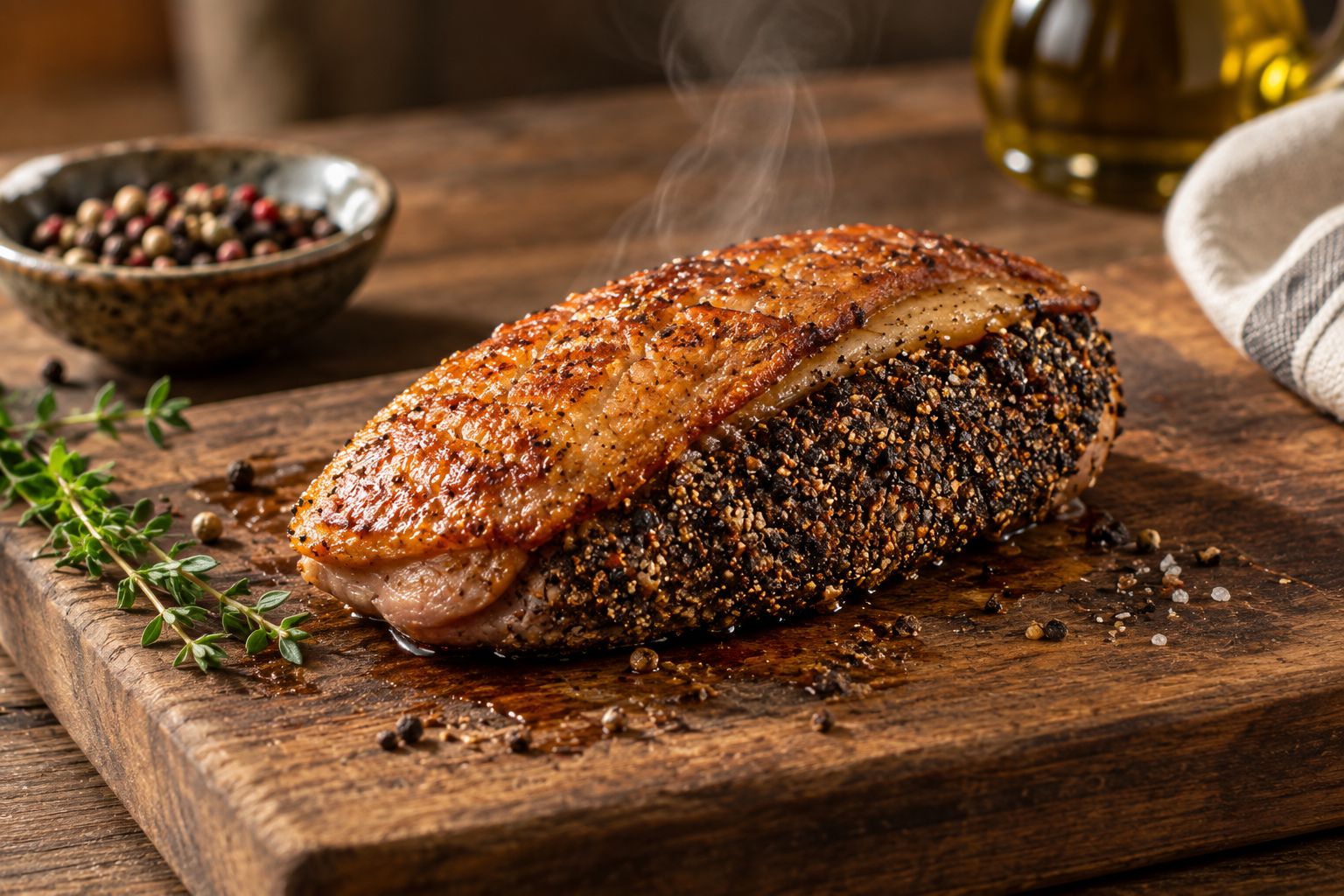
Pan-seared only vs. pan-seared then oven-finished
Thin duck breasts (under 3/4 inch after trimming) cook through on the stovetop alone. Thicker breasts, or two breasts crowding one pan, usually need a short oven finish to get the center past rare without torching the crust.
| Method | Best for | Verdict |
|---|---|---|
| Pan-seared only, stovetop | Thinner breasts, single servings, weeknight cooking | Buy — simplest method, fewest dishes |
| Pan-sear then 400°F oven finish, 4-6 minutes | Thicker breasts, dinner parties, multiple portions | Buy — more even doneness, frees up stovetop time |
Both methods use the same crust technique. The oven finish just moves the last few minutes of cooking off direct heat, which protects the pepper crust from the hottest part of the pan.
For a similar crust-and-render approach on a different cut, the same coarse-crack, medium-heat logic carries over to a peppercorn crust for rack of lamb — the fat cap and crust timing behave almost the same way.
Why the crust turns out different every time
A handful of variables decide whether the crust is crunchy and fragrant or bitter and blackened:
- Grind size — coarse-cracked pepper holds structure under heat; fine-ground pepper toasts and burns in under a minute.
- Pan temperature at contact — starting the duck breast in a cold pan and building heat slowly renders fat without torching the crust.
- Fat cap thickness — thicker fat needs the longer skin-side sear; a thin fat cap flips sooner.
- Pepper freshness — pepper that's been ground and sitting loses the volatile oils that make the crust taste sharp instead of just hot.
- Rest time — skipping the rest pushes juice out onto the cutting board instead of back into the meat.
Cracked pepper that's freshly milled right before the sear behaves differently from pepper that's been sitting ground in a shaker for weeks — the same principle that shows up in cracked black pepper crust work for steak.
“Cracked pepper turns bitter fast on high heat, so the crust step happens at medium, never at a screaming sear.”
How long should you sear duck breast skin-side down?
Skin-side sear runs 6 to 8 minutes over medium heat, long enough to render most of the fat and crisp the skin without overcooking the meat underneath. Pull the fat off with a spoon once or twice during the sear so the breast isn't sitting in a pool of hot grease.
Does peppercorn-crusted duck breast need to rest before slicing?
Yes — rest it 5 to 10 minutes off the heat before slicing. Cutting immediately releases the juice onto the board instead of back through the meat, and duck breast keeps cooking a few degrees during that rest just like a seared steak does.
Can you make the pepper crust without fresh-cracked pepper?
Pre-ground pepper works in a pinch but burns faster and tastes flatter than pepper cracked right before cooking. If the crust matters more than convenience, crack it fresh — a mill built for coarse grinding, not fine dust, holds up better against direct pan heat in 2026 kitchens same as it did a decade ago.
FAQ
What temperature should duck breast be when peppercorn-crusted duck breast is done?
Most home cooks pull duck breast around medium-rare to medium doneness, checking with a thermometer near the thickest part rather than relying on time alone. Duck breast carries over a few more degrees during the 5 to 10 minute rest, so pull it slightly before the target.
Can you make peppercorn-crusted duck breast without a pepper mill?
You can crack peppercorns under a heavy pan or with a mortar and pestle, but a mill gives a more even, consistent crack. Pre-ground pepper from a jar burns faster on the pan and produces a flatter-tasting crust.
Do you need to score the duck fat before crusting?
Yes — scoring the fat in a crosshatch lets it render out during the sear instead of staying trapped under the skin. Skip this step and the skin stays chewy instead of crisp.
How much pepper goes into the crust for one duck breast?
About one tablespoon of coarsely cracked pepper per breast gives a visible, crunchy crust without overwhelming the meat. Adjust up slightly for a heavier crust or down for a milder one.
Can peppercorn-crusted duck breast be made ahead?
Score and crust the raw breast up to a few hours ahead and refrigerate it uncovered so the skin stays dry, then sear right before serving. Searing ahead and reheating dries out the crust and overcooks the meat.
What sauce goes with peppercorn-crusted duck breast?
A pan sauce made from the rendered duck fat drippings, a splash of stock, and a bit of acid (vinegar or citrus) cuts through the richness of the crust and skin. Fruit-based sauces like cherry or orange are classic pairings for the same reason.
Why does the pepper crust taste burnt instead of sharp?
Burnt-tasting crust almost always means the pan was too hot when the pepper side hit the metal. Bring the heat up gradually on the skin side first and keep the flesh-side sear short, at 2 to 3 minutes, over medium heat.
Is duck breast safe to eat medium-rare?
Duck breast is commonly served medium-rare to medium in home and restaurant kitchens, unlike chicken, because it's a different muscle structure and fat profile. Cook it to the doneness you're comfortable with and let it rest before slicing.
One last thing
The crust fails more often from heat management than from the pepper itself. Cold pan, gradual heat, pull the fat as it renders — that sequence matters more than how much pepper goes on. Get a coarse, even crack on the peppercorns and the crust holds through the sear instead of dusting off into the pan, which is the actual difference between a good peppercorn-crusted duck breast and a burnt one in 2026 as much as it was ten years ago.

