


Peppercorn beurre blanc is a butter sauce built from a shallot, white wine, and vinegar reduction finished by whisking in cold butter until it turns glossy, then stirred through with coarsely cracked black pepper. The full batch in this guide uses 1 cup (2 sticks) of butter and yields enough sauce for four to six servings over fish or roasted vegetables in 2026.
- Peppercorn beurre blanc is a 1-cup-butter sauce built on a shallot, wine, and vinegar reduction plus cracked black pepper.
- Keep the pan below 140°F while whisking in butter or the sauce splits into an oily puddle.
- Coarsely cracked pepper holds its bite in the finished sauce better than pre-ground pepper does.
- The same base recipe works on fish and roasted vegetables with one or two ingredient swaps.
- Beurre blanc holds about 30 minutes over warm water and does not reheat well after that.
Why This Matters
Beurre blanc is an emulsion, not a reduction sauce like a pan gravy — the butter never fully melts, it suspends in tiny droplets held by the acid and shallot solids from the reduction. That's why heat control matters more than any other step in the recipe.
Pepper timing matters just as much in 2026 kitchens as it did decades ago, because pre-ground pepper loses its aromatic oils within minutes of grinding. Cracking peppercorns coarse right before you whisk them into the finished sauce, on a mill like the traditional pepper mill, keeps the bite sharp instead of flat and dusty.
How to Make Peppercorn Beurre Blanc
The method has two stages: build a concentrated reduction, then emulsify cold butter into it off direct heat. Rushing either stage is the most common reason the sauce breaks.
Ingredients (serves 4-6):
- 2 tablespoons minced shallot
- 1/2 cup dry white wine
- 2 tablespoons white wine vinegar
- 1 cup (2 sticks) cold unsalted butter, cut into cubes
- 1 tablespoon coarsely cracked black peppercorns
- 1/4 teaspoon fine sea salt
- Optional: 1 tablespoon heavy cream, for a more stable emulsion
Steps:
- Combine the shallot, wine, and vinegar in a small saucepan over medium heat. Reduce until about 2 tablespoons of liquid remain, roughly 8-10 minutes.
- If using cream, add it now and bring the mixture back to a light simmer for 1 minute.
- Drop the heat to low. Whisk in the cold butter two or three cubes at a time, letting each fully disappear into the sauce before adding more. The pan should feel warm, not hot — target 130-140°F.
- Once all the butter is incorporated and the sauce looks pale and glossy, pull it off the heat and whisk in the cracked pepper and salt.
- Strain for a silky finish, or leave the shallot in for texture. Serve within 30 minutes; the emulsion does not hold overnight.
Peppercorn Beurre Blanc for Fish
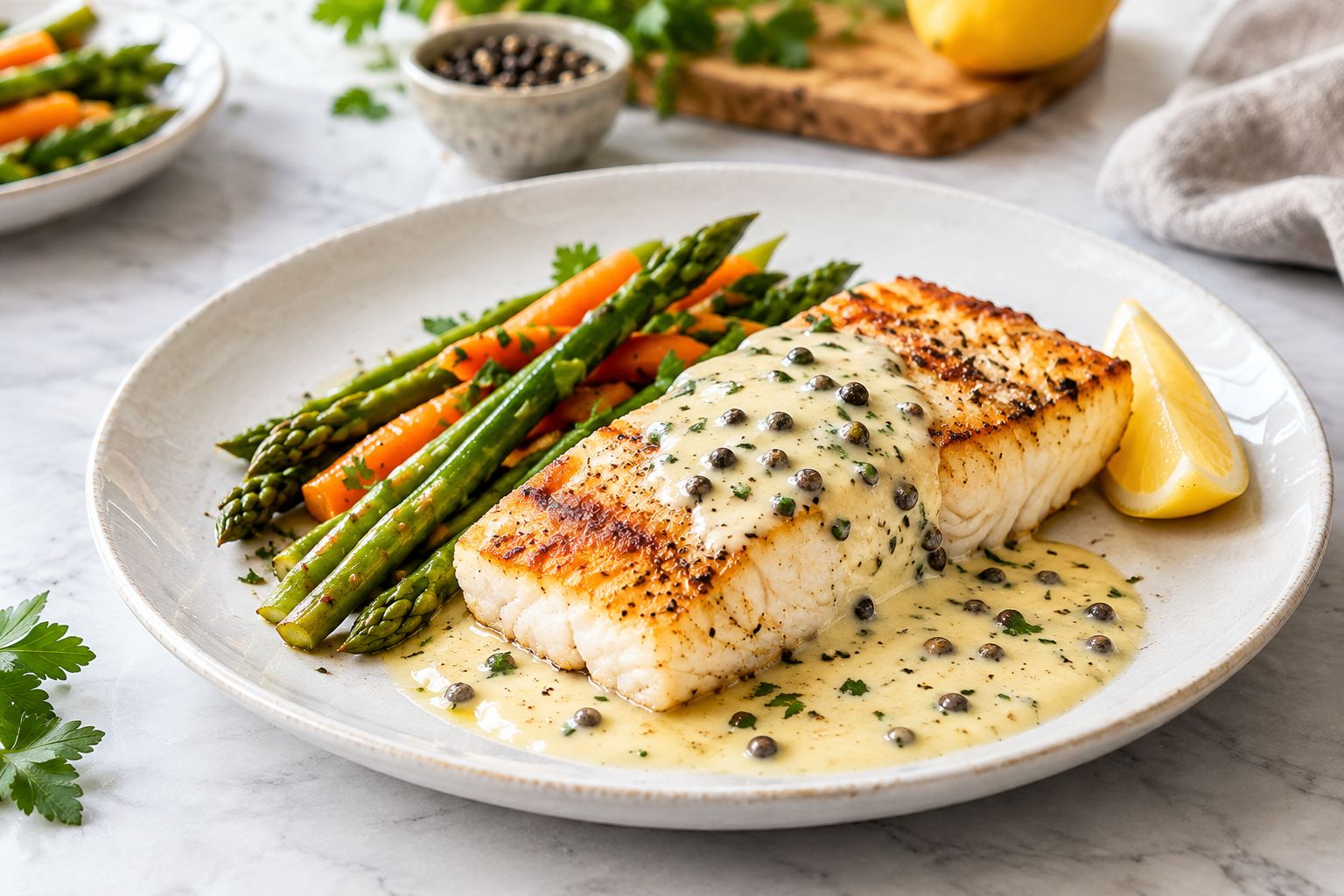
For fish, swap 2 tablespoons of the white wine for the same amount of fish stock or clam juice — it pulls the sauce toward the plate instead of tasting purely of wine. A squeeze of lemon at the very end, added after the pepper, brightens flaky white fish like halibut or sole without thinning the emulsion.
Crack the pepper slightly coarser for fish than you would for a steak sauce; the flakes should be visible against the pale sauce, not ground to dust.
Peppercorn Beurre Blanc for Vegetables
For roasted or grilled vegetables — asparagus, carrots, cauliflower — swap the fish stock idea for a splash of vegetable stock instead of the extra wine, and finish with a small handful of chopped chives or tarragon along with the pepper. Vegetables carry less natural fat than fish, so the same 1 cup of butter reads as richer over a vegetable plate; some cooks cut the butter to 3/4 cup for that reason.
Drizzle it warm rather than hot, since the emulsion is more fragile than a hollandaise and vegetables straight off high heat can shock it apart.
Why Beurre Blanc Breaks (and How to Fix It)
A broken beurre blanc looks oily and separated instead of pale and glossy. The usual causes:
- Heat too high melts the butter into pure fat instead of holding it as an emulsion
- Butter added too fast, overwhelming the reduction before it can absorb each addition
- Reduction under-concentrated — too much liquid left in the pan dilutes the emulsion's grip
- Butter added straight from the freezer instead of just-cold, which cools the pan too much and stalls the whisking
- Pepper added too early, before the butter is fully whisked in, which can scorch the pepper and turn it bitter
- Sauce held too long over direct heat after it's finished, which breaks it even after a successful emulsification
If it does break, a tablespoon of ice-cold water whisked in fast, off the heat, sometimes brings it back together. It's not guaranteed — starting the reduction over is more reliable.
More on Peppercorn Beurre Blanc
Can you make peppercorn beurre blanc ahead of time?
Not really — beurre blanc holds about 30 minutes over warm water and starts to separate after that, so it's built to finish right before serving, not reheated from the fridge.
What's the difference between beurre blanc and hollandaise?
Beurre blanc emulsifies butter into a wine-and-vinegar reduction with no eggs, while hollandaise emulsifies butter into egg yolks — beurre blanc is lighter and more acidic, hollandaise is richer and more stable.
Does peppercorn beurre blanc need cream?
No — the 1 tablespoon of cream in the recipe above is optional and only added for cooks who want a more forgiving, harder-to-break emulsion.
For whole peppercorns to crack fresh for this sauce, whole black peppercorns in a 1 lb bag last through dozens of batches, and for seafood specifically, a dedicated pepper mill for seafood and fish dishes breaks down which grind settings work best against delicate flesh.
“If the pepper flakes disappear into the sauce instead of staying visible, the grind was too fine for beurre blanc.”
FAQ
How much butter goes into peppercorn beurre blanc?
1 cup (2 sticks) of cold unsalted butter is the standard amount for a batch that serves 4-6 people over fish or vegetables. Less butter makes a thinner, less stable sauce.
Can you reheat beurre blanc?
Reheating beurre blanc directly on the stove almost always breaks it, since the emulsion can't tolerate a second pass through high heat. Rewarm it gently in a bowl set over warm (not simmering) water instead.
What wine works best for peppercorn beurre blanc?
A dry white wine like a Sauvignon Blanc or unoaked Chardonnay works best for peppercorn beurre blanc — 1/2 cup reduces down with the shallot and vinegar before the butter goes in. Sweet wines throw off the balance.
Can you freeze beurre blanc?
Beurre blanc does not freeze well because the emulsion separates as it thaws, leaving a grainy or oily texture. It's a make-and-serve-same-day sauce, not a batch-and-store one.
What fish pairs best with peppercorn beurre blanc?
Mild, flaky white fish like halibut, sole, and cod pair best with peppercorn beurre blanc because their subtle flavor doesn't compete with the wine and pepper. Salmon and other oilier fish work too, with a lighter hand on the butter.
Why did my beurre blanc turn oily instead of creamy?
An oily, separated beurre blanc means the pan got too hot and the butter melted into pure fat instead of emulsifying. Pull it off the heat immediately and whisk in a splash of cold water to try to bring it back.
Is peppercorn beurre blanc the same as pepper sauce for steak?
No — peppercorn beurre blanc is a butter emulsion built for fish and vegetables, while a classic steak pepper sauce usually uses cream and pan drippings as its base. They share the cracked pepper but not the technique.
One Last Thing
The grind size matters more than most recipes admit: pepper cracked too fine dissolves into the butter and disappears on the tongue, while pepper cracked too coarse turns each bite into a sharp, isolated hit instead of an even seasoning. Aim for flakes about the size of a match head — visible against the pale sauce but small enough to distribute evenly when you spoon it over the plate. A mill with an adjustable coarse setting gets you there in one pass; a pre-ground jar never will.

