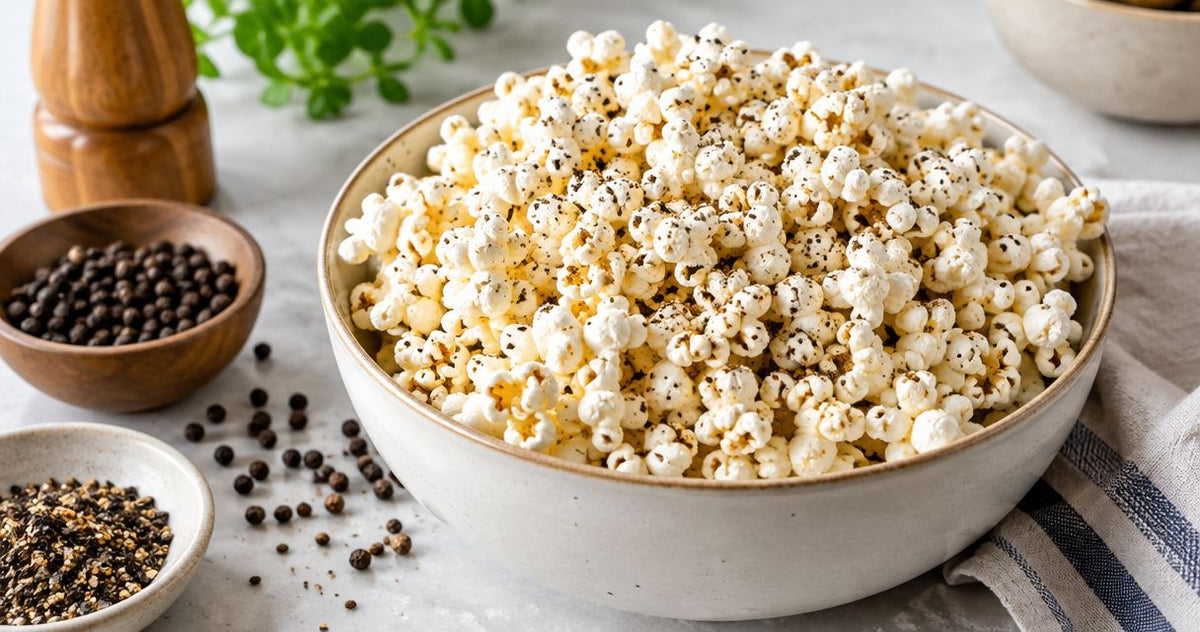


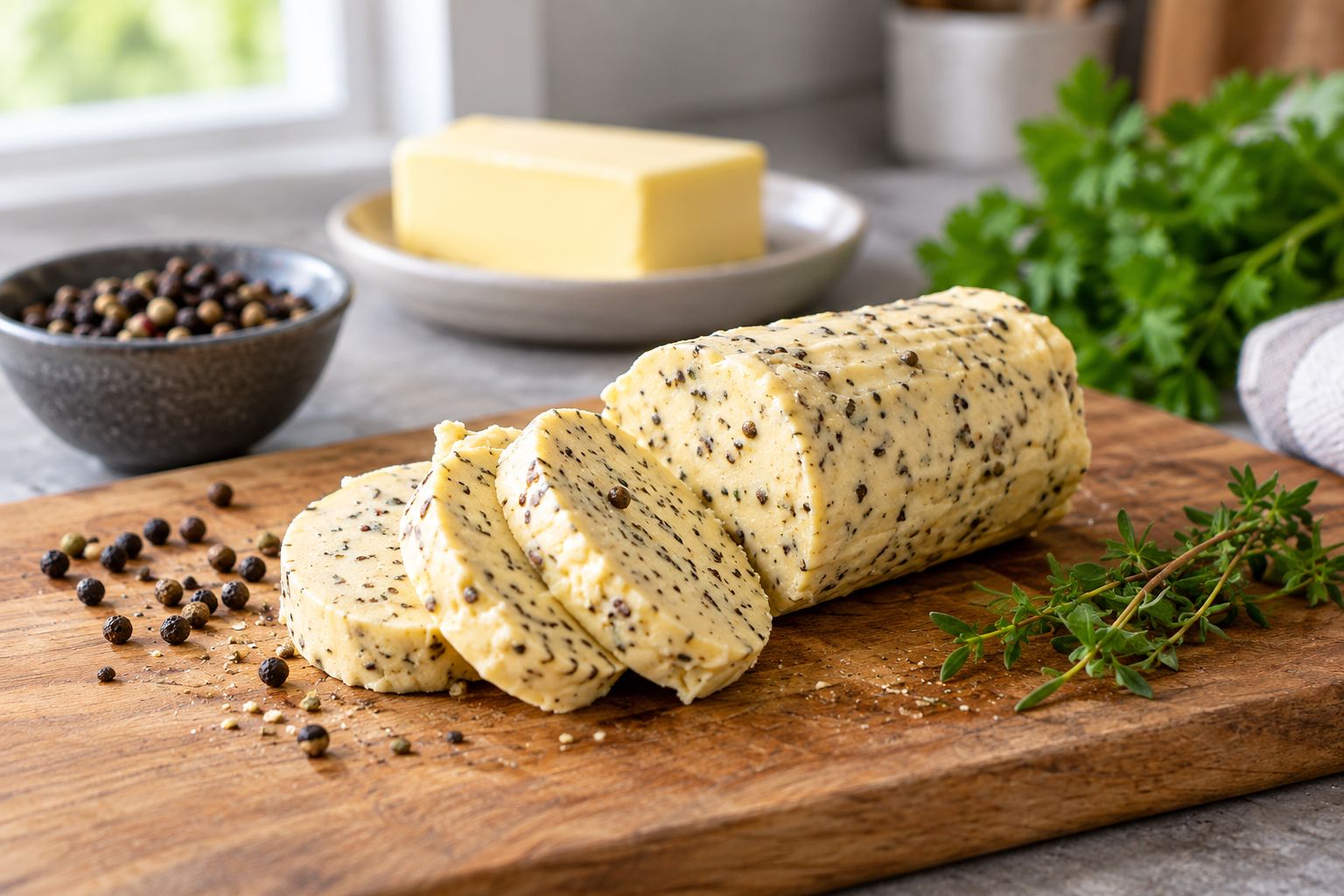
Peppercorn compound butter is softened butter blended with freshly cracked black pepper, rolled into a log, and chilled until firm enough to slice into coins. Mixing and rolling takes about 10 minutes; the butter needs a minimum of 2 hours in the refrigerator before it holds a clean slice.
- Peppercorn compound butter mixes softened butter with freshly cracked pepper, rolled into a log and chilled for at least 2 hours.
- Coarse-cracked pepper from a mill holds its texture in butter; pre-ground pepper goes flat and gritty within a day.
- Garlic, herb, and blue cheese versions use the same base method with different mix-ins folded in at the same step.
- Refrigerated compound butter keeps about 1-2 weeks; frozen and wrapped tight, it holds up to 3 months.
Why this matters
Pepper is usually a background note in a dish. In compound butter it's the whole point, so the grind and the peppercorn itself change the outcome more than any other single choice you make.
Pre-ground pepper from a shaker loses its aroma fast and turns the butter gritty instead of flecked. Freshly cracked pepper from a mill holds its bite and its smell for as long as the butter itself lasts in the fridge, which is the difference between butter that tastes like pepper and butter that just looks like it does.
How to make peppercorn compound butter
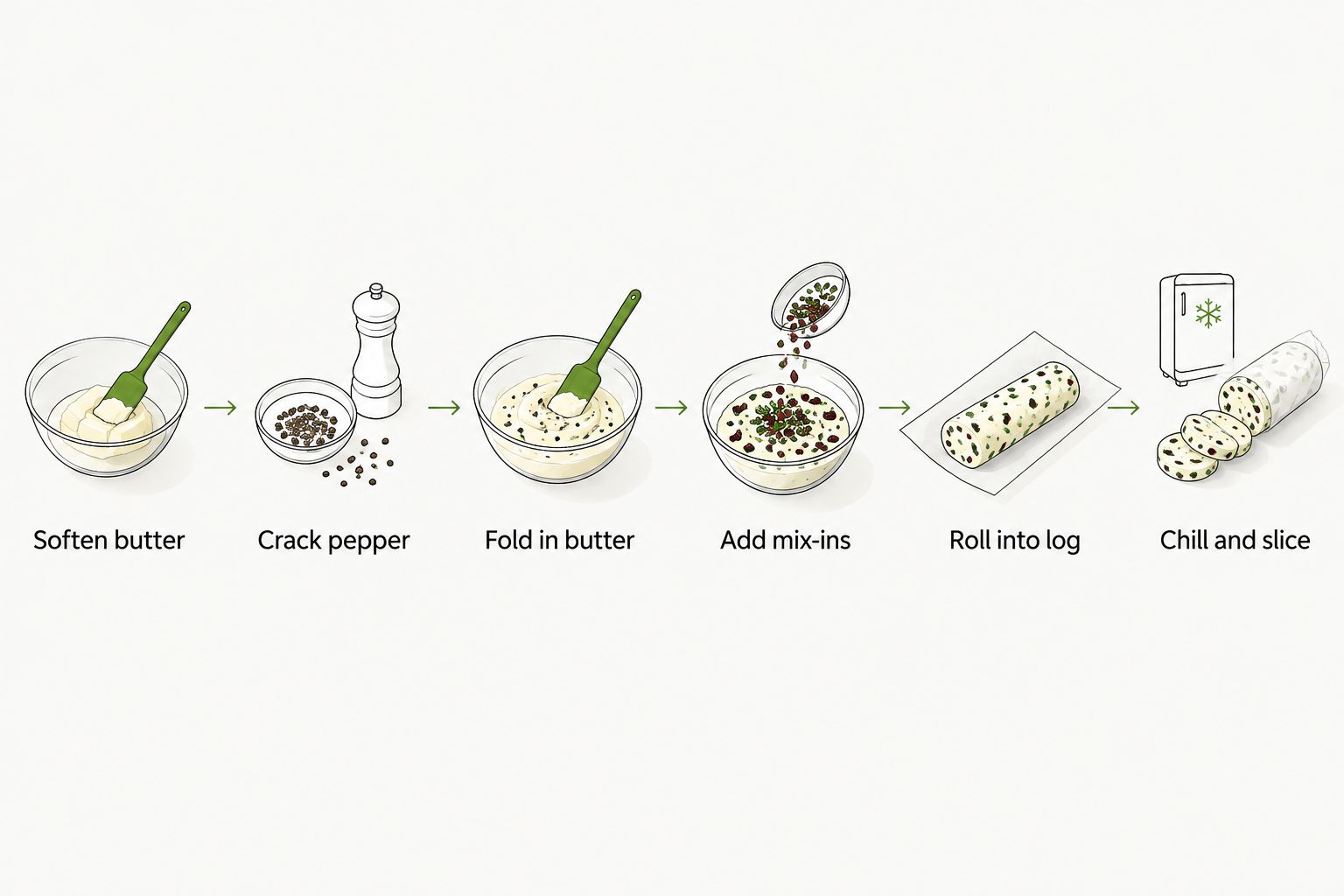
The method is the same no matter which flavor direction you take it. Get the butter soft, crack the pepper coarse, fold everything together, then roll and chill.
- Soften the butter. Leave one stick of unsalted butter at room temperature for about 30 minutes, until it gives easily under a finger but hasn't started to melt.
- Crack the pepper coarse. Set a pepper mill to its coarsest setting and grind directly over a small bowl until you have about a tablespoon of pepper with visible flecks, not powder.
- Fold in the pepper and salt. Mash the pepper and a pinch of salt into the softened butter with a fork or spatula until it's evenly distributed, not just sitting on top.
- Add any mix-ins now. Garlic, herbs, or cheese go in at this step, folded in the same way as the pepper.
- Roll into a log. Spoon the butter onto a sheet of parchment or plastic wrap, shape it into a rough cylinder, then roll the paper around it and twist both ends like a candy wrapper.
- Chill and slice. Refrigerate for at least 2 hours, or until firm, then unwrap and cut into coins as needed.
A butter that's too cold won't take the pepper evenly, and a butter that's gone soupy won't hold a log shape. Room temperature, not microwave-soft, is the target.
Peppercorn Garlic Compound Butter
Mince one small clove of garlic and fold it in with the cracked pepper at step 3, along with a pinch of salt to balance the sharpness. This version melts well over grilled steak or a baked potato, where the garlic softens as it warms. Best for: steak, roasted potatoes, garlic bread.
Peppercorn Herb Compound Butter
Fold in a tablespoon of finely chopped fresh parsley, chives, or thyme along with the pepper. The herbs stay green and fresh-tasting as long as the butter is used within the first week. Best for: roasted vegetables, grilled fish, warm bread.
Peppercorn Blue Cheese Compound Butter
Crumble about two tablespoons of blue cheese into the softened butter before adding the pepper, then fold gently so the cheese stays in small pieces instead of turning the whole batch gray. This one is sharper and richer than the others, so a thinner slice goes further. Best for: grilled steak, burgers, roasted mushrooms.
Why the flavor varies
Compound butter made the same way twice can still taste different. A handful of variables account for most of the difference:
- Peppercorn type. Tellicherry peppercorns are sharper and more aromatic than standard black pepper; the difference is noticeable once the pepper is the main flavor instead of a background seasoning.
- Grind coarseness. A fine grind disappears into the butter and loses its texture; a coarse grind gives visible flecks and a bite you notice when you chew.
- Butter fat content. European-style butters run higher in fat than standard American butter, which changes how firm the log gets and how it melts.
- Salt type and amount. Salted butter plus added salt can push the batch too salty fast; unsalted butter gives more control over the final balance.
- Ratio of mix-ins to butter. Too much garlic, cheese, or herb overwhelms the pepper instead of complementing it.
- How long it sits before use. Flavor rounds out and mellows slightly after a day in the fridge as the mix-ins settle into the fat.
How long does peppercorn compound butter last?
Peppercorn compound butter lasts about 1-2 weeks refrigerated when wrapped tight in parchment or plastic. Beyond that window the pepper's aroma fades and any fresh herbs or garlic mixed in start to lose their brightness.
Can you freeze peppercorn compound butter?
Yes, peppercorn compound butter freezes well for up to 3 months when the log is wrapped in parchment and sealed in a freezer bag. Slice off coins straight from the freezer as needed rather than thawing the whole log at once.
What's the best pepper for compound butter?
Whole black peppercorns ground fresh right before mixing give the strongest flavor and the best texture for compound butter. Whole black peppercorns kept in a mill and cracked to order stay more aromatic than any pre-ground jar, which matters more here than in dishes where pepper isn't the star.
A warm, plain butter recipe like this one doesn't need much gear beyond a mill that grinds coarse without jamming. That's really the only tool decision in the whole process.
“If you can't see pepper flecks after folding the butter, grind coarser.”
Once you've got the base method down, peppercorn compound butter works the same way in a steak crust, a pan sauce finish, or spread cold over warm bread. It's one of the simplest ways to get restaurant-style flavor out of a home kitchen in 2026 without any special technique.
FAQ
How much pepper goes into one stick of compound butter?
About one tablespoon of coarsely cracked pepper per stick of butter is the standard ratio for 2026 home recipes. Adjust up for a sharper bite or down if you're adding other strong mix-ins like blue cheese.
Do you need salted or unsalted butter for compound butter?
Unsalted butter gives you more control over the final salt level. Start with a pinch of salt and taste before adding more, especially if you're folding in a salty mix-in like blue cheese.
Can you use ground pepper instead of a mill?
You can, but pre-ground pepper loses aroma fast and won't give the same visible flecks or texture. A mill set to a coarse grind is the closest thing to a non-negotiable step in this recipe.
Is peppercorn compound butter the same as steak butter?
Peppercorn compound butter is a broader term; steak butter usually refers to the same base recipe served specifically melting over grilled steak. The mixing and rolling method is identical either way.
How do you keep the butter from getting too soft while mixing?
Soften butter at room temperature for about 30 minutes rather than microwaving it, which can melt the edges before the center softens. If it does get too soft, chill it for 10 minutes before folding in the pepper.
Can you make peppercorn compound butter ahead for a dinner party?
Yes, it holds for 1-2 weeks refrigerated, so making it a day or two ahead actually improves the flavor as the pepper settles into the fat. Slice just before serving so the coins look clean.
What's the difference between green and black peppercorn butter?
Green peppercorns are milder and brinier than black, giving the butter a softer, less sharp pepper flavor. Black peppercorns give the classic sharp, aromatic version most compound butter recipes call for.
One last thing
Roll extra logs and freeze them the same day you make the batch instead of waiting until you're down to the last one. A frozen log slices into clean coins straight off a hot steak, and a peppermill loaded with fresh peppercorns means the next batch takes the same 10 minutes as this one.