

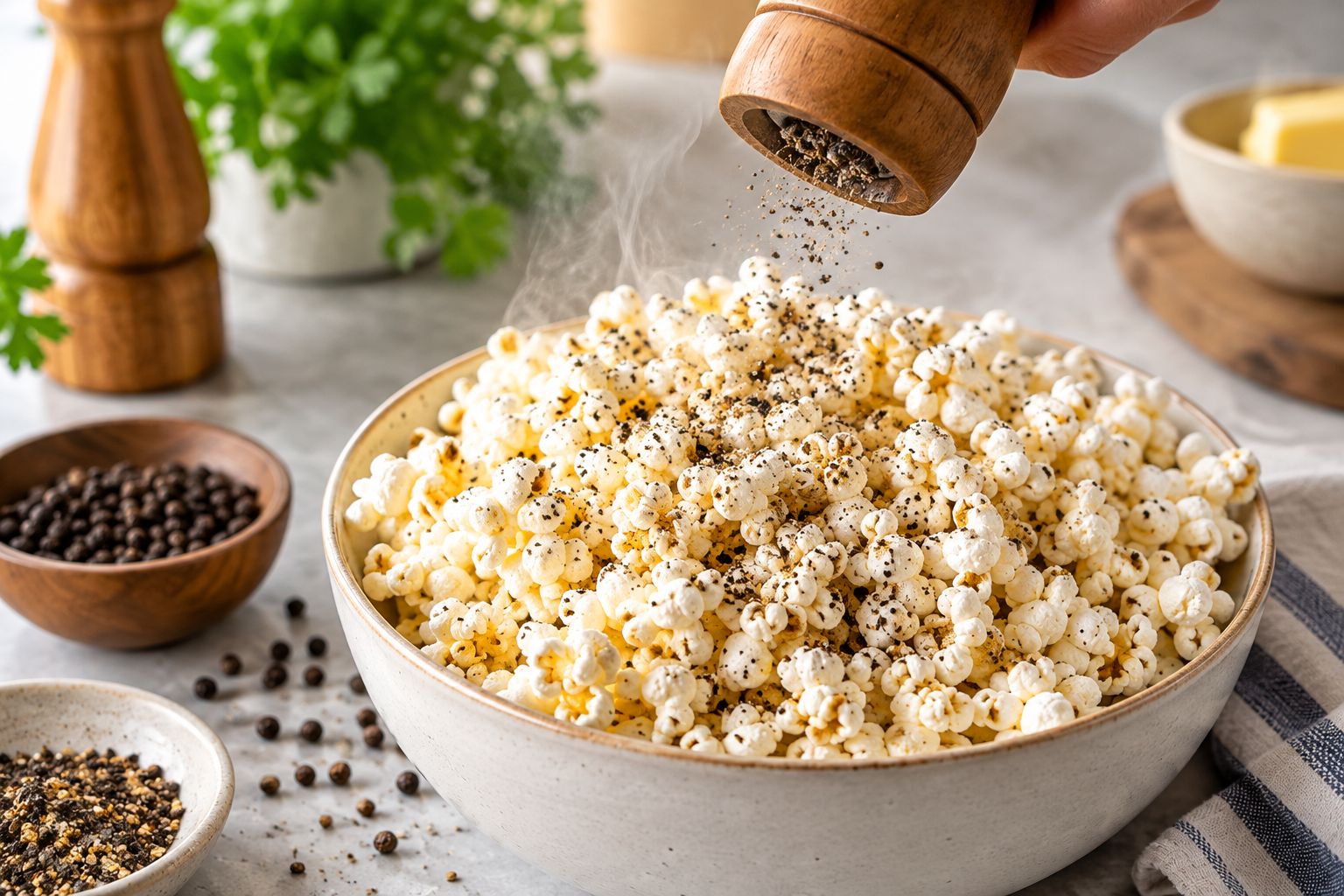
Fresh cracked pepper turns plain popcorn into something worth staying on the couch for, but only if you get the sequence right. Toss hot, freshly popped kernels in melted butter or oil first, then grind pepper coarse directly over the bowl while everything is still warm, and finish with a pinch of salt. Skip the fat step and most of that pepper falls straight through the popcorn to the bottom of the bowl instead of clinging to the kernels where you actually taste it.
- The fastest way to season popcorn with cracked pepper is tossing warm kernels in melted butter, then grinding pepper straight over the bowl.
- Pepper needs a fat (butter or oil) to stick to popcorn — without it, most of the grind ends up at the bottom of the bowl.
- Coarse grind holds onto popcorn better than fine grind, which just dusts off and disappears.
- Salt goes on last, after the pepper, so both seasonings land evenly across the batch.
Why this matters
Pre-ground pepper in a shaker starts losing its aroma the moment it's cracked, because the volatile oils in peppercorns oxidize on contact with air. Pepper you grind fresh, right over the bowl, still carries that sharp, slightly citrusy smell that a jar of pre-ground pepper lost weeks ago on a grocery shelf. A pepper mill for popcorn and snack lovers also gives you control over coarseness, which matters more for popcorn than almost any other dish, because a fine dust of pepper just falls through the kernels while a coarse crack sits on top where your tongue actually finds it.
This isn't a niche move. Salt-and-pepper popcorn has been a diner and movie-theater staple for decades, and the only thing that's changed by 2026 is how many people now own a pepper mill good enough to do it properly at home instead of reaching for a shaker.
How to season popcorn with fresh cracked pepper
Here's the full method, start to finish:
- Pop the corn plain. Air-popped or stovetop, no seasoning yet — you want a clean surface for the fat to coat.
- Drizzle with melted butter or oil while it's still hot. Warm popcorn absorbs fat evenly; cold popcorn just gets soggy clumps.
- Toss immediately so every kernel picks up a thin coat before it cools.
- Set your mill to a coarse grind and turn it directly over the bowl, not into a separate dish first.
- Add coarse salt after the pepper, not before — salt on bare popcorn slides off, salt on buttered popcorn sticks.
- Toss once more, taste, and re-season. Pepper first, salt second, every round.
The order matters more than the amount. Butter or oil is what makes the pepper stay put; without it, you're just cracking pepper into thin air over a bowl.
Once you've got the base method down, the fat you choose changes the whole snack. Here's how the three most common versions stack up.
| Method | Fat used | Best for | Verdict |
|---|---|---|---|
| Butter and pepper popcorn | Melted butter | Classic movie-night flavor | Try first |
| Olive oil and pepper popcorn | Olive oil | Dairy-free snacking | Try |
| Parmesan cracked pepper popcorn | Butter + parmesan | Cacio e pepe fans | Try |
Butter and pepper popcorn
Melted butter is the classic base because it carries fat and a little milk sugar that browns slightly when it hits warm popcorn, giving you that theater-style richness. Grind pepper coarse over the top right after the butter, then add salt. This is the version most people mean when they say "peppered popcorn," and it's the one to start with in 2026 if you've never done any of this before.
Olive oil and pepper popcorn
Olive oil skips the dairy and holds up better if the popcorn is going to sit out for a while at a party, since it doesn't separate the way melted butter can as it cools. It's a lighter, grassier flavor than butter, and it lets the pepper's own aroma come through more instead of getting buried under browned dairy fat. Good for dairy-free households or anyone who wants the pepper, not the butter, to be the star.
Parmesan cracked pepper popcorn
Add finely grated parmesan to the buttered, peppered popcorn while it's still warm enough for the cheese to soften slightly and cling to the kernels. This is basically cacio e pepe logic applied to a snack bowl, and the sharpness of the parmesan needs a genuinely coarse pepper grind to balance it — a fine dust gets lost. Best for anyone upgrading a Tuesday-night snack into something that tastes intentional.


A PepperMate Traditional Pepper Mill grinds coarse enough for popcorn in one pull, no adjusting dials mid-toss while your popcorn cools on the counter.
Why the grind size and seasoning ratio vary
A few things push the right pepper amount and grind up or down for any given batch:
- Fat type: butter holds more pepper per kernel than a light drizzle of olive oil.
- Mill coarseness setting: a mill set fine dusts off; set coarse, it clings.
- Batch size: a big bowl needs more passes over the mill, not just a longer single grind.
- Popcorn style: kettle corn's sugar coating grabs pepper differently than plain salted popcorn.
- How long it sits before serving: pepper on popcorn that's cooled and gone slightly stale doesn't stick the same way it does straight out of the popper.
- Personal heat tolerance: some cooks want a background note, others want the pepper to be the first thing they taste.
How much pepper should I put on popcorn?
Start with a light, even coat from a few full turns of a coarse-set mill over a large bowl, then taste before adding more. Fresh cracked pepper is stronger than pre-ground, so what looks like "not enough" on the popcorn often isn't.
Does cracked pepper stick to popcorn without butter or oil?
No — cracked pepper needs a fat to cling to, and dry popcorn just lets the grind fall through to the bottom of the bowl. If you're avoiding butter and oil entirely, a light water-based glaze or cooking spray will hold some pepper, but nowhere near as well as real fat does.
Should I use black pepper or a pepper blend on popcorn?
Plain black pepper is the safest starting point because it doesn't compete with butter or parmesan. A pepper-and-garlic blend or a smoked pepper works well once you already know how much plain pepper you like, since blends add extra flavor layers that can overwhelm a first attempt.
FAQ
How do you get pepper to stick to popcorn?
Pepper sticks to popcorn only when the kernels are coated in melted butter or oil first. Grind the pepper directly over the buttered popcorn while it's still warm for the best hold.
Should you season popcorn while it's hot or after it cools?
Season popcorn while it's still hot, right after popping. Warm kernels absorb butter or oil more evenly, which is what lets the fresh cracked pepper cling instead of sliding off.
What's the best pepper grind for popcorn?
A coarse grind is the best pepper setting for popcorn. Fine-ground pepper dusts off the kernels and settles at the bottom of the bowl instead of staying on the popcorn where you taste it.
Can you use pre-ground pepper on popcorn instead of a mill?
Pre-ground pepper works on popcorn but loses aroma faster than fresh cracked pepper because the oils in ground pepper oxidize once exposed to air. A mill lets you grind coarse right before serving instead.
Is olive oil or butter better for peppered popcorn?
Butter gives peppered popcorn a richer, theater-style flavor, while olive oil is a lighter, dairy-free option that holds up better if the popcorn sits out for a while. Both hold pepper well as long as you toss it in while the popcorn is warm.
How much salt should go with the pepper on popcorn?
Add salt after the pepper, in a similar light coat, and taste before adding more. Salt on bare popcorn slides off; salt added after the butter and pepper is already on sticks far better.
Does cracked pepper work on kettle corn?
Cracked pepper works on kettle corn, but the sugar coating grabs the pepper differently than plain popcorn, so it often needs a slightly heavier grind to notice it against the sweetness.
One last thing
The order really is the whole trick: fat first, pepper second, salt last, every single time, and grinding directly over the warm bowl in 2026 still beats reaching for a pre-ground shaker for one simple reason — cracked pepper loses its aroma to oxidation within weeks of being ground, so the jar sitting in your cabinet is already duller than whatever comes out of a mill right now. If popcorn night happens more than once a week in your house, a coarse-grinding Traditional Pepper Mill earns its spot on the counter next to the popcorn bowl instead of living in a drawer.