

A serrated peeler for stone fruit and peaches is a kitchen tool with small saw-like teeth built to grip fuzzy or waxy skin without slipping, letting you peel a peach, nectarine, or plum in one or two strokes instead of blanching a whole batch. Peaches, plums, apricots, and nectarines all peel differently from apples or potatoes, and a straight blade fights all four.
- A serrated peeler for stone fruit grips fuzzy peach skin and waxy plum skin better than a straight blade.
- PepperMate's Superior Chef Serrated Peeler uses a double-tooth stainless blade built for grip, not pressure.
- For under a dozen peaches, a serrated peeler beats blanching on time and cleanup.
- For canning-size batches of 20 or more, blanching still wins on speed.
- Chilled stone fruit peels cleaner than room-temp fruit because the flesh holds firm against the blade.
Why a serrated peeler matters for stone fruit
Fuzzy peach skin grabs a smooth blade and tears the flesh underneath it. Waxy plum and nectarine skin does the opposite and slides right past a dull edge. Either way, you lose fruit, and stone fruit flesh bruises within seconds of contact — every extra pass costs you.
For fuzzy-skinned fruit specifically, PepperMate stocks tools built for grip-first peeling instead of force-first peeling, which matters more with stone fruit than with root vegetables. The serration is the whole point — small teeth bite into skin texture that a smooth blade skates across.
Tomatoes share the same skin-tension problem but handle differently once the blade is through, since tomato flesh is wetter and softer. If you peel both in the same kitchen, the serrated peeler for tomatoes and soft-skinned produce guide covers that separately.
Heading into peach season in 2026, the choice between blanching and hand-peeling comes down to batch size, and that's the decision this guide walks through step by step.
Match the blade to the skin type
Not every peeler handles every fruit the same way. Match the blade shape to what's actually on the counter before you start peeling a whole bowl.
- Serrated blade — best for fuzzy peach skin and thin nectarine skin
- Straight swivel blade — best for smooth plums and firm apricots
- Paring knife — best for trimming small areas around the pit
- Vegetable peeler (straight edge) — wrong tool for stone fruit; built for potatoes and carrots
Prep the fruit before peeling
Skip this step and every fruit after the first one gets messier. A few minutes of prep saves the whole batch.
- Rinse fruit under cold water to remove surface fuzz and dirt
- Chill fruit for 15-20 minutes if the kitchen is warm — firm flesh peels cleaner
- Dry the skin so the peeler doesn't skid on wet fuzz
- Trim the stem-end divot first so the blade doesn't catch on it
- Set a bowl of water with a splash of lemon juice nearby to hold peeled fruit
Use a rocking stroke, not a scraping one
Scraping is what tears stone fruit flesh. A rocking stroke — angle the blade, apply light pressure, roll it forward in one motion — takes the skin off without digging into the fruit underneath.
This is where a double-serrated blade earns its keep. The Superior Chef Serrated Peeler covers a peach in two or three rocking strokes because both edges of the blade bite the skin instead of one edge scraping and one edge riding free.
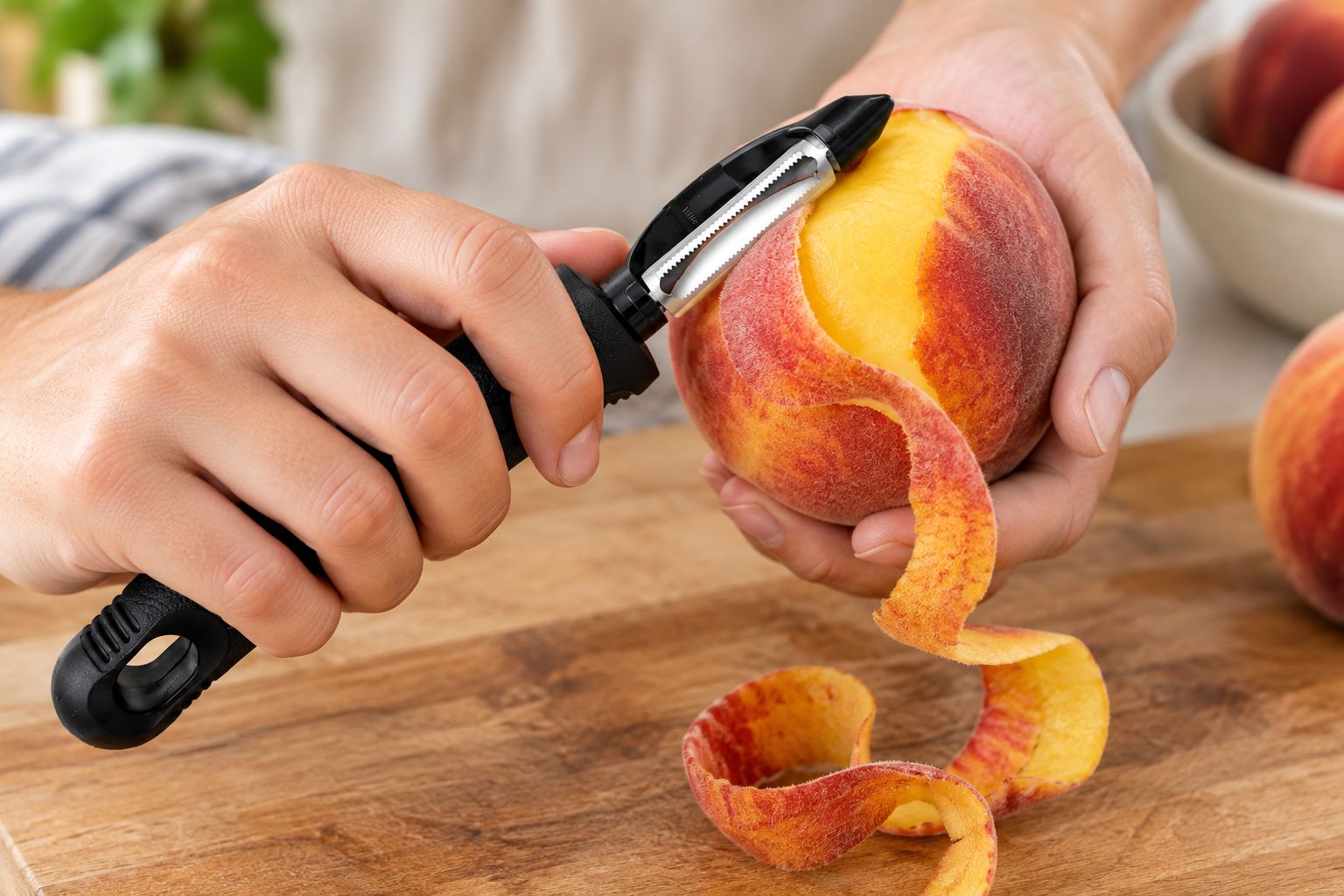
- Angle the blade at roughly 20-30 degrees, not flat against the skin
- Roll forward in one continuous motion instead of short back-and-forth scrapes
- Rotate the fruit in your other hand rather than chasing the curve with the blade
- Stop and re-angle at the shoulder near the stem — that's where skin resists most
Adjust your grip for overripe fruit
Overripe peaches and plums are the fruit most likely to end up mashed instead of peeled. Less pressure, shorter strokes, and a firmer hold on the fruit fix most of the problem.
- Cup the fruit in a loose palm instead of gripping with fingertips
- Use shorter strokes — an inch or two at a time, not the full length of the fruit
- Peel over a bowl so any juice or torn skin doesn't hit the counter
- If a section won't release cleanly, switch to a paring knife for just that spot
Batch-peel for canning or freezer bags
Canning and freezer-prep sessions are where technique either saves you an hour or costs you one. Set up a simple line before you start.
- Line up cutting board, peeler, bowl of acidulated water, and pitting station in that order
- Peel one fruit fully before moving to the next — don't half-peel a row
- Work in batches of 8-10 before pausing to check blade grip and hand fatigue
- For 20-plus peaches destined for canning, blanching in boiling water for 30-45 seconds still beats hand-peeling on raw speed
Clean and dry the blade after each session
Fruit acid and sugar residue sit in the serration grooves and dull the blade faster than plain water use. A quick rinse and dry after each session keeps the teeth sharp longer.
- Rinse under warm water immediately after use, before residue dries
- Use a soft brush to clear sugar and fiber out of the serrated grooves
- Dry fully before storing — trapped moisture dulls stainless steel over time
- Store blade-covered or in a drawer tray, not loose against other metal tools


Comparing peeling options for stone fruit
| Option | Best for | Key limitation |
|---|---|---|
| Superior Chef Serrated Peeler | Fuzzy peach and nectarine skin | Not the right tool for hard vegetables like carrots |
| Superior Chef Swivel Peeler | Smooth plums and firm apricots | Straight blade can skid on fuzzy peach skin |
| Standard vegetable peeler | Potatoes, carrots, hard produce | Slips on soft or fuzzy stone fruit skin |
| Paring knife | Small batches, trimming around the pit | Slower, higher risk of wasted flesh |
| Blanch-and-ice-bath method | Canning batches of 20+ peaches | Extra pot and step; works less well on plums |
Buy the Superior Chef Serrated Peeler if you handle peaches or nectarines weekly through the summer of 2026. Skip it if your prep is mostly root vegetables — a straight-blade peeler still wins there.
Common mistakes with stone fruit peeling
- Scraping instead of rolling — short back-and-forth scrapes tear soft flesh; a single rolling stroke doesn't
- Peeling underripe fruit — skin won't release cleanly, forcing extra pressure that bruises the flesh underneath
- Skipping the stem-end trim — the blade catches on the stem divot and skips across the rest of the skin
- Working with a dull straight blade on fuzzy skin — it skids instead of gripping, wasting fruit and time
FAQ
What's the best peeler for peaches with fuzzy skin?
A serrated peeler is the best peeler for fuzzy peach skin because its teeth grip the surface instead of skidding across it. A straight vegetable peeler is built for potatoes and carrots and tends to tear peach flesh.
Is a serrated peeler better than a straight blade for stone fruit?
Yes, for fuzzy or waxy stone fruit skin, a serrated peeler outperforms a straight blade because the teeth catch skin texture a smooth edge slides past. For smooth-skinned plums, a sharp swivel blade also works well.
Do I need to blanch peaches if I have a serrated peeler?
No, not for small batches. A serrated peeler handles a dozen or fewer peaches faster than setting up a blanching pot; blanching still wins for canning-size batches of 20 or more.
Can a serrated peeler handle plums and nectarines too?
Yes, a serrated peeler works on nectarines the same way it works on peaches since both have thin, easily torn skin. Plums have smoother skin and peel just as well with a swivel blade.
How do I peel an overripe peach without mashing it?
Use shorter strokes, cup the fruit loosely instead of gripping tight, and peel over a bowl to catch any juice. Overripe fruit needs less pressure, not more.
What's the difference between a serrated peeler and a swivel peeler?
A serrated peeler has saw-like teeth for grip on fuzzy or slippery skin, while a swivel peeler has a smooth double blade that pivots to follow curves. Serrated wins on peaches; swivel wins on smooth-skinned plums and apricots.
Does a serrated peeler dull faster than a regular peeler?
Sugar and fruit acid left in the serration grooves after use can dull a blade faster than plain water contact does. Rinsing and drying the peeler right after each session slows that down.
Is a serrated peeler safe for kids to use?
A serrated peeler still carries a sharp blade and needs adult supervision the same as any kitchen knife or peeler. Short strokes and a firm grip on the fruit reduce slip risk regardless of who's holding it.
One last thing
Chilled fruit peels cleaner than room-temperature fruit — the flesh firms up against the blade instead of giving way under it. If you're prepping a big batch for a 2026 canning weekend, fifteen minutes in the fridge before you start saves more fruit than any technique change on the list above.