

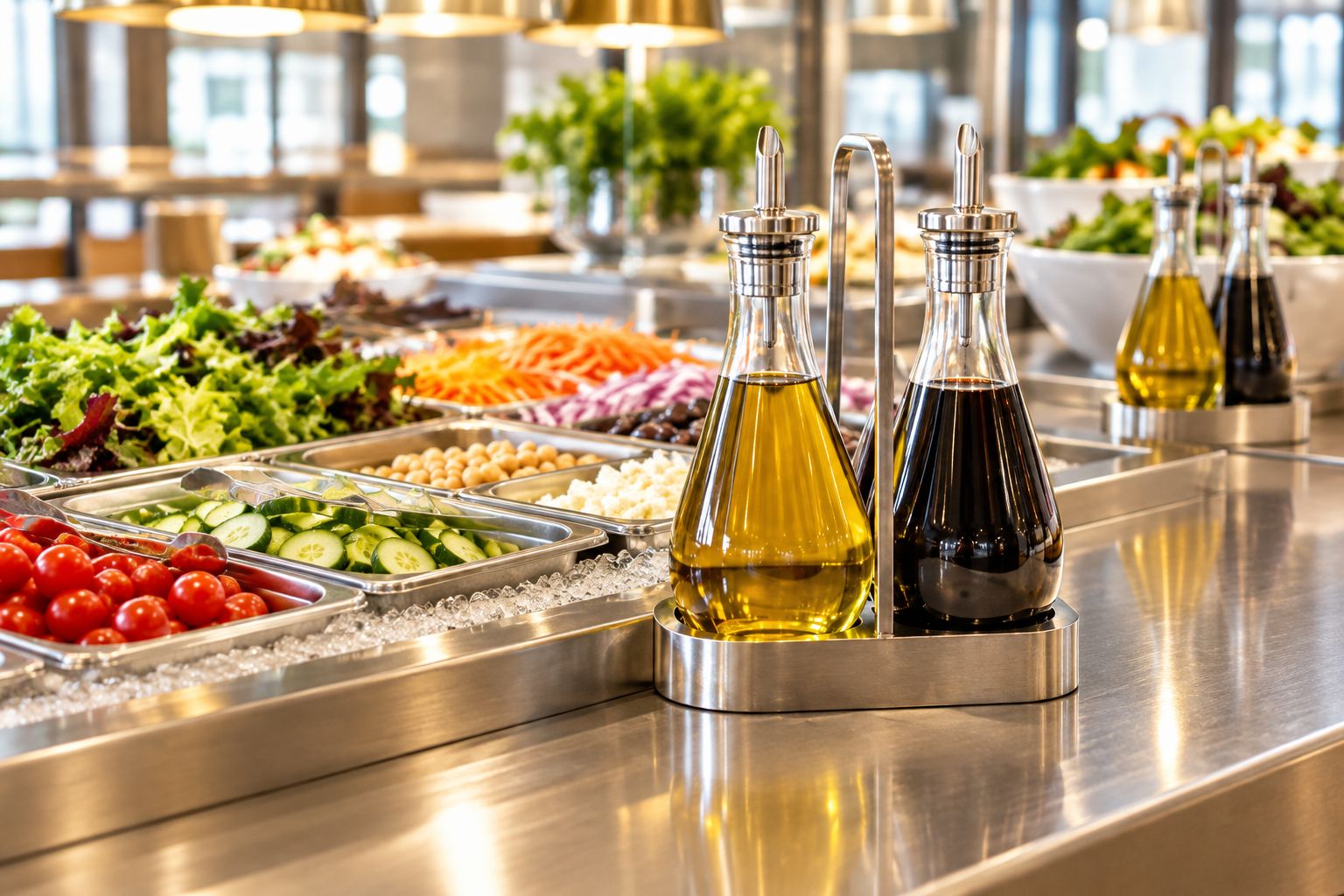
Oil and vinegar cruet set for buffet service is a matched pair (or trio) of pour vessels built to sit on a self-serve line all day without dripping, clouding, or running dry mid-rush. A salad bar or hotel buffet asks more of a cruet than a dinner table does: higher fill volume, constant handling by strangers, and zero tolerance for a spout that gums up by the third refill. Get the pour style, material, and size wrong and you're either wiping the counter every twenty minutes or watching the vinaigrette sit untouched because the spout won't cooperate.
- Stainless and thick glass cruets outlast thin glass on a busy oil and vinegar cruet set for buffet service line in 2026.
- Size cruets to a 2-3 hour refill window, not a full shift, so oil doesn't sit under heat lamps.
- A pepper mill and salt mill next to the cruets finishes the station in one stop.
- Skip screw-cap or cork-stopper dispensers on any line without staff refilling every hour.
- Label every cruet by content, not shape - two clear glass bottles look identical after a refill.
Why this matters for buffet and salad bar service
A home cruet gets refilled by one person who already knows what's in it. A buffet cruet gets handled by dozens of guests a day and refilled by whoever is on shift, which means the design has to survive guessing, spilling, and heat exposure that a dinner-table set never faces. See how an oil and vinegar cruet set for everyday cooking differs, and you'll notice the buffet version needs tougher materials and a faster pour, not a fancier one.
The stakes are practical, not decorative: a cracked glass cruet on a crowded line is a liability, and a clogged spout during a lunch rush backs up the whole station. Get the basics right once and the station runs itself for the rest of 2026.
How to set up an oil and vinegar cruet set for buffet service
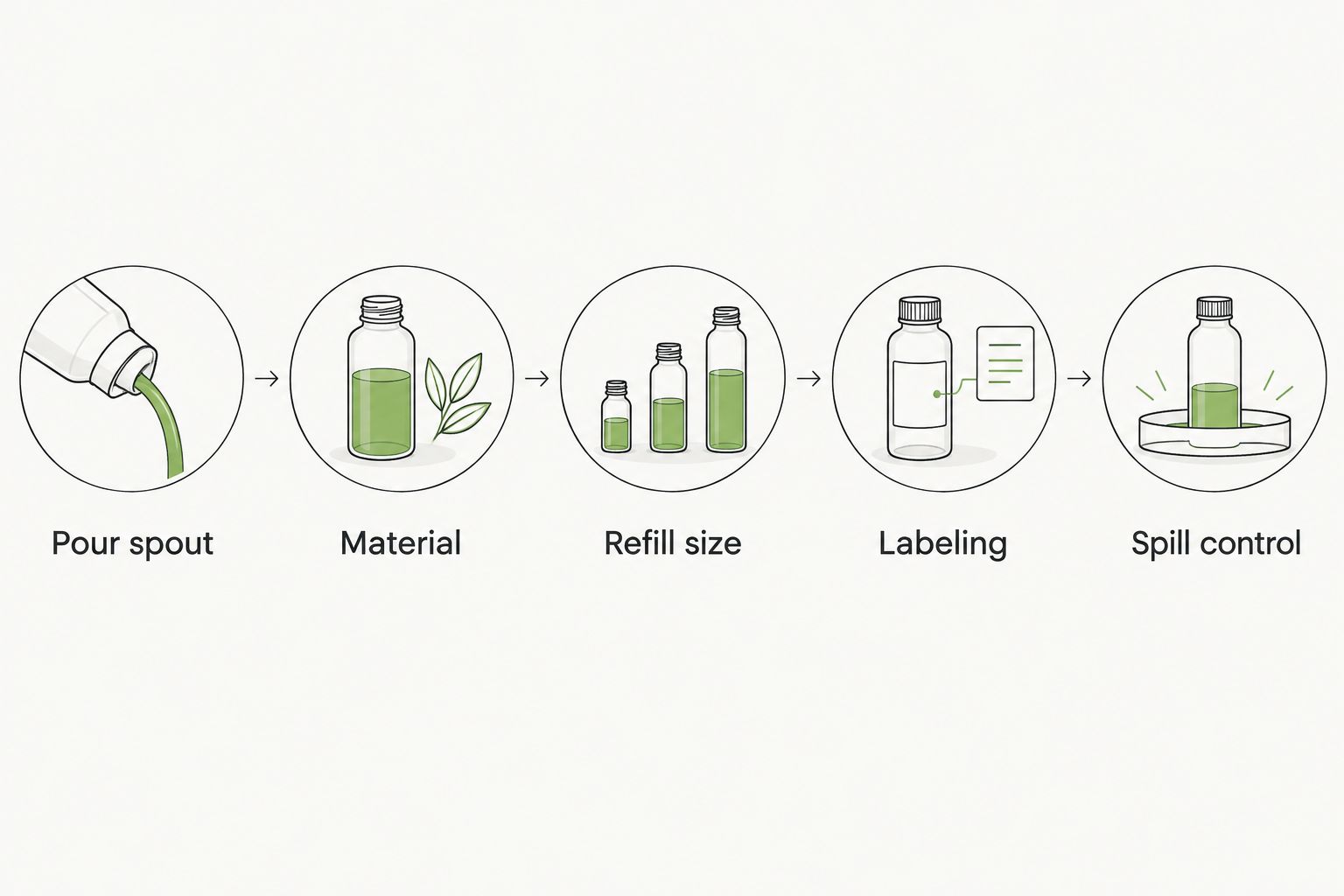
Match the pour spout to your traffic pattern
The spout decides how fast the line moves and how much product gets wasted. Pick it based on guest volume, not looks.
- Free-pour spouts for high-volume salad bars and brunch lines where guests self-serve fast
- Restricted-flow metal inserts for pricier oils like olive oil, to slow the pour and cut waste
- Flip-top or hinged caps for outdoor catering setups where dust and insects are a real concern
- Pump tops for portion-controlled events, like a plated vinaigrette station at a wedding
- Skip cork stoppers on any public-facing station - they slow refills and fall out under handling
Choose the material: glass, stainless, or acrylic
Material affects both how fast staff can check fill level and how the set survives a bump.
- Clear glass shows fill level at a glance for quick visual refill checks
- Stainless steel resists breakage on a crowded line and hides fingerprints better than glass
- Acrylic or heavy plastic suits outdoor and poolside buffets where glass breakage is a real liability
- Tinted glass protects light-sensitive oils, like extra virgin olive oil, from steam table heat
- Avoid thin glass on any line with foot traffic near the table edge
Size the cruets to your refill schedule
Buying the biggest cruet available seems efficient, but oversized cruets sit half-full for hours and pick up steam-table heat.
- 8-12 oz cruets suit a 2-3 hour lunch rush before a scheduled refill check
- 16-24 oz cruets work for all-day buffet lines with lower per-guest usage, like a hotel breakfast bar
- Stock at least two oils and two vinegars for any station serving a salad bar or taco bar
- Oversized cruets left half-full under a heat lamp let oil turn rancid faster than a fresh small fill would
“If the vinegar cruet runs dry before the dressing bowl empties, the cruet is too small for the traffic it's serving.”
Label every cruet for oil, vinegar, and dressing type
A cruet nobody can identify at a glance gets refilled wrong, and a wrong refill is a health-code problem waiting to happen.
- Etched or printed labels beat handwritten tape, which peels after a few wash cycles
- Color-code caps by content so staff refill the right bottle under pressure
- List allergens on the label for any vinaigrette containing nuts, soy, or dairy
- Reprint labels each season if the buffet rotates seasonal dressings
Add a pepper mill and salt mill to complete the station
A cruet set alone leaves the seasoning half-finished. Guests reach for fresh-ground pepper the same way they reach for oil and vinegar, especially at a salad bar built around fresh ingredients. A pepper mill and salt mill placed next to the cruets, not at the far end of the line, keeps the seasoning step from getting skipped. PepperMate's Traditional Salt and Pepper Mill Bundle covers both grinders in one stop, which matters when counter space next to the cruets is tight. The same fresh-ground logic applies at home - the pepper mill for salad dressing and vinaigrette prep guide walks through why pre-ground pepper falls flat next to fresh oil and vinegar.


Control spills and cross-contamination
A self-serve line means dozens of hands touching the same bottles, so spill and safety controls matter more than they would at home.
- Use spill trays or catch mats under each cruet on a self-serve line
- Keep dairy-based or fresh-garlic dressing components refrigerated separately from the cruet fill
- Hold any dairy-based dressing at room temperature for no more than two hours
- Assign one staff member per shift to check drip trays and wipe cruet necks
Clean and rotate stock between shifts
- Empty and rinse cruets nightly instead of topping off old oil with new
- Run first-in-first-out rotation on backstock oil and vinegar bottles
- Deep-clean pour spouts weekly - buildup changes flow rate before it looks dirty
- Replace scratched or cloudy glass cruets before they start hiding sediment
Comparison: cruet options for buffet and salad bar service
| Option | Best for | Key limitation |
|---|---|---|
| Glass cruet set | Manned salad bars with staff doing visual fill checks | Breaks if bumped on a crowded line |
| Stainless steel cruet set | High-traffic, fully self-serve buffets | Hides fill level, needs a checking habit |
| Acrylic or heavy plastic set | Outdoor and poolside buffets | Scratches and clouds after repeated washing |
| Pump-top dispenser | Portion-controlled catering events | Slower per-guest pour than a free spout |
Verdict: a stainless steel cruet set with a restricted-flow spout wins for most high-traffic buffet lines in 2026 - it survives handling and controls waste without needing constant staff attention.
Common mistakes buffet operators make
- Buying one cruet size for the whole line regardless of guest count, so the busiest hour runs dry
- Leaving oil in a clear glass cruet under a heat lamp for a full shift instead of a scheduled refill
- Skipping labels because "staff already know which bottle is which" - new hires and vendors don't
- Placing the pepper mill at the far end of the line instead of next to the dressings, so guests skip it
- Refilling on top of old oil rather than emptying and rinsing the cruet between shifts
FAQ
What's the best oil and vinegar cruet set for buffet service?
A stainless steel or thick glass cruet set with a restricted-flow spout works best for buffet service in 2026 because it resists breakage and controls waste on a high-traffic line. Thin glass and cork stoppers hold up poorly under constant public handling.
Is stainless steel or glass better for a busy salad bar?
Stainless steel resists breakage better on a crowded salad bar, while glass lets staff check fill level at a glance. Pick stainless for unsupervised, high-traffic lines and glass for stations with regular staff monitoring.
How often should buffet cruets be refilled?
Size cruets to a 2-3 hour refill window rather than a full shift, since oil left half-full under a heat lamp turns rancid faster. A scheduled refill check beats guessing by sight.
Should a salad bar have a pepper mill next to the dressings?
Yes - placing a pepper mill and salt mill right beside the oil and vinegar cruets keeps the seasoning step from getting skipped. Guests reach for fresh pepper the same way they reach for dressing.
How much oil and vinegar does a buffet cruet set need to hold?
An 8-12 oz cruet suits a 2-3 hour lunch rush, while 16-24 oz fits an all-day buffet with lower per-guest usage like a hotel breakfast bar. Match size to guest volume, not to the biggest bottle available.
What's the difference between a cruet and a dispenser bottle?
A cruet is a stoppered or spouted pour vessel meant for controlled tableside or line pouring, while a dispenser bottle is typically a squeeze or pump bottle for faster, higher-volume dispensing. Buffet lines often use cruets for oil and vinegar and dispensers for thicker dressings.
Can the same cruet set work for both catering events and daily buffet service?
A stainless or acrylic cruet set generally works for both, but catering events benefit from pump-top dispensers when portion control matters more than pour speed. Daily buffet service favors free-pour spouts for faster line movement.
How do you keep oil from going rancid on a heated buffet line?
Use tinted or opaque cruets to block light, size fills to a short refill window, and empty and rinse the cruet nightly instead of topping off old oil. Heat and light are the two biggest factors that speed up rancidity on a steam table line.
One last thing
The detail most buffet operators skip isn't the cruet - it's the pepper station next to it. Pre-ground pepper shakers lose aroma within days of grinding, and a fresh pepper mill sitting right beside the vinaigrette costs nothing extra in counter space but changes how the whole dish tastes. If you're rebuilding a salad bar line for 2026, place the mill first and build the cruet layout around it, not the other way around.