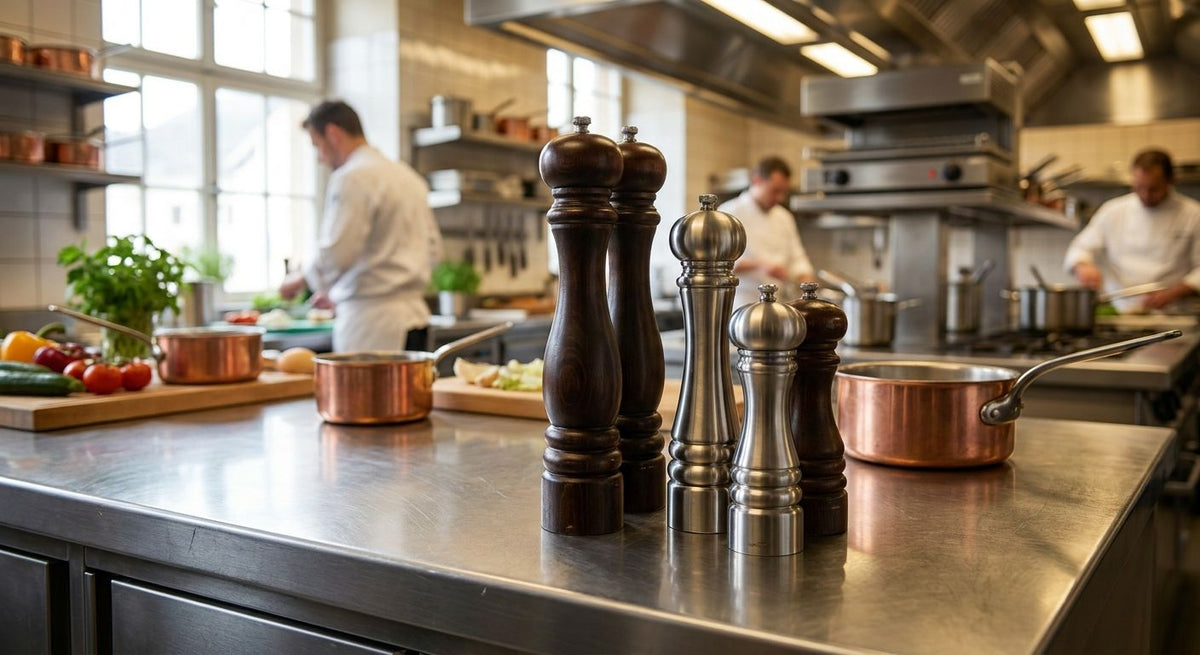


A pepper mill for eggs is a fresh-grind black pepper mill used right at the breakfast table or over the pan, built to season scrambled eggs, omelets, and fried eggs with cracked pepper instead of the flat, dusty flavor that comes out of a pre-ground shaker. Breakfast cooking has its own demands: you need a mill that works one-handed while you're plating, refills fast on a weekday morning, and won't seize up after a few months of daily use next to a stove that gets steamy from eggs and coffee.
- PepperMate Traditional Pepper Mill is the pick for daily egg dishes in 2026 - one-handed grind, no clogging from kitchen humidity.
- Grind pepper over finished eggs, not into the pan, so the aroma doesn't cook off before it hits your plate.
- Coarse grind suits fried and scrambled eggs; a finer grind disappears cleanly into deviled egg filling.
- Pre-ground pepper shakers lose most of their flavor within a few weeks of opening - skip them for a breakfast table you use every day.
Why a pepper mill for eggs matters more than you'd think
Eggs are a mild canvas. Salt and pepper aren't garnish here, they're most of the flavor, which is exactly why the pepper you use matters more on eggs than it does on a heavily sauced dinner. A pre-ground shaker that's fine on a busy weeknight taco falls flat on a Sunday omelet because there's nothing else on the plate to cover for it.
Breakfast pepper mills also get used differently than dinner mills. They sit on a table that gets wiped down daily, they get passed hand to hand between family members still half-awake, and they get used two or three times a week minimum if eggs are a staple in the house. A mill with a stiff grind mechanism or a fussy two-hand twist becomes the thing nobody wants to reach for at 7 a.m., and it quietly goes back to the cabinet in favor of the shaker.
Grind pepper onto finished eggs, not into the pan
Heat breaks down the volatile oils in black pepper that give it aroma, so pepper added early in cooking tastes duller by the time it hits your fork.
- Season eggs lightly with salt while cooking, then grind pepper on right before serving
- For scrambled eggs, grind while they're still glossy and slightly underdone, since residual heat finishes the dish
- For fried eggs, grind directly over the yolk so the pepper sits where you'll taste it first
- For deviled eggs, grind pepper into the yolk mixture itself, not just as a garnish on top
- Hold off on pepper in egg salad until right before serving to keep the flavor sharp
Pick a mill built for one-handed morning use
A breakfast pepper mill needs to work while you're holding a spatula in your other hand or juggling a toddler's plate.
- Look for a top-crank or one-hand-twist mechanism instead of a two-hand twist-cap design
- Confirm the mill sits flat and doesn't tip over on a table with a lazy susan or a lightly tilted counter
- Check that the grind adjustment is a simple dial, not a screw you need a coin to turn
- Favor a clear or acrylic body so you can see when peppercorns are running low before a Saturday brunch
- Avoid mills with tiny grind chambers that need refilling every few days if eggs are a daily habit in your house
The PepperMate Traditional Pepper Mill in black covers all of this with a top-load, one-hand crank designed to keep working daily without seizing up, which is the main failure point of cheap plastic mills after a few months on an egg-heavy breakfast table.
Match grind coarseness to the egg dish
Not every egg dish wants the same pepper texture.
- Scrambled and fried eggs: medium-coarse grind, so you get visible flecks and a bit of crunch
- Omelets: medium grind, fine enough to distribute evenly through the folded eggs
- Deviled eggs: fine grind for the filling, coarse grind as a garnish on top
- Egg salad and quiche: medium grind, since the pepper needs to hold its own against mayonnaise or cream
- Poached eggs and eggs benedict: coarse grind on top, since the pepper is the main visual and textural contrast against the sauce
Keep peppercorns fresh for daily breakfast use
A mill is only as good as what's inside it, and pre-ground pepper starts losing potency within weeks of opening.
- Buy whole peppercorns, not pre-cracked, since whole corns hold flavor for months longer
- Store backup peppercorns in a sealed container away from the stove's heat and steam
- Refill the mill before it runs completely empty, since the last few grinds from a near-empty chamber come out uneven
- Smell-test peppercorns that have sat unused for over a year - stale pepper smells dusty instead of sharp
- Buy in smaller quantities if eggs aren't a daily habit, so pepper doesn't sit around losing punch
Pair pepper with the right salt for eggs
Pepper does half the work; salt does the other half, and the two need to match in coarseness so neither one dominates the bite.
- Use a flake or coarse salt for scrambled and fried eggs so you get texture along with the pepper crunch
- Fine salt works better for baked egg dishes like quiche, where an even distribution matters more than texture
- A salt and pepper mill bundle keeps both seasonings at the table in matching mills, which matters more than it sounds once you're setting a table for a family breakfast every morning
- Check the best salt grinder for everyday cooking guide if you're still using table salt shakers next to your pepper mill
Clean and maintain your mill so egg day doesn't clog it
Eggs mean butter, steam, and the occasional splash near the mill, and grime on the grind mechanism is what actually kills most cheap mills, not the pepper itself.
- Wipe the exterior down after breakfast instead of letting butter residue sit and harden
- Never submerge a wood-bodied mill in water; a damp cloth is enough
- Empty and dry the mill fully if it ever gets splashed with liquid egg or butter
- Check the grind mechanism every few months for stuck peppercorn dust, which is the usual cause of a mill that suddenly grinds unevenly


Pepper mill options for egg dishes compared
| Option | Best for | Key limitation |
|---|---|---|
| Pre-ground pepper shaker | Nobody who wants real flavor | Flavor fades within weeks; no coarseness control |
| Cheap plastic twist mill | Occasional egg cooks on a tight budget | Grind mechanism clogs and jams within months |
| PepperMate Traditional Pepper Mill | Daily breakfast tables and egg-heavy households | Larger footprint than a mini travel mill |
| Disposable salt and pepper grinder | Camping, RVs, or a one-time event | Not built for years of daily table use |
Verdict: for a breakfast table used most days of the week, a one-hand-crank mill beats a shaker every time - the shaker's convenience disappears the moment the pepper inside it goes stale.
Common mistakes egg cooks make with pepper
- Grinding pepper into the pan too early - the aroma cooks off before the eggs hit the plate.
- Using the same fine grind for every egg dish - deviled eggs and fried eggs want different textures, not one setting for everything.
- Letting a shaker sit open for months - pre-ground pepper on an egg table this often is the single biggest flavor mistake home cooks make.
- Buying a mill too small for daily use - a chamber that needs refilling every few days becomes a mill nobody wants to maintain.
- Skipping salt coarseness matching - a fine salt shaker next to a coarse pepper mill throws off the balance on scrambled eggs.
FAQ
What's the best pepper mill for eggs?
A one-hand-crank mill like the PepperMate Traditional Pepper Mill works best for eggs in 2026 because it grinds with one hand while you plate, and it holds up to daily breakfast-table use without clogging.
Should I grind pepper before or after cooking eggs?
Grind pepper after cooking, right before serving. Pepper's aroma breaks down under heat, so pepper added early in the pan tastes flatter by the time the eggs are plated.
Is coarse or fine pepper better on scrambled eggs?
Coarse to medium-coarse pepper works best on scrambled eggs, giving visible flecks and a bit of crunch against the soft eggs. Fine grind works better mixed into deviled egg filling.
Do I need a separate salt mill for eggs?
A separate salt mill matched in coarseness to your pepper mill keeps both seasonings balanced on the plate. A bundled salt and pepper set keeps both at the table without mismatched textures.
How long does pre-ground pepper stay fresh for breakfast use?
Pre-ground pepper starts losing potency within a few weeks of opening because the ground surface area lets aroma escape faster than whole peppercorns. Whole peppercorns in a mill hold flavor for months longer.
What grind setting is best for deviled eggs?
Use a fine grind mixed into the yolk filling, then a coarse grind sprinkled on top as garnish. The fine grind blends evenly; the coarse grind gives the finished egg visual and textural contrast.
Can a pepper mill work if I have limited grip strength?
A top-crank mill needs far less grip force than a twist-cap mill, since the crank motion uses your whole hand instead of a pinching twist. Look for a mill rated for easy one-hand operation if grip strength is a concern.
Is a wood or acrylic pepper mill better for a breakfast table?
Acrylic mills let you see the peppercorn level at a glance, which matters for a table used daily, while wood mills need to stay dry and can't be run under water for cleaning.
One last thing
The mistake that trips up more egg cooks than any other: they buy a mill sized for occasional dinner use and expect it to survive a household that eats eggs four or five mornings a week. Buy the mill built for daily use from the start - a bigger chamber and a one-hand crank cost you nothing in counter space but save you from replacing a jammed mill six months in.