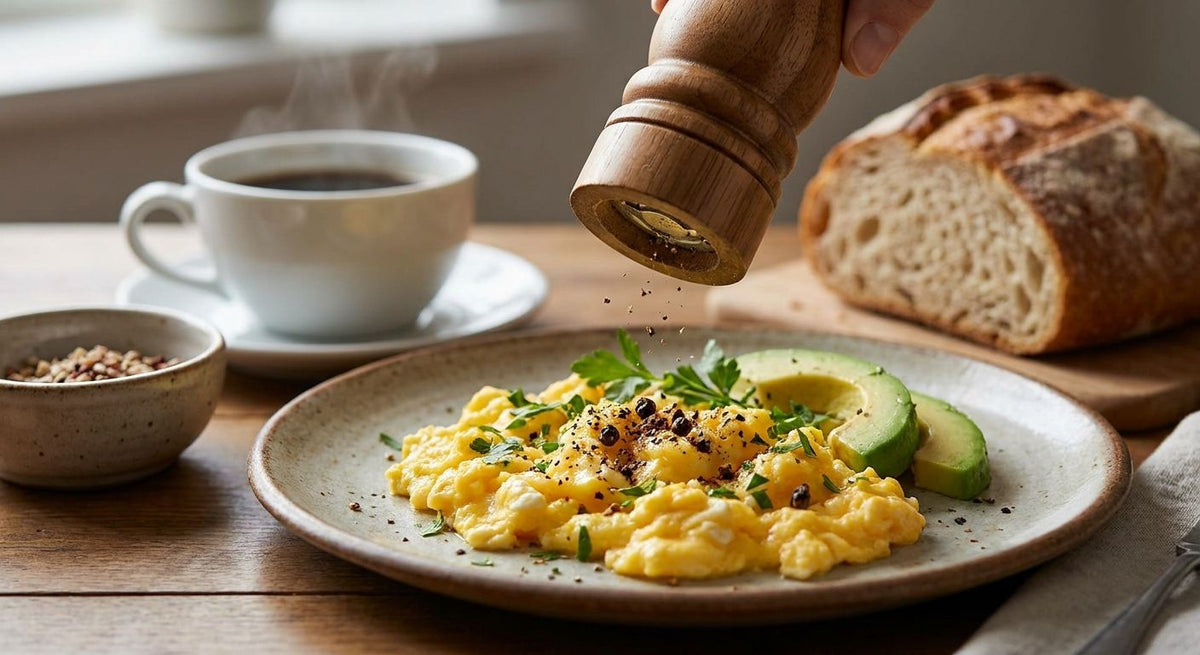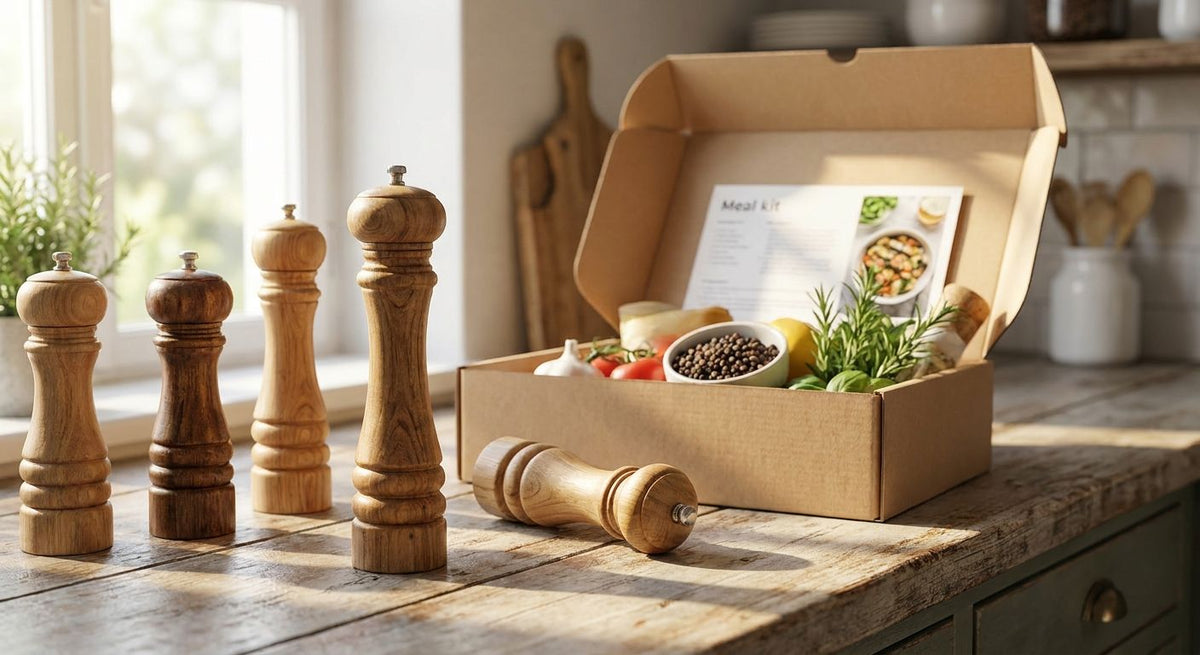


A pepper mill for cocktails needs to do two things a kitchen mill doesn't: grind one-handed over a glass and switch between a coarse Bloody Mary crack and a fine rim-salt blend without a tool kit. This guide breaks down what separates a bar-ready mill from a countertop one, and which options actually hold up during a Saturday brunch rush in 2026.
- PepperMate Traditional Pepper Mill wins for Bloody Marys: one-handed grind, adjustable coarseness, glass-safe base.
- Skip pre-ground pepper for cocktails; the aromatic oils fade fast once peppercorns are cracked.
- Coarse grind holds up floating in a Bloody Mary; a finer setting works better for rimming blends.
- A pepper mill for cocktails should refill fast mid-shift, not require a screwdriver at the bar.
Why a pepper mill for cocktails matters for home bartenders
A shaker of pre-ground pepper sitting next to the bar tools looks fine until someone orders a second Bloody Mary and the flavor is flat. Ground pepper loses its punch fast once it's cracked open, which is exactly why bars and serious home mixologists keep a mill next to the vodka instead of a spice jar.
Cocktail service adds a constraint kitchen cooking doesn't have: you're grinding over a filled glass, often one-handed, often while talking to a guest. A mill built for a cutting board — heavy, two-hand crank, awkward angle — turns into a spill risk the second you tip it over stemware. That's the real difference between a pepper mill built for cocktail bars and one built for a roast chicken.
Match grind size to the drink
Bloody Marys, micheladas, and spiced margaritas all use pepper differently, and the wrong grind either disappears in the glass or clogs a straw.
- Coarse grind for a Bloody Mary garnish — it floats instead of sinking to the bottom
- Medium grind for muddled cocktails where pepper mixes into syrup or juice
- Fine grind for rim blends mixed with salt or sugar
- Extra-coarse for a visual cracked-pepper rim on a bloody caesar
Pick a mill that works one-handed over a glass
A bartender's hands are already busy with a jigger or a bar spoon. A mill that needs two hands to crank slows down every ticket.
- Test the grip with a full glass in your other hand before buying
- Favor a top-crank design over a side-twist for speed
- Check that the base sits flat on a bar mat without tipping
- Avoid mills where the grind adjustment is on the bottom — you'll never touch it mid-shift
Stock whole peppercorns built for grinding, not shakers
Pre-ground pepper in a shaker is a different product than whole peppercorns meant for a mill, and the two aren't interchangeable if you want a fresh cracked garnish.
- Buy whole black peppercorns, not a pre-cracked blend, for the freshest bite
- Keep a backup jar behind the bar so service never runs dry
- Rotate stock so peppercorns don't sit for months in a hot kitchen
- Skip flavored pepper blends for cocktails — plain peppercorn reads cleaner in a drink
Rim glasses with a salt and pepper blend
A Bloody Mary rim is where salt and pepper actually work together, and a lot of home bartenders skip this step because they only own one mill.
- Grind salt and pepper separately, then combine on a plate for rimming
- Add celery salt or smoked paprika to the rim mix for a bar-style finish
- Use a coarser pepper grind for rim texture than you'd use inside the glass
- Keep the rim mix dry — moisture clumps it and it won't stick evenly
A salt and pepper mill bundle covers both jobs from one set instead of hunting for a second grinder mid-shift.
Choose a mill you can see through
Running dry mid-service is the fastest way to embarrass yourself in front of a full bar. A mill you can't see into means guessing.
- Pick a glass-body mill so you can eyeball the peppercorn level at a glance
- Refill before service starts, not after the first empty grind
- Keep a spare mill loaded and ready during high-volume events
- Wipe the exterior between uses — cocktail splash builds up fast on glass
Match the mill to your bar decor
This one's cosmetic but it matters if the mill sits on an open bar cart or a home bar guests can see.
- A black or transparent-black mill blends into most modern bar setups
- Marble-top styles read more upscale for a home cocktail cart
- Match the mill finish to your barware instead of your kitchen
- Keep a second plain mill in the kitchen so the bar cart mill stays clean
Refill fast during a busy shift
The mills that frustrate people during service are the ones that take five minutes and a funnel to reload. A one-hand-load mill saves real time on a Friday night.
- Look for a top-load design over a bottom-unscrew mechanism
- Practice the refill once before you need it live
- Store backup peppercorns within arm's reach of the bar station
- Replace worn grind mechanisms instead of forcing a slow mill through another season


“If the crank takes two hands over a cocktail glass, it's the wrong mill for a bar cart.”
Comparison: pepper mill options for cocktails
| Option | Best for | Grind range | Key limitation |
|---|---|---|---|
| PepperMate Traditional Pepper Mill | Everyday Bloody Mary service, one-hand use | Fine to coarse, adjustable | Not designed to double as a salt mill |
| Marble Top Pepper Mill | Home bar carts, visible display | Adjustable ceramic grinder | Heavier footprint than a standard mill |
| Modern Twist Pepper Mill | Compact bars, small counters | Adjustable coarseness | Smaller hopper needs more frequent refills |
| Disposable salt & pepper grinder | Single events, pop-up bars | Fixed grind | Not built for repeat, daily use |
| Pre-ground pepper shaker | Nothing you actually want in a good cocktail | None | Flat flavor, no texture control |
Verdict: the PepperMate Traditional Pepper Mill is the pepper mill for cocktails most home bartenders should buy in 2026 — it grinds one-handed, adjusts from a Bloody Mary crack to a fine rim blend, and doesn't need a second mill for everyday use.
Common mistakes home bartenders make
- Using pre-ground pepper for garnish. It sinks, it clumps, and it tastes flat compared to a fresh crack straight into the glass.
- Buying one mill and expecting it to handle salt too. Salt corrodes standard grind mechanisms over time; a dedicated salt mill or a matched bundle avoids the wear.
- Setting the grind too fine for a Bloody Mary. Fine pepper disappears into the drink instead of giving that visible cracked-pepper look guests expect.
- Storing peppercorns near the bar's heat lamp or direct light. Heat and light break down the oils that give pepper its punch, so a mill sitting under bar lighting loses freshness faster than one in a cabinet.
- Ignoring the refill mechanism until it's empty mid-shift. Test the reload before the first busy weekend, not during it.
FAQ
What's the best pepper mill for cocktails in 2026?
The PepperMate Traditional Pepper Mill is the best all-around pick for cocktails in 2026 because it grinds one-handed and adjusts from a coarse Bloody Mary crack to a fine rim-salt blend. Bartenders working high-volume shifts should also keep a glass-body mill so they can see the peppercorn level without guessing.
Is fresh cracked pepper actually better than pre-ground for cocktails?
Yes — pre-ground pepper loses its aromatic oils fast once it's cracked open, so it reads flat by the time it hits a Bloody Mary. Fresh cracked pepper from a mill delivers more aroma and a visible texture that pre-ground pepper can't match.
Can I use the same mill for salt and pepper in cocktails?
You can, but salt corrodes most standard grind mechanisms faster than pepper does, which shortens the mill's life. A matched salt and pepper mill bundle keeps both jobs working without wearing out one grinder.
What grind size works best for a Bloody Mary garnish?
A coarse grind works best for a Bloody Mary garnish because it floats on top instead of sinking, giving a visible cracked-pepper finish. A finer grind is better suited to rim blends mixed with salt or sugar.
How often should I refill a bar pepper mill during service?
Refill before service starts rather than waiting for the mill to run dry mid-shift, especially during high-volume events like brunch service. A glass-body mill makes it easy to check the level at a glance instead of guessing.
Do glass pepper mills work well behind a bar?
Glass-body mills work well behind a bar because you can see the peppercorn level without opening the mill, which matters during a busy shift. The tradeoff is that glass shows splash marks faster than a solid-body mill, so it needs more frequent wiping.
What's a good pepper mill for a small home bar cart?
A compact mill like the Modern Twist Pepper Mill fits a small bar cart without taking up much counter space, and its adjustable coarseness handles both Bloody Marys and rim blends. Its smaller hopper means more frequent refills than a full-size mill.
One last thing
The detail most home bartenders skip: pepper meant for a Bloody Mary should be a coarser setting than the pepper you'd use on a steak, because the goal in a drink is texture and visible garnish, not maximum surface area for flavor release. Set your mill's coarsest notch aside specifically for cocktail service in 2026 and leave the finer settings for the kitchen.