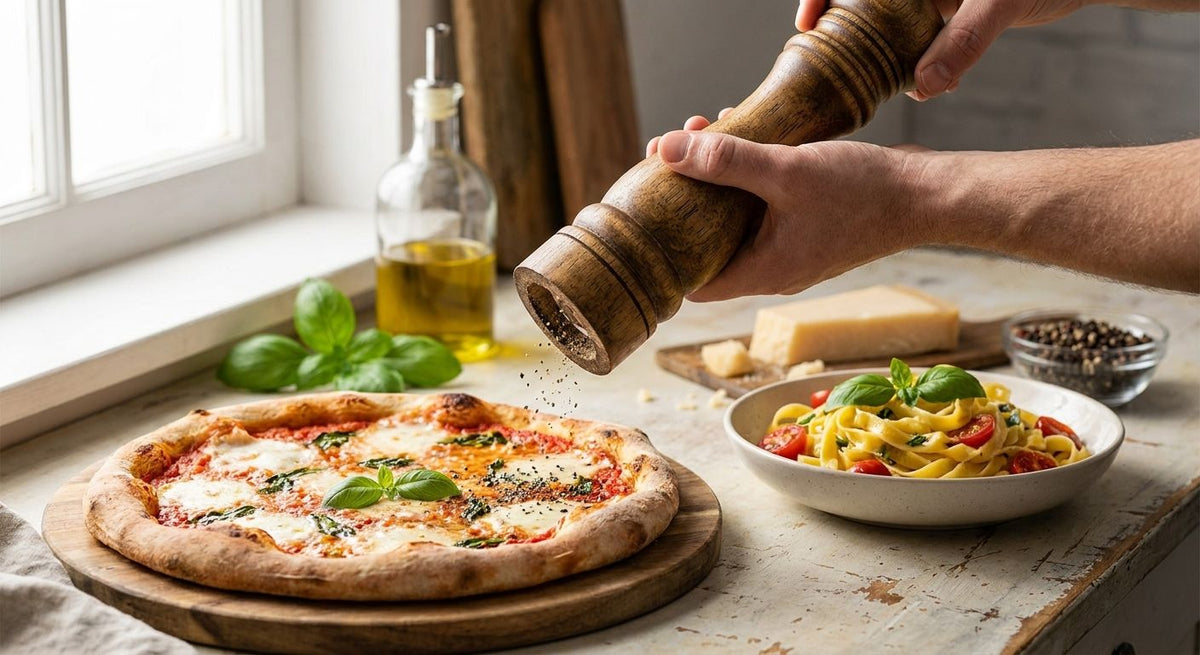


Pepper mill for charcuterie boards and entertaining is a tabletop grinder built to season a spread in front of guests without slowing the room down. A weekday kitchen mill lives near the stove and gets picked up twice a day; a board mill sits out for three hours, gets passed hand to hand, and has to survive a crowded table without tipping into the prosciutto.
- A good pepper mill for charcuterie board setups grinds one-handed and stays upright on a moving table.
- The PepperMate Traditional Pepper Mill uses a base-crank design built for tabletop grinding, not counter use.
- Coarse grind suits cured meats and hard cheese; fine grind suits soft cheese and dips.
- Buy whole peppercorns in small batches for entertaining season 2026 rather than one giant bag.
- Pair a salt and pepper mill bundle for boards that mix sweet, salty, and cured elements.
Why this matters for entertaining hosts
A board gets built once and grazed on for hours, which means the pepper mill has to keep performing after the ice has melted and the wine is topped off twice. Guests reach across the table, kids bump the spread, and a mill that tips or jams becomes the thing everyone remembers instead of the cheese selection.
The stakes are different from daily cooking. At the stove, a wobbly mill is a minor annoyance you fix next time you shop. On a table full of guests, it is the thing that spills peppercorns into the honey. A base-crank mill like the PepperMate Traditional Pepper Mill grinds by turning a knob at the bottom instead of twisting the top, so it can sit flush on a board and get worked with one hand while the other holds a cracker.
How to pick and run a pepper mill for a charcuterie spread
Scale your peppercorn supply to the size of the party
Most hosts under-buy peppercorns for entertaining season, then run dry mid-party and switch to pre-ground pepper, which flattens the whole board's flavor. Buy enough whole peppercorns for the guest count and refill before the party, not during it.
- For 4-6 guests, a half-full mill chamber usually lasts the whole spread
- For 10+ guests, refill the mill right before guests arrive, not the morning of
- Keep a small backup jar of whole peppercorns in the pantry for last-minute top-offs
- Skip pre-ground pepper entirely for a board — it loses aroma within hours of grinding
- Buy peppercorns in 1lb bags rather than small jars if you host more than once a season
Match grind coarseness to what's actually on the board
Charcuterie boards mix textures that all want different grind settings, and running one setting for the whole board flattens half the flavor. Cured meats and hard cheeses want a coarse, visible crack; soft cheeses, dips, and deviled eggs want a fine dusting that doesn't crunch.
- Coarse setting: salami, prosciutto, aged cheddar, hard-boiled eggs
- Medium setting: soft-ripened cheeses like brie, roasted nuts, olives
- Fine setting: whipped ricotta, hummus, deviled eggs, dressed greens
- Adjust the grind between courses rather than picking one setting for the whole spread
- Test the grind on a spare cracker before guests arrive, not on the board itself
Pick a mill that holds up during a three-hour spread
A lot of pepper mills grind fine in a two-minute kitchen demo and then jam or tip over an hour into a party. Look for a wide, stable base and a mechanism rated for repeated one-handed use rather than a tall, top-heavy design made for a spice rack.
- Wide base diameter so the mill doesn't tip when bumped
- Ceramic or stainless grinding mechanism that doesn't dull from repeated cranking
- A single hand-crank motion rather than a two-handed twist-top
- A clear or light-colored body so guests can see when it's running low
- A salt and pepper mill bundle if the board needs both seasonings side by side
The PepperMate Traditional Pepper Mill uses a bottom crank instead of a top twist, which keeps the grind steady even when it gets passed around a table all night in 2026.
Set up the mill so it doesn't compete with the board
A mill parked in the center of a charcuterie board eats up plating space and forces guests to reach over the meats to grab it. Stage it at the edge, angled toward the seating side, so it's grabbed without disturbing the layout.
- Place the mill at the board's corner, not the center
- Angle the crank toward the seated side of the table
- Leave a small empty patch of board near the mill for grind fallout
- Keep a folded napkin nearby for wiping the base between uses
- Rotate the mill toward whoever is closest to a dry section of the board
Keep peppercorns fresh once the mill is sitting out
Peppercorns lose aroma once exposed to air and heat, and a board sitting under kitchen lights for hours accelerates that. Fill the mill close to serving time rather than the night before, and keep the bulk supply sealed and away from the stove.
- Store bulk peppercorns in an airtight container, not the original bag
- Keep the bulk container away from stove heat and direct light
- Fill the mill within an hour of guests arriving, not the day before
- Buy whole black peppercorns in a size that gets used up within a season rather than sitting for a year
- Smell-test peppercorns before a big event — flat aroma means it's time to replace the batch
Clean and store the mill between gatherings
A mill that sits unused between parties collects stale oil residue in the grinding chamber, which shows up as a dull, bitter grind at the next event. A quick wipe-down and dry storage keeps it ready without a full teardown every time.
- Wipe the exterior with a dry cloth after each use
- Empty leftover peppercorns if the mill won't be used again within a few weeks
- Avoid submerging the mill body in water
- Store upright in a cabinet rather than a drawer where it can get knocked sideways
- Check the grind knob periodically for stuck peppercorn dust
“If the mill needs two hands to hold steady, it's not a table mill, it's a kitchen mill you brought to a party.”
Pepper mill options for entertaining, compared
| Option | Best for | Key limitation |
|---|---|---|
| PepperMate Traditional Pepper Mill | Hosts who want one-handed grinding on a crowded board | Single-color body, so match it to your table setting in advance |
| Salt and pepper mill bundle | Boards that need both seasonings side by side | Takes up more table space than a single mill |
| Marble top pepper mill | Hosts styling a board around a specific decor theme | Heavier to pass around a long table |
| Modern twist pepper mill | Smaller gatherings with less table traffic | Top-twist motion is slower for repeated one-handed grinding |


Common mistakes hosts make with tabletop pepper mills
- Using a stovetop mill instead of a table mill. Twist-top mills built for one hand near a cutting board become awkward when guests are passing them across a table full of glassware.
- Grinding everything at one setting. A single coarse or fine setting flattens the difference between a hard cheddar and a whipped ricotta.
- Filling the mill the night before. Peppercorns lose aroma sitting in a warm kitchen overnight; fill closer to serving time in 2026 entertaining seasons where prep windows are already tight.
- Centering the mill on the board. It forces guests to reach over the food, which is how spills happen mid-party.
- Skipping a backup supply. Running out of whole peppercorns mid-event means switching to pre-ground pepper, which undercuts the whole point of a fresh grind.
FAQ
What's the best pepper mill for a charcuterie board?
A base-crank mill with a wide, stable footprint works best for charcuterie boards because it grinds one-handed without tipping when guests reach across the table. The PepperMate Traditional Pepper Mill uses this bottom-crank design instead of a top-twist mechanism.
Should I use coarse or fine pepper on a charcuterie board?
Use coarse pepper on cured meats and hard cheeses, and fine pepper on soft cheeses and dips. Most boards benefit from adjusting the grind setting between sections rather than using one setting for everything.
Is a salt and pepper mill bundle better than a single pepper mill for entertaining?
A bundle is better when the board mixes sweet, salty, and cured elements that each need seasoning control. A single mill is enough for smaller boards focused mainly on pepper-forward flavors.
How much pepper should I grind for a party of 10?
Fill the mill chamber close to full before a party of 10 or more so it doesn't run dry mid-event. Refilling right before guests arrive keeps the pepper aromatic instead of stale from sitting overnight.
Can I leave a pepper mill out on a board for hours?
Yes, a stable base-crank mill can sit out for a full entertaining window without issue. Wipe the exterior afterward and empty unused peppercorns if the mill won't be used again soon.
Do pre-ground pepper shakers work as a charcuterie board substitute?
Pre-ground pepper loses aroma within hours of grinding, so it tastes flat compared to a fresh grind at the table. A tabletop mill filled with whole peppercorns keeps the flavor sharper through a long spread.
What size peppercorn bag should I buy for regular entertaining?
A 1lb bag of whole peppercorns covers several gatherings before losing freshness, which suits hosts who entertain more than once a season. Buying smaller jars more often keeps the pepper from sitting too long before use.
One last thing
The detail most hosts miss is where the mill sits relative to the seating, not what mill they own. A base-crank mill parked at the board's edge, angled toward the chairs, gets used all night; the same mill dead-center on the board gets picked up once and abandoned because nobody wants to lean over the prosciutto to reach it in 2026's tighter dinner-party setups.