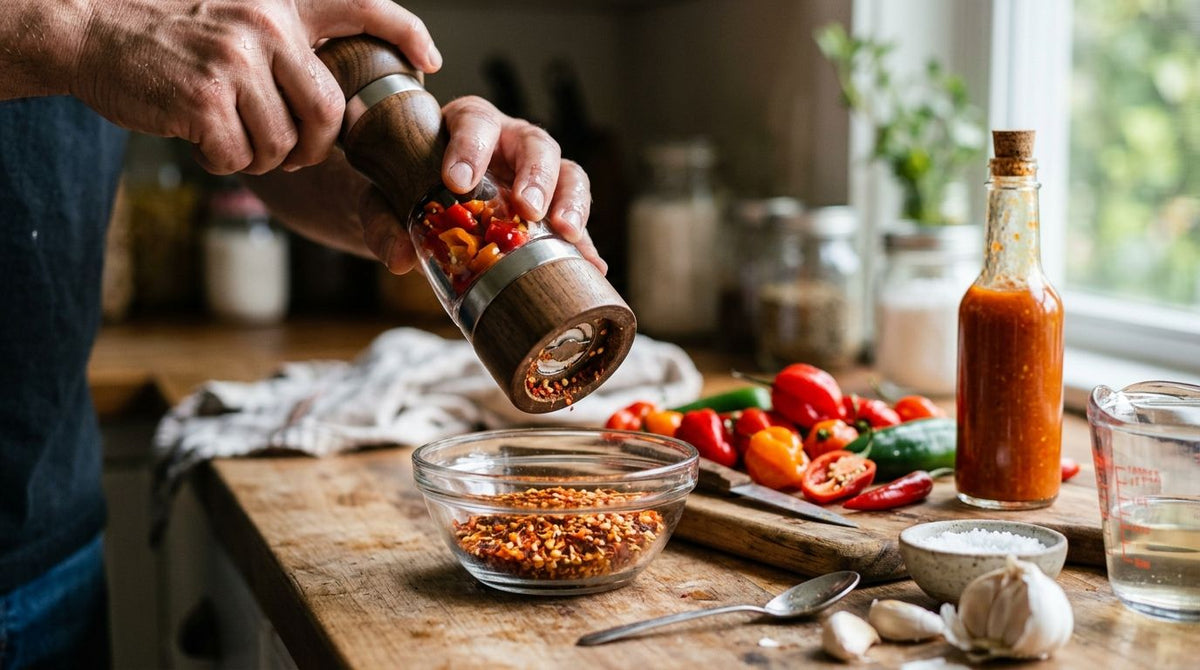


Pickling and fermentation cooks need a pepper mill that survives brine splashes, cracks peppercorns evenly for long ferments, and doesn't clog when salt gets into the mechanism — a standard pepper shaker or a cheap mill with plastic gears won't hold up through a full canning season. This guide breaks down what actually matters for brine work: grind size, mechanism durability, and how to season a ferment without over-milling it into dust.
- PepperMate Traditional Pepper Mill wins for pickling brine because its ceramic mechanism handles coarse-cracked peppercorns without clogging.
- Grind coarse, not fine, for fermentation crocks — fine pepper dust clouds the brine and sinks to the bottom.
- Whole peppercorns suit quick refrigerator pickles; fresh-cracked pepper works better for long ferments and canning batches.
- Store peppercorns away from stove heat and humidity to protect the oils that pickling recipes depend on.
Why a pepper mill for pickling matters for fermentation cooks
Brine work is not the same as seasoning a dinner plate. A ferment sits in salt water for days or weeks, so whatever pepper you add has to hold its flavor and texture the whole time, not just at the first taste. Whole peppercorns dropped into a jar barely release oil over a two-week ferment; pre-ground pepper from a shaker loses most of its aroma before the lid even goes on.
A PepperMate Traditional Pepper Mill solves the middle problem: it cracks peppercorns fresh, right before they go into the brine, so the oils are still active when the vegetables start fermenting. That single difference is why home picklers who've switched off pre-ground pepper report a sharper, more distinct pepper note in their finished jars in 2026 batches compared to prior seasons using shaker pepper.
Choose the right grind size for brine work
Grind size decides whether pepper flavors the whole batch evenly or clumps at the bottom of the jar.
- Coarse grind for fermentation crocks — releases oil slowly over days without turning the brine cloudy
- Medium-coarse for quick refrigerator pickles that only sit for 24-72 hours
- Cracked, not powdered, for anything going into a canning jar with a long shelf life
- Fine grind only for last-minute seasoning after the ferment is done and jarred
Match your mill's mechanism to whole spice loads
Pickling spice blends often include whole peppercorns alongside mustard seed, coriander, and dill seed — your mill needs to handle that load without jamming.
- Ceramic grinding mechanisms resist corrosion from salt-heavy air near the stove
- Adjustable coarseness settings let you switch between crock work and finishing seasoning
- A wide hopper reduces how often you refill mid-batch during a big canning day
- Avoid mills with painted metal internals — brine mist corrodes them within a season or two
Build your pickling spice blend around fresh-cracked pepper
Most pickling spice mixes lean on pepper as the backbone flavor, so grinding it fresh changes the whole jar.
- Start with whole black peppercorns rather than a pre-mixed jar — you control the crack size
- Add mustard seed and coriander whole; they don't need grinding
- Crack a tablespoon of pepper fresh per quart jar rather than measuring pre-ground
- Taste the brine before sealing — fresh pepper is sharper than what most recipes were written for
Season your salt separately from your pepper
Brine strength depends on getting salt measurements exact, and mixing salt and pepper in one grinder makes that harder to control.
- Use a dedicated salt grinder so you can weigh salt precisely for brine ratios
- Coarse sea salt or pickling salt grinds more consistently than table salt
- Keep pepper and salt mills on separate sides of your prep station to avoid mixing them mid-recipe
- Check your brine salinity before adding pepper — pepper won't fix an under-salted brine
Protect your mill from brine and humidity
Splashed brine and steam from a canning pot are harder on kitchen tools than everyday cooking.
- Wipe down the mill body after every batch — dried brine leaves a salt crust that attracts moisture
- Never submerge the grinding mechanism in water or brine
- Check the replacement parts guide before assuming a sticky mill needs full replacement
- Store the mill away from the stove during long simmer sessions, not next to the canning pot
Store your peppercorns for consistent batches all season
A fermentation project might run for weeks, so peppercorns sitting open on the counter lose potency before you've finished the batch.
- Keep peppercorns in an airtight container away from direct light
- Buy whole peppercorns in bulk for canning season rather than small jars you refill weekly
- Read the full peppercorn storage guide before stocking up for a big pickling run
- Rotate stock — older peppercorns still work but grind softer and taste flatter
Adjust pepper after fermentation, not just before
Fermentation changes flavor intensity over time, so the pepper level you set on day one isn't always right on day fourteen.
- Taste the brine at the halfway point of a long ferment
- Add a fresh crack of pepper right before jarring if the flavor has mellowed
- Don't over-correct — pepper added late sits on top and tastes sharper than pepper that fermented in
- Keep notes on grind size and quantity per batch so you can repeat what worked


Pickling and fermentation pepper options compared
| Option | Best for | Key limitation |
|---|---|---|
| Whole peppercorns dropped straight in brine | Quick refrigerator pickles under 72 hours | Uneven flavor release; peppercorns float rather than distribute |
| Pre-ground black pepper from a shaker | Fast weeknight quick pickles | Flavor fades before the ferment finishes; dust settles at the jar bottom |
| Fresh-cracked pepper from a PepperMate mill | Fermented crocks and canning batches needing consistent grind | Needs a quick wipe-down after brine splash to stay smooth |
| Salt and pepper mill bundle | Seasoning both the brine and the finished ferment from one set | Two mills to manage on a crowded canning-day counter |
A fresh-cracked coarse grind is the right call for any ferment running longer than a few days — pre-ground pepper simply doesn't survive the process.
Common mistakes pickling and fermentation cooks make
- Grinding pepper too fine for a long ferment. Fine dust clouds the brine and sinks instead of distributing flavor through the jar.
- Skipping the crack entirely. Whole, un-cracked peppercorns barely release oil into a two-week ferment — you're basically adding decoration, not flavor.
- Storing peppercorns next to the stove. Heat and steam from canning pots strip the oils before the peppercorns ever reach the brine.
- Ignoring mill maintenance during canning season. Dried brine crust builds up fast when you're running batch after batch, and it eventually jams the mechanism.
- Setting the pepper level once and forgetting it. Fermentation mellows flavor over days — a batch that tasted right on day one can taste flat by day fourteen if you don't re-check it.
FAQ
What's the best pepper mill for pickling and fermentation?
A pepper mill with a ceramic grinding mechanism, like the PepperMate Traditional Pepper Mill, holds up best because it resists corrosion from brine mist and cracks peppercorns coarse enough to release flavor slowly during a long ferment.
Should you use whole or ground pepper in pickle brine?
Fresh-cracked, coarse-ground pepper works better than either whole peppercorns or pre-ground pepper for ferments running longer than a few days. Whole peppercorns release too little oil, and pre-ground pepper loses its aroma before the brine finishes fermenting.
How much fresh-cracked pepper should you use per quart of pickling brine?
Most home pickling recipes call for about a tablespoon of cracked black pepper per quart jar, adjusted to taste. Fresh-cracked pepper is noticeably sharper than pre-ground, so start light and taste the brine before sealing.
Does salt brine damage a pepper mill over time?
Salt mist and splashed brine can corrode painted metal internals and leave crusted residue that jams the mechanism. Wiping the mill down after each batch and choosing a ceramic mechanism reduces this risk significantly.
Can you put whole peppercorns directly into a fermentation crock without grinding?
Yes, but whole peppercorns release very little flavor into a ferment compared to cracked pepper. Most fermentation recipes get better results from a coarse crack right before the peppercorns go into the brine.
How do you store peppercorns so they stay fresh through a full pickling season?
Keep peppercorns in an airtight container away from stove heat, steam, and direct light. Buying in bulk for a canning season works fine as long as storage is airtight and cool.
Is a mill with a visible peppercorn level better for pickling projects?
A mill you can see through helps you track supply during a long canning day when you're refilling multiple times, though it's a convenience feature rather than a requirement for flavor.
One last thing
Most pickling recipes were written assuming pre-ground pepper, which means the pepper amounts listed are usually calibrated for a weaker flavor than what fresh-cracked pepper delivers. Cut the pepper measurement in your recipe by roughly a third the first time you switch to a fresh-cracked mill, taste the brine, and adjust up from there — it's easier to add more pepper mid-ferment than to fix an over-peppered jar.