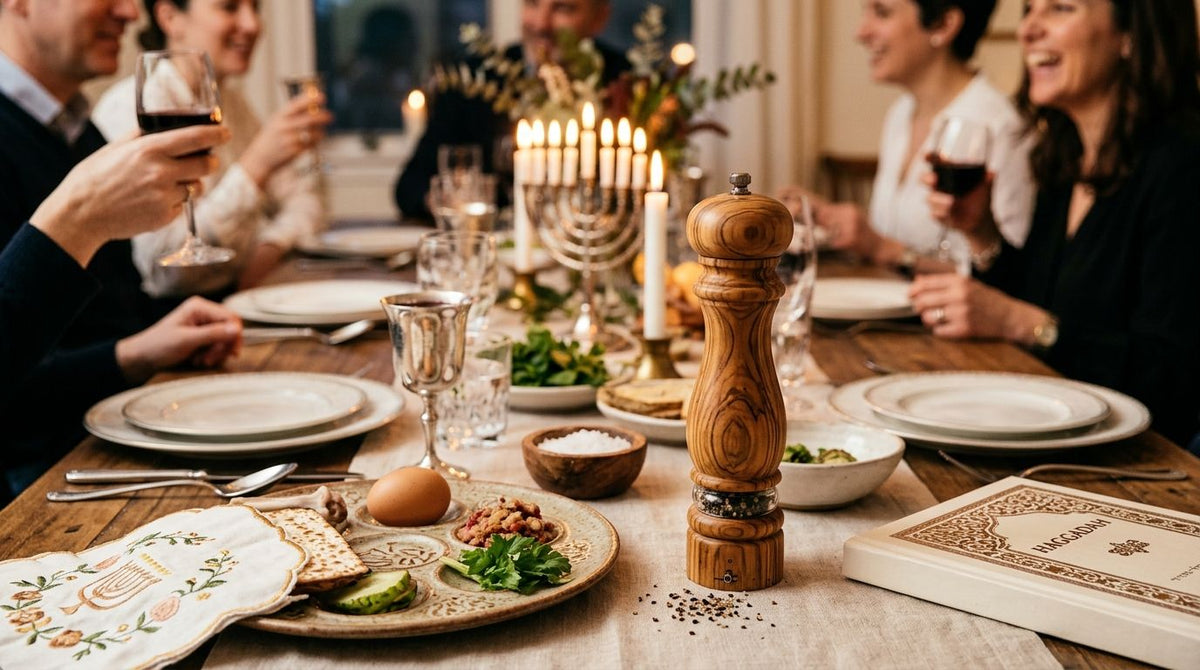


A pepper mill for Ramadan and Iftar dinners is a grinder built to season the same table every night for 29-30 days straight, not just one holiday meal. Iftar spreads move fast from soup to rice to grilled meat in a single sitting, so the mill needs to keep up with different textures and grind sizes without clogging halfway through the month.
- A pepper mill for Ramadan and Iftar dinners needs to survive nightly grinding across 29-30 days without clogging or drying out.
- The PepperMate Traditional Pepper Mill uses an acrylic burr that keeps grinding through daily use all of Ramadan 2026.
- One mill comfortably serves 6-8 guests before it becomes a bottleneck at the fast-breaking table.
- Stock whole peppercorns before the first fast in 2026 — pre-ground pepper loses aroma within days.
- A salt and pepper mill bundle covers both seasonings for family-style iftar spreads without adding a second station.
Why the right pepper mill matters for Ramadan and Iftar
Iftar isn't a single dinner — it's the same meal repeated every evening for a month, often with extended family or guests added on weekends. A mill that's fine for occasional weeknight cooking gets asked to do a lot more work here: soups like harira need a fine dusting, grilled kofta wants a coarse crack, and rice dishes fall somewhere in between.
The PepperMate Traditional Pepper Mill is built around this exact kind of repeated, adjustable grinding rather than a single setting you dial in once and forget. Because it's designed for daily kitchen use rather than occasional entertaining, it holds up better across a month of nightly service than mills meant for lighter rotation.
A fast-breaking table also moves quickly — everyone sits down hungry at the same moment, and a mill that jams or takes two hands to twist becomes the thing people wait on. That's the practical problem this segment needs solved, not a fancier grind, just a reliable one that keeps pace with the rest of the meal.
Choose a mill built for a month of nightly grinding
Start by ruling out mills that aren't made for daily repetition. A lot of tabletop grinders are designed to look good more than to be used twice a day for 29-30 days.
- Check that the mechanism turns with one hand — you'll be doing this at every meal
- Avoid mills with tiny hoppers that need refilling every few days
- Test the twist resistance before committing; stiff mechanisms tire out over a month
- Skip battery-powered grinders for this use case — dead batteries mid-Ramadan are a real annoyance
- Look for a wide base so the mill doesn't tip on a crowded table
Match grind coarseness to your iftar menu
One grind setting doesn't work for a table that moves from soup to lamb in twenty minutes. Adjust before the meal starts rather than mid-service.
- Set a fine grind for lentil soups, harira, and lighter broths
- Move to medium for rice dishes, biryani, and stews
- Go coarse for grilled meats, kofta, and kebabs where you want visible cracked pepper
- Grind extra into a small bowl before guests arrive so seasoning is ready without passing the mill around
- Taste as you go — fasting all day changes how strong flavors read at iftar
Stock whole peppercorns before the first fast
Buying peppercorns the week Ramadan starts and then forgetting about them for a month is the single most common mistake. Whole peppercorns hold their oils far longer than pre-ground pepper, which is exactly what you need for consistent flavor across dozens of meals.
- Buy whole black peppercorns in bulk rather than small jars you'll run out of mid-month
- Store extra peppercorns in an airtight container away from stove heat
- Refill the mill's hopper before it runs empty, not after — an empty mill during a busy iftar service is a problem you can avoid
- Keep a backup bag of peppercorns in the pantry so a refill never interrupts meal prep
- Consider a salt and pepper mill bundle if you're already restocking pepper — it keeps both seasonings on the same refill schedule
Set up a shared seasoning station for the table
For family-style iftar with 6-8 or more at the table, passing a single mill hand to hand slows everyone down right when they're ready to eat. A small station near the center of the table fixes this without adding much clutter.
- Place one pepper mill for every 6-8 guests instead of relying on a single mill for the whole table
- Pair the pepper mill with a matching salt grinder so both seasonings live in one spot
- Keep the station within reach of the dates and water used to break the fast, since that's where hands go first
- Add a small tray under the mills to catch drips and keep the tablecloth clean during a busy service
- Rotate mills between the main table and a side table if you're hosting overflow guests
Pick finishes that fit your iftar table setting
Ramadan tables tend to get dressed up more than an average weeknight dinner, especially for guest nights or the last ten days of the month. The mill sitting in the middle of the table is part of that presentation.
- Match the mill finish to your tableware — white or red for a bright, festive setting, hunter green or black for a more formal spread
- Choose a taller mill if you want it visible above serving dishes on a full table
- Keep a plain black or white mill as your everyday option and save colored finishes for guest nights
- Avoid mills with fragile decorative tops if children are at the table during iftar
The PepperMate Traditional Pepper Mill comes in enough finishes to match either setup without switching mechanisms.
Keep the mill working through 29-30 nights of use
Daily use for a full month wears on any kitchen tool. A little maintenance keeps the mechanism from binding right when you need it most.
- Wipe the exterior after each meal to keep oils from building up on the mechanism
- Run the mill empty a few times if it starts turning stiffly — trapped pepper dust is usually the cause
- Store it upright between meals rather than on its side, which can shift the internal mechanism
- Check the hopper level each afternoon before iftar prep starts, not after guests arrive
Comparison: pepper mill options for Ramadan tables
| Option | Best for | Key limitation |
|---|---|---|
| PepperMate Traditional Pepper Mill | Nightly single-household iftar use | One mill per station; add a second for larger tables |
| Traditional Salt and Pepper Mill Bundle | Family-style tables needing both seasonings | Two mills take more table space |
| Modern Twist Pepper Mill | Guest nights and dressed-up tables | Better suited to lighter, occasional grinding than heavy daily rotation |
| Marble Top Pepper Mill | Décor-focused settings for the last ten nights | Heavier design, less practical for moving between rooms |


Common mistakes with a pepper mill for Ramadan and Iftar
- Buying pepper the week Ramadan starts and never restocking. Pre-ground pepper and a single filled mill both run dry by week two.
- Using one mill for a table of 12+. It turns iftar into a waiting line instead of a shared meal.
- Skipping grind adjustment between courses. Soup and grilled meat need different settings; leaving it on one is a compromise nobody enjoys.
- Storing peppercorns near the stove. Heat breaks down the oils that give fresh pepper its punch, which matters over a full month of use.
- Choosing decorative mills over functional ones for the everyday table. Save the marble or acrylic finishes for guest nights; put a workhorse mill in daily rotation.
A za'atar spice blend can round out an iftar spread built around fresh-ground pepper, especially if the menu leans into Middle Eastern flavors for suhoor and iftar alike.
FAQ
What's the best pepper mill for Ramadan and Iftar dinners?
A mill with an adjustable, one-hand mechanism that holds up to twice-daily use for 29-30 days, like the PepperMate Traditional Pepper Mill, works best. Look for a wide base and easy-turn grip since it gets used at every iftar table.
How often should I refill a pepper mill during Ramadan?
Check the hopper level every afternoon before iftar prep rather than waiting for it to run empty mid-meal. Most households refill once or twice over a 29-30 day Ramadan depending on hopper size and how many guests are served.
Can one pepper mill serve a large iftar gathering?
One mill comfortably covers 6-8 guests before it slows down the table. For larger family-style iftars, add a second mill or a matching salt and pepper set so guests aren't passing one grinder around.
What's the difference between a pepper mill and a salt and pepper mill bundle for iftar tables?
A single pepper mill only handles pepper, while a bundle pairs it with a matching salt grinder so both seasonings sit together at the table. Bundles work well for family-style iftar where guests need both at once.
How do I keep whole peppercorns fresh for the month of Ramadan?
Store whole peppercorns in an airtight container away from stove heat, and buy in bulk rather than small jars you'll run out of mid-month. Whole peppercorns hold their oils far longer than pre-ground pepper.
Is a coarse or fine grind better for iftar dishes like harira and biryani?
Harira and other soups do better with a fine grind, while biryani and rice dishes suit a medium setting. Adjust the mill before the meal starts rather than switching mid-service.
Do I need a separate pepper mill for grilled meats during iftar?
You don't need a separate mill, just a coarser grind setting for kofta, kebabs, and other grilled dishes. One adjustable mill can cover both the soup course and the grill course if you reset it between them.
How do I clean a pepper mill after a month of daily Ramadan use?
Wipe the exterior after meals and run the mill empty occasionally to clear trapped pepper dust that causes stiff turning. Store it upright between uses rather than on its side to keep the mechanism aligned.
One last thing
The detail most people miss going into Ramadan 2026 isn't the mill itself — it's the peppercorns. A mill refilled with stale, pre-ground pepper tastes the same on night one and night twenty-nine: flat. Fresh whole peppercorns, ground right before the fast breaks, are what actually make an iftar table taste different from a regular weeknight dinner.