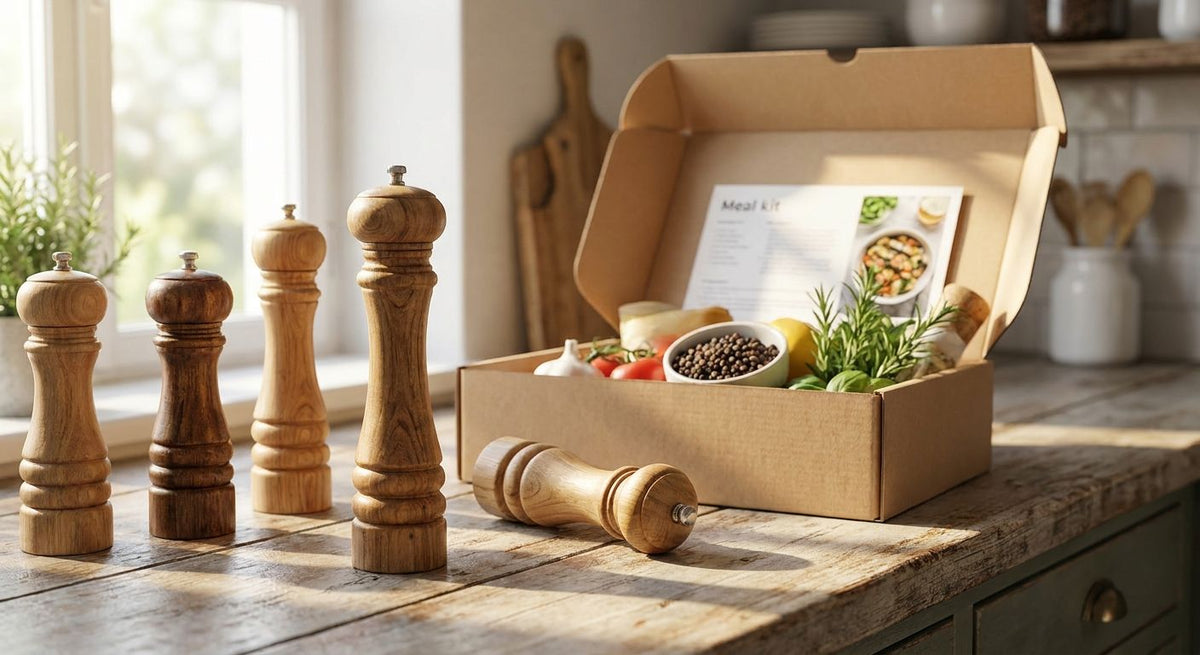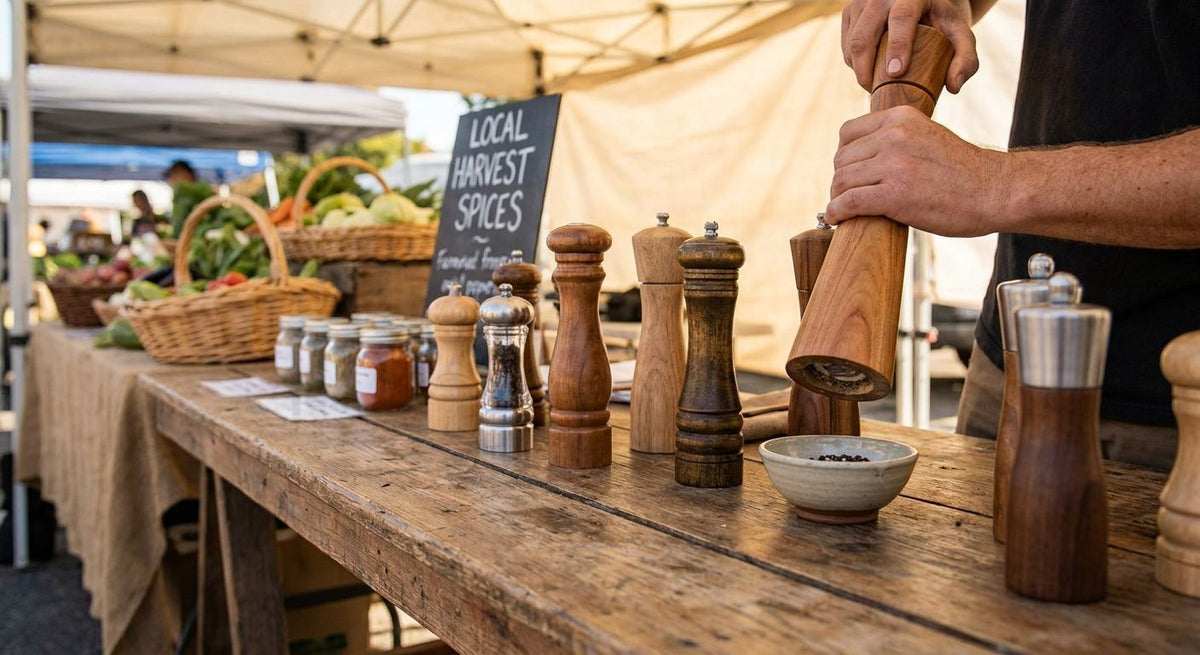


Bakers and dessert cooks need a pepper mill for baking that grinds fine and even, so a pinch of pepper disappears into batter instead of scattering woody flecks through a strawberry shortcake or a batch of molasses cookies. Savory cooking tolerates a coarse, uneven grind; dessert work does not, because the pepper has to distribute through a small volume of dough or glaze without announcing itself in bites.
- PepperMate's Traditional Pepper Mill is the best pepper mill for baking in 2026 for home bakers who need a repeatable fine grind.
- Pre-ground pepper loses aromatic oil fast, which flattens flavor in delicate desserts like caramel or spiced pear pie.
- Tellicherry and other fine-grind peppercorns work better in sweet recipes than coarse steak-cut blends.
- A dedicated pepper mill for baking costs $39.99 for PepperMate's Traditional model versus roughly $80 for a matching salt-and-pepper bundle.
Why a pepper mill for baking matters for dessert cooks
Black pepper shows up in more 2026 dessert recipes than most home bakers expect — strawberry-balsamic shortcake, black pepper molasses cookies, spiced pear galette, even chocolate truffles finished with a cracked pepper rim. In every one of those, the pepper is a supporting note, not the headline, so the grind has to be fine and the dose has to be small and controllable.
Pre-ground pepper from a jar has already lost most of its aromatic punch by the time it reaches your pantry. Whole peppercorns hold their essential oils until the moment they're crushed, which is exactly why a mill matters more in baking than in a stew that simmers for an hour and masks staleness anyway. A pepper mill built for daily use gets you fresh flavor at the exact moment the dough or glaze needs it, not whenever the jar was last filled at the factory.
Steps that fix the actual problem
Match the grind to the recipe, not the pepper shaker
A steakhouse grind (thick, cracked, visible) works on a crust. It does not work in a batter, where those same flecks turn hard and bitter once baked.
- Set your mill to its finest, most even output for cakes, cookies, and custards
- Reserve a coarser grind only for finishing touches on top of a glaze or crust
- Grind a test pinch onto a white plate before adding it to the bowl — you should see fine, even grains, not shards
- Skip pre-cracked pepper entirely for batters; it's built for rubs, not dough
Pick peppercorns suited to sweet and delicate flavors
Not every peppercorn behaves the same in a dessert. Tellicherry peppercorns, a well-known fully ripened black pepper variety, tend to bring more citrus and floral notes than a generic coarse-ground blend, which reads as sharper and more one-note against sugar and butter.
- Start with a fully ripened, single-origin black peppercorn rather than a pre-mixed rainbow blend
- Taste a few grains raw before committing a whole batch of dough to them
- Avoid pepper blends that include salt or dried herbs — they throw off a dessert's sugar balance
- Keep a separate, dedicated stock of peppercorns for baking so a garlicky blend never ends up in a cookie by mistake
Measure milled pepper by teaspoon, not by feel
Recipes that call for pepper in dessert applications are precise about quantity because the margin between "pleasant warmth" and "this tastes off" is thin.
- Grind pepper into a small dish first, then measure it with a standard measuring spoon
- Level off the spoon the same way you would with flour or baking soda
- Start at half the recipe's stated amount if you're new to pepper in sweets, then adjust up
- Never eyeball turns of the mill as a substitute for a measured teaspoon in a written recipe
Store your peppercorns where humidity and heat can't reach them
A mill loaded with peppercorns that have gone soft or musty ruins the whole batch of dough before you notice, because the flavor loss shows up only after baking.
- Keep whole peppercorns in an airtight container, away from the stove and oven vent
- Refill your mill in small amounts rather than topping off a half-empty hopper for months
- Store backup peppercorns in a cool, dark cabinet, not a spice rack over the range
- Check peppercorns for a faded, dusty smell before using them in a delicate dessert batch
For a longer walkthrough on humidity, containers, and shelf life, see PepperMate's guide on storing peppercorns for maximum freshness.
Test new pepper pairings in a small batch before scaling
A full sheet pan of cookies is an expensive way to discover a pairing doesn't work.
- Bake a mini batch of 4-6 cookies or a single ramekin of custard first
- Adjust the pepper amount by quarter-teaspoon increments between test batches
- Write down what worked so the full recipe doesn't rely on memory
- Let the test batch cool fully before judging — pepper's warmth often builds after baking, not during
Clean and reset your mill between savory and sweet use
A mill that just ground pepper for a roast carries oil residue that can taste rancid or muddy in a dessert.
- Wipe the grinding mechanism with a dry cloth after heavy savory use
- Run a few grinds of dry rice through the mill to clear built-up oil, if your mill allows it
- Let the mill air out overnight before switching it to dessert duty
- Keep a second, dedicated mill for baking if you cook savory food daily — it avoids cross-flavor entirely


Comparing your options for a pepper mill for baking in 2026
| Option | Best for | Starting price | Key limitation |
|---|---|---|---|
| Pre-ground black pepper (jar) | Quick, one-off dessert recipes | Under $5 | Aromatic oil has already faded before you open the jar |
| Generic manual pepper mill | Bakers who already own one and bake rarely | Varies by brand | Inconsistent grind size throws off measured teaspoons |
| PepperMate Traditional Pepper Mill | Bakers who bake weekly and want a repeatable fine grind | $39.99 | Grinds pepper only, not salt |
| Salt and Pepper Mill Bundle | Bakers who also season crusts and glazes with salt | $79.99 | Takes up two mills' worth of counter space |
PepperMate's Traditional Pepper Mill is the pick for anyone baking with pepper more than once a month in 2026 — the grind stays fine and even, batch after batch, which matters more in a cookie dough than it ever did in a stew.
“Milling pepper straight into batter right before baking preserves more flavor than grinding a batch ahead of time and letting it sit.”
Common mistakes bakers make with pepper in desserts
- Using a steakhouse-coarse grind in cookie dough. Those thick flecks turn hard and bitter once baked, instead of dissolving into the crumb.
- Adding pepper too early in the creaming stage. Pepper's aroma cooks off faster than most bakers expect, so it should go in with the dry ingredients, not the butter and sugar.
- Treating all peppercorns as interchangeable. A coarse blend meant for grilling reads sharp and one-note against sugar; a fully ripened single-origin peppercorn reads warmer and rounder.
- Storing peppercorns above the oven. The exact spot most kitchens use for spice storage is the worst place for pepper headed into a delicate 2026 dessert lineup — heat and steam strip the oils fast.
- Skipping the small test batch. Scaling a new pepper pairing straight to a full sheet pan wastes ingredients when a mini batch would have caught the problem first.
FAQ
What's the best pepper mill for baking in 2026?
PepperMate's Traditional Pepper Mill is the best pepper mill for baking in 2026 for home bakers, because it produces a consistent fine grind at $39.99 without requiring a second mill for salt.
Is pre-ground pepper okay for dessert recipes?
Pre-ground pepper works in a pinch but has already lost much of its aromatic oil, which flattens flavor in delicate desserts. Freshly milled pepper reads sharper and rounder in the same recipe.
How much fresh pepper should I add to a batter or dough?
Start at half the amount a recipe calls for if you're new to pepper in sweets, then measure and level a full teaspoon on later batches once you know your tolerance. Measure milled pepper in a spoon rather than counting mill turns.
Does black pepper actually belong in desserts?
Yes — black pepper appears in strawberry shortcake, molasses cookies, spiced pear desserts, and chocolate truffles as a warming background note, not a dominant flavor. The key is a fine, even grind and a small measured dose.
What type of peppercorn works best in sweet baking?
A fully ripened, single-origin black peppercorn such as Tellicherry tends to bring citrus and floral notes that pair better with sugar than a generic coarse blend. Avoid pre-mixed blends that include salt or dried herbs.
How do I keep pepper from tasting too spicy in a dessert?
Use a fine grind setting and measure by teaspoon rather than by mill turns, starting with half the called-for amount. Pepper's warmth often builds after baking, so judge the final cooled result before adding more next time.
Can I use the same pepper mill for savory and sweet baking?
You can, but wipe down the grinding mechanism and let it air out between uses so savory oil residue doesn't carry into a dessert batch. Bakers who cook savory food daily often keep a second mill dedicated to sweets.
How do I store peppercorns so they stay fresh for baking?
Keep whole peppercorns in an airtight container away from the stove, oven vent, and direct light, refilling your mill in small amounts rather than topping off a half-empty hopper for months.
One last thing
Most bakers assume pepper's flavor problem is about heat level — too spicy or not spicy enough. It isn't. It's about timing: ground pepper loses its aromatic oil far faster than salt or dried herbs, which is why milling it directly into batter right before baking beats grinding a batch ahead and letting it sit on the counter. If a 2026 dessert recipe calls for pepper, grind it last, not first.